
REVIEW · BALINESE DANCE AND CULTURAL SHOWS
An Evening of Bali Traditional Dance
Three dances, one unforgettable Bali story. This evening performance is a focused way to see Balinese culture through three traditional forms, from the loud, hypnotic Kecak to the dramatic fire elements and the trance-style Sanghyang. I especially liked how the story threads the night together, and I loved having an English-speaking guide explain what you are seeing. One drawback to plan for is timing, some routes involve long traffic waits or early pickup, and the experience can feel rushed if you hate being on a schedule.
I also think this tour is a good value if you want an organized night without figuring out buses, tickets, and pickup times on your own. The setting in Batubulan, with dancers in costume performing an hour-long program, makes it easier to stay present instead of bouncing around. If you are the type who dislikes shop stops or getting collected early, go in with eyes open.
In This Review
- Key highlights you will feel right away
- Batubulan at 4:00 pm, when the night starts moving
- How the Kecak Chant Tells a Story with Your Ears
- Fire Dance and the Saghyang Trance, drama with meaning
- The timing problem: traffic, early pickup, and waiting around
- Ticket value: how $48.72 can feel fair, or not
- Comfort tips that make the evening easier
- Who this tour fits best
- Should you book this Bali traditional dance evening?
- FAQ
- What dances are included in the evening show?
- How long is the tour and how long is the performance?
- What time does the tour start?
- Do I get hotel pickup and drop-off?
- Is an admission ticket included?
- Are food and drinks included?
- Is there a group size limit?
- Is free cancellation available?
Key highlights you will feel right away
- Three iconic dances in one evening, including Kecak, Fire Dance, and Saghyang trance
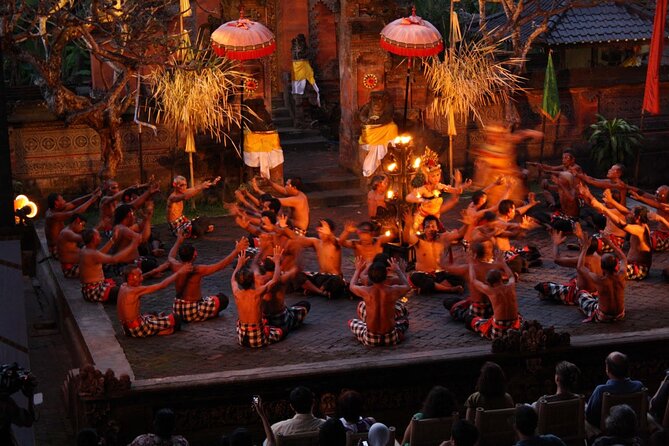
- Batubulan amphitheater atmosphere, a provincial village staging that sets the mood at dusk
- Hotel pickup and drop-off in the Kuta, Seminyak, Sanur, Jimbaran, and Nusa Dua hotel zone
- A real guide narration, with English-speaking explanation that helps you follow the stories
- Small group cap of 15, so it does not feel like a cattle-call bus show
- One-hour admission performance included, then you are back to your hotel afterward
Other performances and where they are staged


Batubulan at 4:00 pm, when the night starts moving
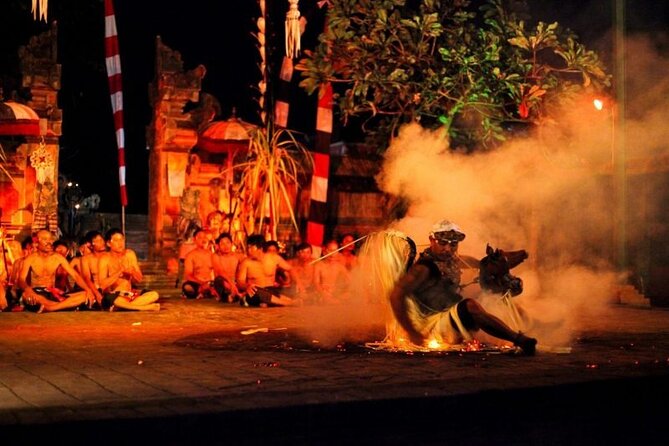
This is the kind of Bali activity that starts as a plan and ends as a mood. You depart from your hotel at 4:00 pm, then ride to the performance area in time for the evening program. Expect a tour day that is close to 4 hours total, even though the actual dancing is about 1 hour.
What makes this night special is that the show is built around story and ritual, not just costume and posing. The program mixes three different dance styles, each with its own rhythm and purpose. In plain terms, you get a quick cultural lesson with a front-row seat to performance.
The tour also gives you structure. Your guide is there with an English-speaking narration and a license, so you can understand why the dancers do what they do. That matters here, because some of the dances would otherwise feel like they are happening in a vacuum, especially if you only know Bali as beaches and spa ads.
The big logistical reality is that traffic around southern Bali can eat time. In past outings with guides like Darta and Oka, the timing has sometimes meant early pickup and a wait before the amphitheater officially comes alive. If you are sensitive to waiting, bring patience and a water bottle.
How the Kecak Chant Tells a Story with Your Ears
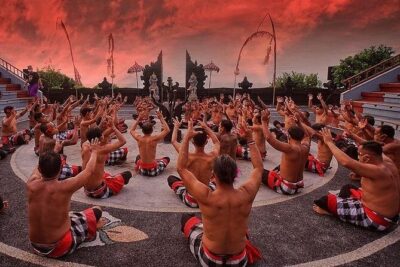
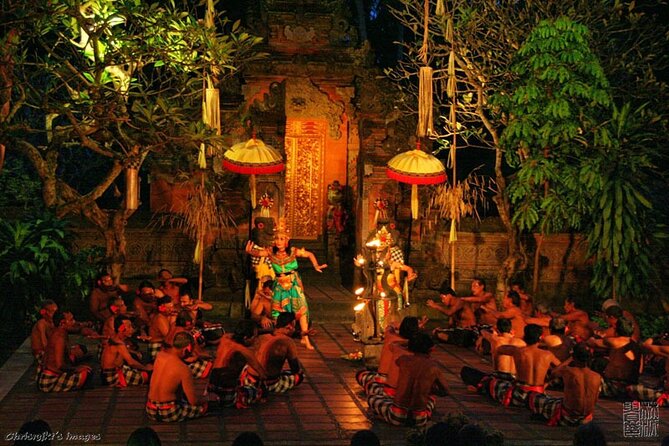
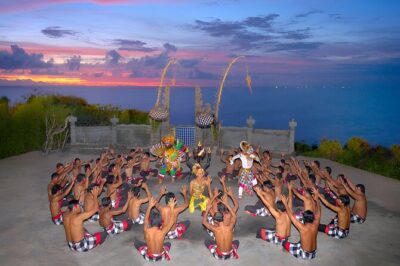
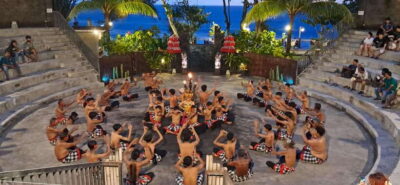
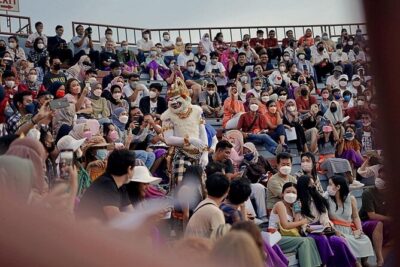
The first big section centers on the Kecak dance, often called the Monkey Dance. This is the one you hear before you see it, because it is built on a chorus, repeated chants, and a drum-like cadence from the performers. The effect is crowd hypnosis in the best way.
The story theme you will follow is Prince Rama and the rescue of a kidnapped princess. That storyline shows up through the dance action and the way the chorus supports the scenes. You do not have to be a Balinese mythology expert, because your guide explains the plot as it unfolds, turning the chant into something you can track.
I like the Kecak because it is not about fancy moves alone. It is about collective rhythm. The performers are arranged as a body of sound, and the chorus gives you a sense that the “stage” is bigger than a single dancer. Even if you sit far back, the sound carries, and the group energy does the heavy lifting.
One practical note: the performance setting can be outdoor or semi-outdoor, and as the light drops, it can get uncomfortable. The best strategy is to bring layers. Also, keep your eyes on the dancers and the chorus line. That is where the emotion lands.
Fire Dance and the Saghyang Trance, drama with meaning
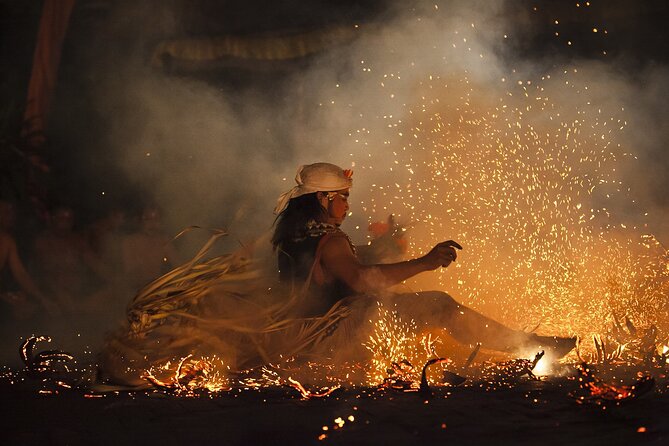
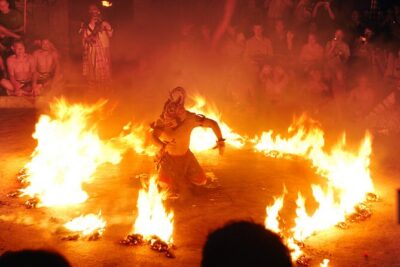
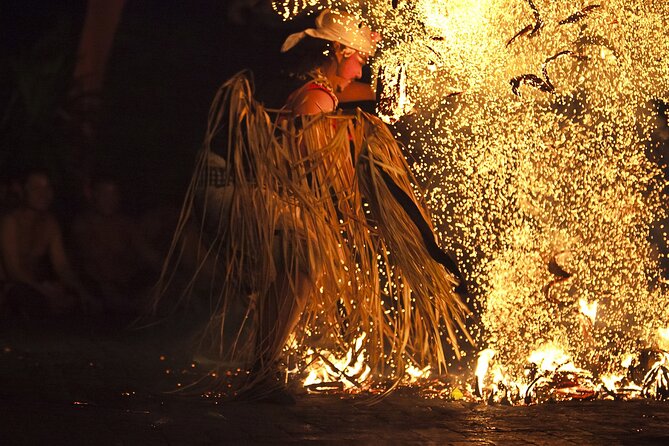
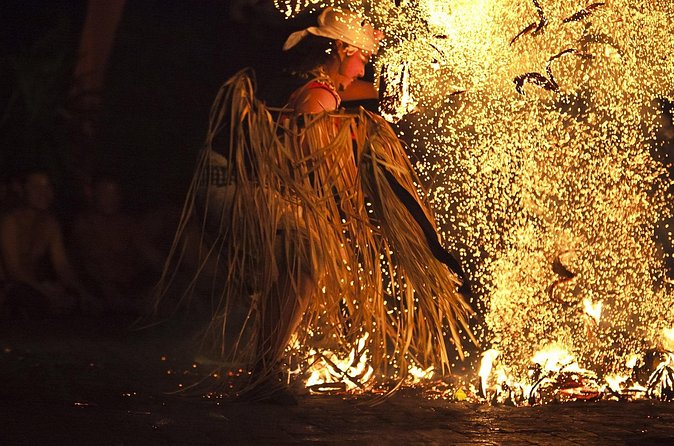
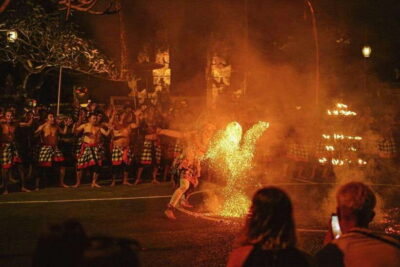
Next comes the Fire Dance segment, where you watch dancers move through heat and danger while maintaining control and form. The spectacle here is intense, but it is not random. It is tied to traditional performance, and it is meant to look fearless and disciplined at the same time.
A lot of people remember the fire dancer because it looks so risky. That reaction is normal, but the bigger point is the training and the seriousness behind it. If you go in thinking it is just for shock value, you might miss what makes it culturally important.
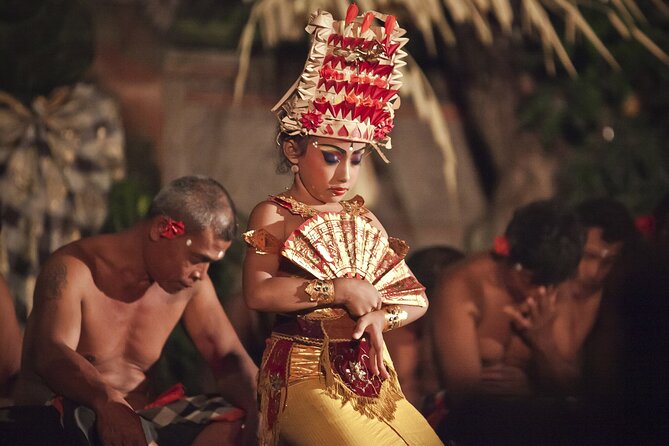
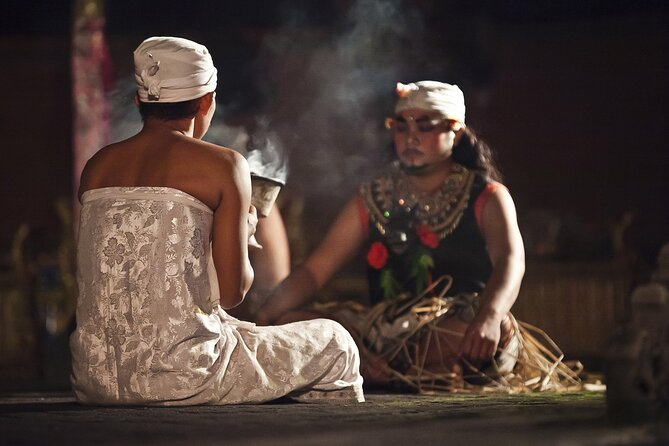
Then the program shifts into Sanghyang, sometimes described as trance dance. In this section, performers show a more convulsive choreography, and the tradition is said to have roots in exorcism. Even if trance performances are not your usual interest, you will likely find this portion different from the Kecak and Fire Dance styles. It has a different tempo and a different emotional flavor.
This is also the portion where your guide’s commentary really helps. When you understand that the dance styles connect to older ritual functions, you stop treating it as entertainment only. You start seeing it as a performance language.
If you are worried about the Fire Dance being scary, that is reasonable too. In some experiences, people felt uneasy watching the fire portion. If you prefer milder nights, still show up, but plan mentally for intensity.
The timing problem: traffic, early pickup, and waiting around
The schedule sounds simple on paper, but Bali timing is its own character. The tour starts at 4:00 pm, and the transfer can be longer depending on where you stay and how traffic behaves that day. That is why your total time on the outing is around four hours.
Several participants have had versions of the same pattern: being picked up earlier than expected, then waiting for the show or nearby activities to open. Sometimes the guide uses that waiting window well, like a short look at a temple or a quick story that helps you understand what you are seeing later. In other cases, it can feel like dead time.
What I recommend: if your pickup happens early, do not assume something is wrong. Ask your guide what the plan is and how long the wait will be. The best guides are clear and time-aware. In at least one positive experience, Darta handled heavy traffic by building in time with a temple stop and explaining the ceremonies and the buildings there, so the extra time felt meaningful.
If you are the type who hates shop detours, also know that some nights include pressure points. You might be taken to craft or gift places near the route, or offered chances to buy items. That does not mean the show will be bad, but it can change your mood and your sense of value.
- Nusa Penida day trip: boat, 4 snorkeling, Manta rays & Land tour★ 5.0 · 2,033 reviews
- Bali Nusa Penida West Private All-Inclusive Tour★ 5.0 · 1,277 reviews
- Mount Batur Sunrise Trekking Private Tour with Breakfast and Hotel Transfer★ 5.0 · 885 reviews
- Individual Bali Day Trip with Private Driver and Free WiFi★ 5.0 · 755 reviews
- Waterbom Bali Tickets – Single Day Pass★ 4.5 · 620 reviews
Ticket value: how $48.72 can feel fair, or not
At $48.72 per person, this tour sits in the “budget organized night out” zone. You get hotel pickup and drop-off in a defined set of Bali hotel areas, transportation in an air-conditioned vehicle, an English-speaking licensed guide, and admission included for the 1-hour performance.
So where does the value come from? It is mostly convenience. Instead of spending time figuring out ticket counters, transport, and timing, you outsource the logistics. For solo travelers and couples staying in the main hotel corridors, that is a real win.
Where value can slip is when the transfer time is long, the seating feels less premium than expected, or the show runs shorter than you imagined. In some experiences, people felt the evening was padded with waiting or added shopping stops, while the core performance time felt brief.
A useful way to judge this for your own trip is to ask two questions:
- Will you still enjoy it if the pickup runs early and you spend time waiting?
- Do you want convenience enough to pay for organized transport, or would you rather handle tickets and a driver yourself?
If you want the smooth plan, this may feel fair. If you want maximum control and minimum extras, you might compare the cost of independent transport plus entry tickets.
Comfort tips that make the evening easier
Even a cultural show can feel tough if you are not ready for the physical reality of an evening outing.
First, the tour notes moderate physical fitness as a requirement. That likely means you should be comfortable with standing and walking in a lively venue environment, and with sitting during performances. If you have mobility issues, it is worth checking with the operator before you go.
Second, wear practical clothing. A night show in Bali can mean cooler evening air combined with heat from the setting. Layers help. Closed-toe shoes also help if the amphitheater area has uneven ground.
Third, think about what you expect from the guide. A strong guide makes a big difference here. When your narration explains the storyline behind Kecak, fire, and trance, you do not just watch movement. You watch meaning. In positive experiences, guides like Oka even added small practical touches, like bringing mosquito repellent for people to use during the outdoor moments around the performance.
Finally, remember that food and drinks are not included. Plan on eating before you go, or bring a snack so you are not hungry during the wait.
Who this tour fits best
This is a smart fit if you want a structured introduction to Balinese dance without doing research for three different shows. It is also a good pick if your Bali itinerary is tight and you want to consolidate multiple dance styles into one evening.
I would especially recommend it if:
- you like story-based performances and want context
- you prefer being picked up and dropped off rather than using local transport
- you travel as a couple or solo and want a smaller group size (max 15)
It is less ideal if:
- you hate waiting around or being collected earlier than planned
- you strongly dislike any shopping stops or pressure to buy things
- you want a longer show or a more premium seat experience
Should you book this Bali traditional dance evening?
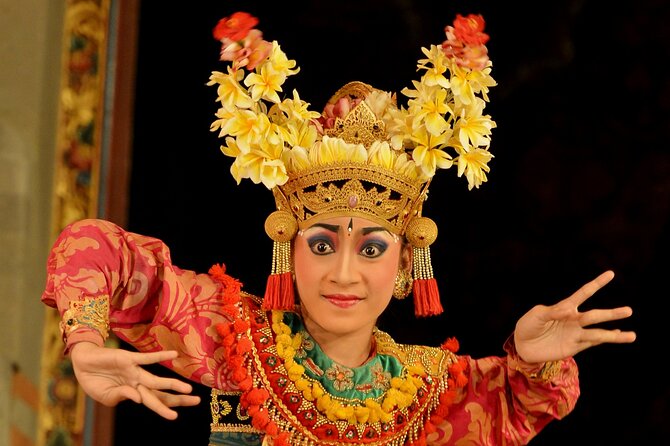
If your top goal is a clean, organized night that gives you Kecak, Fire Dance, and Sanghyang with hotel pickup, then yes, it is an easy booking to justify. The value is in convenience and a guided narrative that helps the dances land as culture, not random spectacle.
But book with realistic expectations. This is not a private, long-form cultural ritual with hours of commentary. It is an evening program, starting at 4:00 pm, built around a 1-hour performance and guided explanation, with travel time that can vary because of Bali traffic. If you want maximum control, a shorter trip, and no detours, you might compare independent options.
My best advice: if you choose to go, show up ready to listen. When the guide explains the Prince Rama story and the meaning behind each dance style, the night feels like more than a show. It turns into a story you can follow, even if you are seeing it for the first time.
FAQ
What dances are included in the evening show?
The tour includes three traditional dances: Kecak (Monkey) Dance, the Fire Dance, and the Sanghyang (Trance) Dance.
How long is the tour and how long is the performance?
The total tour time is about 4 hours. The included performance is 1 hour.
What time does the tour start?
The start time is 4:00 pm.
Do I get hotel pickup and drop-off?
Yes. The tour offers pickup and drop-off from major hotels in the Kuta, Seminyak, Sanur, Jimbaran, and Nusa Dua area.
Is an admission ticket included?
Yes. The 1-hour dance performance admission ticket is included.
Are food and drinks included?
No. Food and drinks are not included.
Is there a group size limit?
Yes. The tour has a maximum of 15 travelers.
Is free cancellation available?
Yes. You can cancel for a full refund up to 24 hours before the experience’s start time.
Kecak, Legong and Barong Performances
Fresh Kuta write-ups from the review desk





Balinese Dance and Cultural Shows, compared.
 ★ 4.4Ubud Palace Legong Dance Show TicketFrom $63,979 reviews
 ★ 5.0Uluwatu Sunset, Kecak Dance, and Dinner Jimbaran BeachFrom $353,681 reviews
 ★ 4.4Ubud Kecak and Fire Dance Show TicketsFrom $62,631 reviews
 ★ 4.5Uluwatu Sunset Tour: Kecak and Fire Dance with Jimbaran DinnerFrom $65597 reviews
 ★ 5.0Uluwatu Temple Entry and Kecak Fire Dance TicketFrom $29479 reviews
 ★ 4.2Tanah Lot Temple Sunset Kecak & Fire Dance Show TicketFrom $6242 reviews
 ★ 4.0Kecak and Fire Dance Ticket at Uluwatu TempleFrom $11222 reviews
 ★ 5.0Private Uluwatu Sunset, Kecak Dance, Dinner at Jimbaran BeachFrom $50160 reviews
Browse the lists this tour appears in