REVIEW · INDONESIA
Make Traditional Bali Coconut Oil with a Balinese Family
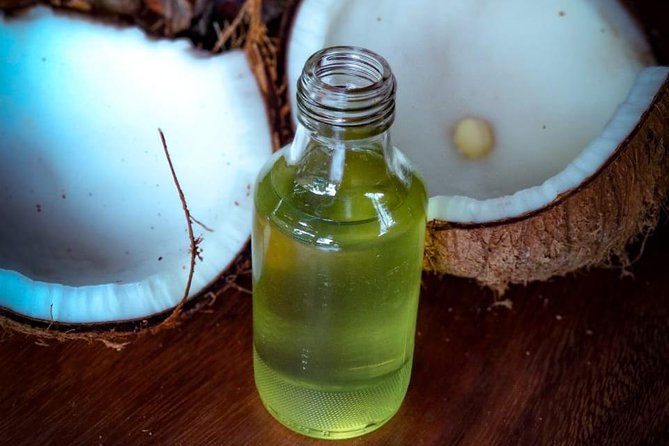
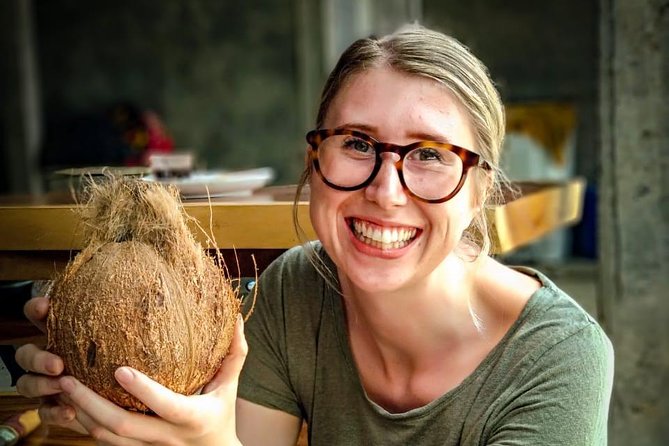
Coconut oil, made by hand, in a real home. This private class in Delodsema village (Taro, north of Ubud) turns a popular wellness ingredient into a tangible, step-by-step experience, I love the hands-on coconut oil process and the coconut scrub massage that keeps it from feeling like a lecture. One thing to plan for: it is rural, so you’ll need to think about transport from central Ubud unless you upgrade for transfers.
You’ll be welcomed at a local home, starting with Balinese coffee or herbal tea and snacks, then moving into the traditional making process. While the oil is being prepared, you’ll get coconut scrub and also time to see what daily village life looks like, from traditional houses to simple routines.
The payoff is practical, too. You leave with your own jar of coconut oil, plus a better sense of why this homegrown product still matters here.
In This Review
- Key highlights worth your time
- Delodsema Taro, the rural side of Ubud
- Making traditional Balinese coconut oil step by step
- Coconut scrub massage: the relaxing break that feels real
- Village life in Taro: traditional houses, chickens, and daily routines
- Your take-home coconut oil souvenir (and how to use it)
- Optional silversmithing class: a second craft for hands-on learners
- Price, timing, and transport from Ubud central
- Who this Balinese coconut oil experience suits best
- Quick tips before you go
- Should you book this Delodsema coconut oil class?
- FAQ
- Where does the coconut oil class take place?
- How long is the experience?
- Is the tour private?
- What is included in the price?
- Do I get to take the coconut oil home?
- Is transportation from central Ubud included?
- Can I add round-trip transfers from central Ubud?
- Is the coconut scrub massage included?
- Can I add a silversmithing class?
- What is the cancellation policy?
Key highlights worth your time
- Delodsema, Taro village setting: a small community north of Ubud where you can actually watch the process
- Private class with a family welcome: you share the day only with your group
- Coconut scrub massage included: relaxation is built into the schedule, not tacked on
- Herbal tea or coffee and Balinese cookies: a warm start before the work begins
- Take-home coconut oil: you get a handmade souvenir you can use at home
- Optional silversmithing class: a second craft option if you want more than oil
Not decided yet? These Ubud trips held up when we went through them.




Delodsema Taro, the rural side of Ubud
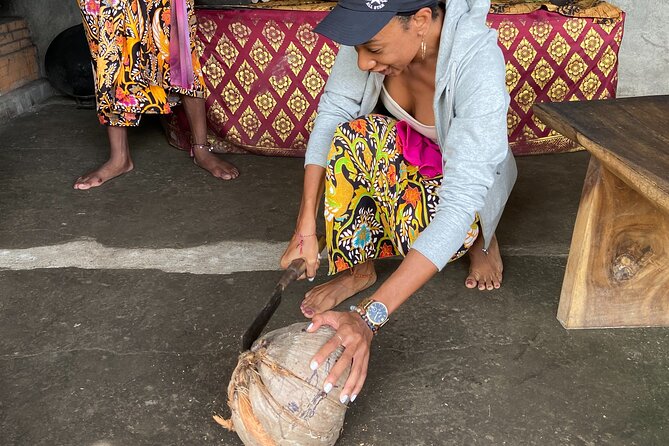
Most Ubud days you plan around temples, galleries, and traffic. This one is different because you are heading north, to Delodsema village in Taro, where life is slower and more local. The experience is run as a private visit, so it feels less like a stop on a route and more like being invited into someone’s routine.
A detail I really like here is the scale. The village is described as a place with about 50 families, which helps explain why this feels personal. You can ask questions without feeling like you’re shouting over a crowd.
You’ll also get a true sense of place. The family welcome includes Balinese coffee and/or herbal tea, plus snacks like Balinese cookies. That matters because it sets the tone, you’re not rushing straight into cooking smells and coconut mess.
The host family setup is another plus. In the experience style, you are greeted by Putu and your chauffeur Kadek may bring you there, so you get that human connection from the start. It’s a good reminder that the value here is the people, not just the craft.
Making traditional Balinese coconut oil step by step
You should know up front: this is not a quick demo. The coconut oil is made using the traditional Balinese process, and it takes more than the typical class time because the waiting is part of the method.
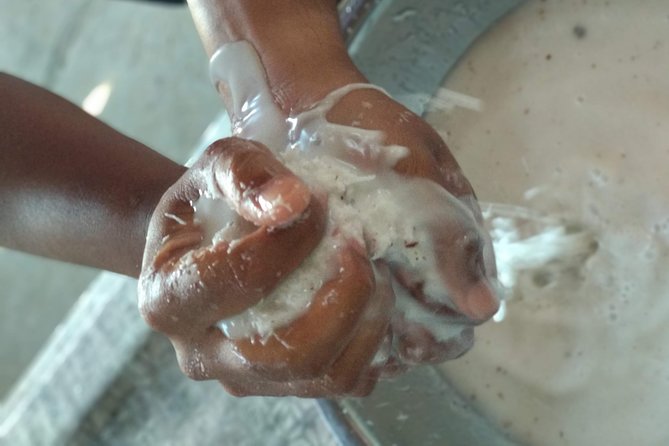
The experience is scheduled for about 1 hour 30 minutes overall, but the production process itself is described as taking 1 to 1.5 hours once you start. In practice, that means you will likely spend time peeling and preparing, then watch the process as the oil is produced. This is where the education really lands: you see why coconut oil takes time when you do it the traditional way.
Here is what the flow usually feels like:
- You arrive and settle in, with coffee or herbal tea and snacks.
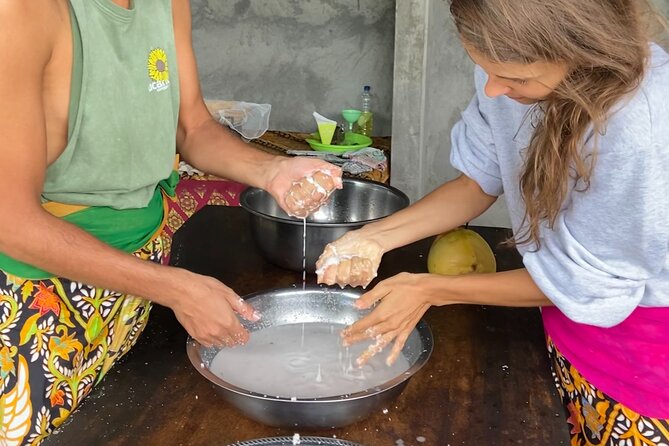
- You start making your own coconut oil using the tools and equipment provided.
- Each step is explained as you go, so you understand what you are doing and why it matters.
- While the oil is finishing, you shift into relaxation and village-life time.
If you are the kind of person who likes to learn by doing, this works well. The activity is designed to be fun and hands-on, and it is also described as good for children and groups, which usually means the pace is manageable and the work is explained clearly.
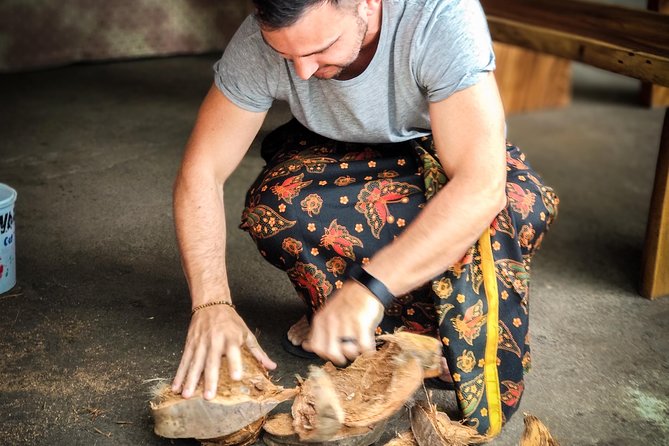
A practical consideration: coconut oil making can get messy. You’ll be handling coconuts and participating in preparation steps, so plan on wearing comfortable clothes you don’t mind getting slightly coconut-scented.
Coconut scrub massage: the relaxing break that feels real
While the oil is being made, the schedule includes a coconut scrub massage. This is a big deal for value because it turns the day into both a craft and a self-care experience.
The timing also makes sense. You do the hands-on work, then take a break while the oil continues to be processed. That keeps you from feeling like you’re stuck waiting with nothing to do.
You’ll also be using coconuts again, not just as an ingredient. Coconut scrubs are part of everyday traditions in many parts of Bali, so you’re not only learning the product side, you are also learning the body-care side.
If your group includes different interests, this is a smart compromise. One person can be fully focused on the oil process, while another might look forward to the massage. Everyone still shares the same setting and the same family experience.
Village life in Taro: traditional houses, chickens, and daily routines
One reason this class is so popular is the “what else happens” portion. While your oil is processing, you are able to explore local village life and see what people do day to day.
The experience description explicitly includes finding what locals do and seeing traditional houses in the village. That is more than sightseeing, it helps you understand what your hosts’ lives look like beyond tourist landmarks.
In the reviews that were shared, people also highlighted moments like eating fresh fruit from the family’s trees and feeding chickens. Even if you cannot count on those exact moments every time, the structure of the experience makes room for these small, everyday touches. It’s the kind of thing you remember later because it feels specific to the home you visited.
This also makes the class feel more grounded. You’re learning coconut oil as a household practice, not as an abstract wellness trend. That context is what turns a souvenir into a story.
- All-Inclusive Ubud Private Tour★ 5.0 · 14,344 reviews
- Best of Ubud Full-Day Tour with Jungle Swing★ 5.0 · 8,571 reviews
- Ubud: Monkey Forest, Jungle Swing, Rice Terrace, and Water Temple★ 5.0 · 7,160 reviews
- Bali: Ubud Palace Legong Dance Show Ticket★ 4.4 · 3,979 reviews
- Uluwatu Sunset, Kecak Dance, and Dinner Jimbaran Beach★ 5.0 · 3,681 reviews
Your take-home coconut oil souvenir (and how to use it)
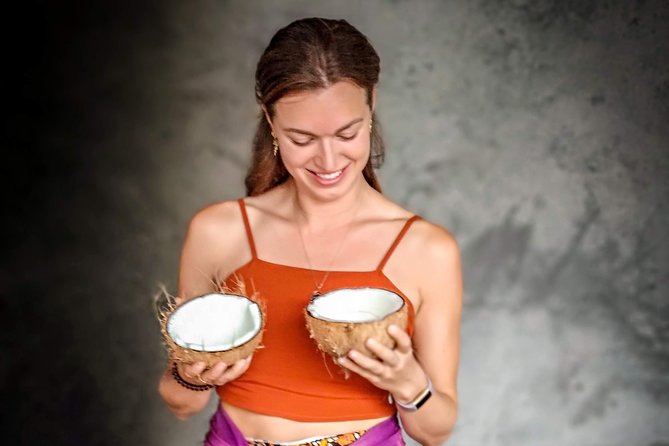
The most obvious part of the payoff is simple: you make coconut oil and you take it home after the session ends. The included items specifically note you receive your coconut oil as a souvenir.
That matters for value. At $27 per person, you’re not just paying for a guided activity, you’re paying for a usable product. Even if you only use coconut oil occasionally, it is nice to have something you helped make, rather than another generic tourist item.
What you do with it at home depends on your preferences. Coconut oil is often used for everyday skin and hair care, and people who buy it in Bali often do so because it fits into their routine. I like that this experience gives you the “how it’s made” connection, so you understand what you’re using, and you can explain it to friends later.
Also, the experience provides Balinese sarong during the class. That helps you feel respectful in the home setting and makes it easier to blend in.
Optional silversmithing class: a second craft for hands-on learners
If you want to extend your Bali craft day, there is an option to add a silversmithing class. This is offered as an upgrade, and it is framed as a way to create another unique souvenir during your visit.
This is ideal if your group is split, one person is all about coconut oil, but someone else wants a craft skill too. Silversmithing also fits the overall theme of the day: traditional skills that are learned through repetition and patience.
If you do add it, keep your expectations realistic. A silversmithing session will not magically turn you into a jeweler, but it can give you a satisfying first step and another tangible memory. It is also a great choice if you are traveling with a partner who wants more than cooking-related work.
Price, timing, and transport from Ubud central
The price is $27.00 per person, and the average booking window is about 18 days in advance. For Bali craft activities, this is positioned as a straightforward, local-value experience rather than a luxury add-on.
Here is why the price feels fair based on what is included:
- You get coffee and/or herbal tea plus snacks.
- You receive tools and equipment.
- You get a coconut scrub massage.
- You get a Balinese sarong.
- You take home your own jar of coconut oil.
- The tour is private for your group.
The main cost you might encounter is transportation. Transportation from Ubud central area is listed as IDR 350k round trip, unless you upgrade to include round-trip transfers from central Ubud.
That matters because the experience location is Delodsema village in Taro, north of Ubud. If you hate budgeting for taxis and time planning, the transfer upgrade can reduce stress.
Timing-wise, plan around the 1 hour 30 minutes activity length and the fact that the coconut oil itself takes 1 to 1.5 hours in the traditional process. If your day is tight with other Ubud plans, schedule this with buffer time for travel.
Who this Balinese coconut oil experience suits best
This works for a lot of people, and the description and shared experiences point to a few clear matches.
- Families: it is described as fun, traditional, educational, and good for children.
- Couples: the private format makes it feel romantic in a quiet way, plus you share hands-on work.
- Solo travelers: you still get a host family welcome and a structured experience, so you are not just walking into a workshop alone.
- Culture-minded travelers: if you like daily life context, this is about more than the product.
It also suits travelers who like small-group experiences. Private means only your group participates, and that usually makes questions easier and the learning less rushed.
If you only want a quick tourist activity with minimal effort, this might feel like more work than you want. But if you like hands-on learning, it is a strong fit.
Quick tips before you go
A few practical things will make your day smoother:
- Wear comfortable clothes you do not mind getting a bit messy, because coconuts are part of the process.
- Expect hands-on steps and clear explanations, since the experience is built around learning by doing.
- If you are starting from central Ubud, decide early whether you want to manage transport yourself or upgrade to transfers.
- If you want a second craft, ask about adding the silversmithing class so you can plan your time in Ubud.
Should you book this Delodsema coconut oil class?
I think you should book it if you want something more grounded than another Ubud photo stop. The best part is the mix: hands-on coconut oil making, a coconut scrub massage, and village-life context in Delodsema, Taro. You leave with a jar of oil you made yourself, not just a memory.
Skip it only if you are looking for something ultra-fast and low-effort. The traditional process takes time, and you’ll be doing real prep work, not just watching.
If your goal is authentic, rural Bali with practical value and a family-run feel, this is a smart way to spend a day north of Ubud.
FAQ
Where does the coconut oil class take place?
It takes place in Delodsema village, Taro, north of Ubud. The meeting point address is Jl. Taman Gajah, Taro, Kec. Tegallalang, Kabupaten Gianyar, Bali 80561, Indonesia.
How long is the experience?
The duration is approximately 1 hour 30 minutes.
Is the tour private?
Yes. It is a private tour/activity, and only your group participates.
What is included in the price?
Coffee and/or herbal tea, Balinese cookies snacks, tools and equipment for making coconut oil, free WiFi, a Balinese sarong, and your coconut oil to take home as a souvenir.
Do I get to take the coconut oil home?
Yes. You make coconut oil during the experience and bring it home after the session ends.
Is transportation from central Ubud included?
Transportation from Ubud central area is not included. It is listed as IDR 350k round trip.
Can I add round-trip transfers from central Ubud?
Yes. There is an option to upgrade to include round-trip transfers from central Ubud.
Is the coconut scrub massage included?
Yes. A coconut scrub massage is included during the experience.
Can I add a silversmithing class?
There is an option to include an additional silversmithing class as part of your experience.
What is the cancellation policy?
Free cancellation is available. You can cancel up to 24 hours in advance for a full refund, and cancellations within 24 hours are not refunded.