
REVIEW · FULL-DAY
Private Full-Day Temple Tour: Bali Archaeology Tours
A full day of temples sounds simple, until traffic enters. This private tour lines up major sites and lesser visited stops, with private 2-way transfers and a guide who helps you connect the Hindu symbolism to what you see. When the driver doubles as a guide, like the folks named Agung or Gusti, your day turns into a story you can actually follow.
I especially like the private format: no waiting for other groups, and you can pace the day around your energy. I also like that you can choose the version with entrance tickets and lunch included, so you spend less time sorting details on the spot. One thing to consider: guide skills can vary, and one account flagged issues like ticket handling and missing in-car water, so it helps to confirm what is included before you roll out.
In This Review
- Key Points at a Glance
- A Private Day of Bali Temples, Without the Taxi Tangle
- Price and Ticket Options, and How to Judge Value
- Temple Etiquette That Actually Saves Your Day
- Kehen Temple: Three Gods and a Strong Sense of Place
- Besakih Temple, Bali’s Mother Temple
- Tirta Empul: The Holy Spring in Action
- Gunung Kawi Sebatu: A Rocky Temple and a Lot of Steps
- Goa Gajah (Elephant Cave): Archaeology With Everyday Rhythm
- The Drive in Between, and Why It’s Part of the Day
- How the Driver-Guide Makes or Breaks the Day
- Who This Tour Fits Best
- Should You Book This Full-Day Temple Tour?
- FAQ
- How long is the private temple tour?
- Do I get pickup and drop-off?
- Is this tour private?
- Are entrance tickets and lunch included?
- Is there a vegetarian lunch option?
- What should I wear to visit the temples?
Key Points at a Glance

- Private vehicle and private guide attention, so you move through Bali at your speed.
- Nine to ten hours with multiple distant temples, which is hard to stitch together by yourself.
- Kehen, Besakih, Tirta Empul, Gunung Kawi Sebatu, and Goa Gajah in one day.
- All-inclusive option can cover entrance tickets and lunch, reducing on-site hassle.
- Temple etiquette matters (smart casual is the stated dress code, and sarongs may be needed at some sites).
- Stops include archaeology-style settings with rock-cut ruins and cave features, not just big postcard temples.
Not decided yet? These Seminyak trips held up when we went through them.



A Private Day of Bali Temples, Without the Taxi Tangle
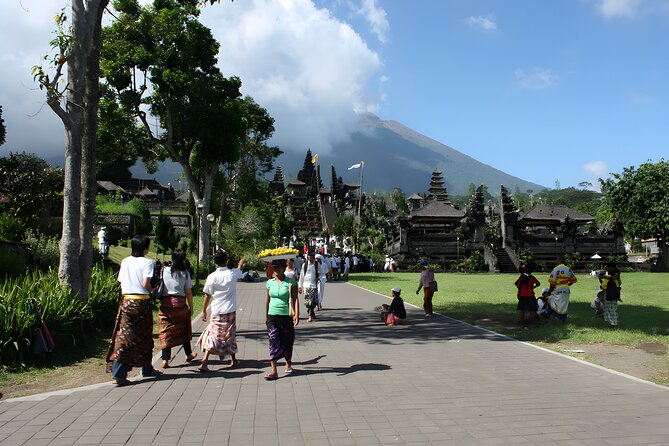
Bali’s temple world is spread out. Even when you know the names, it’s the travel between them that can wear you down. This is designed for that reality. You get a private air-conditioned car and pickup from your area, then you spend the day moving between sites instead of negotiating rides, directions, and timing.
What you gain is simple: time for the scenery and time for the moments. You’re not bouncing from viewpoint to viewpoint on a tight bus schedule. You can linger at a gate, pause for photos, and ask questions without feeling like you’re holding everyone up. The tour also runs with a professional English speaking driver who acts as a guide, so it’s not just driving, it’s interpretation.
The day is long enough to feel like a real itinerary, not a quick hit. Plan for about 9 to 10 hours, including transfers and walking time between temple areas.
Price and Ticket Options, and How to Judge Value
The listed price is $40 per person, but the key detail is that there are different ways this tour can be run. There’s a version often described as car charter only where entrance tickets and lunch are not included, and there’s an all-inclusive version where entrance ticket(s) and lunch are included.
That choice changes value a lot. If you’re trying to keep your day budget tight, the car charter style can make sense, especially if you’re comfortable buying tickets on-site. But if you want a smoother day, the all-inclusive option is usually the better deal, because it reduces back-and-forth at the busiest places, when lines and on-site rules can slow you down.
A practical way to think about it: if you hate the idea of managing tickets while your day is already stretched by traffic, go all-inclusive. If you love a self-directed rhythm and you’re fine taking care of tickets yourself, car charter only can work. Either way, you should arrive with patience. Bali’s roads move slowly, and your driver’s routing matters.
Temple Etiquette That Actually Saves Your Day
This tour asks for smart casual dress. That’s a good start, but temples often have their own rules. Many Bali temples require you to cover up properly, and men may need a sarong to enter. Some guides provide loaner sarongs, and if you arrive without the right coverage, it can mean extra waiting at the entrance.
Here’s what I’d do if I were planning this day:
- Wear clothes that are easy to adjust at the entrance.
- Bring sunscreen, because long outdoor walking time is baked into the schedule.
- Pack a camera, because the relief carving, stone textures, and ritual scenes are exactly what you’ll want to photograph.
One more real-world note: some temples may restrict access to inner areas unless you’re participating as a worshipper. Even when you can’t go inside, the open-air layout means you can usually see a lot from the outer spaces, so the day still works for non-worshippers.
Kehen Temple: Three Gods and a Strong Sense of Place
Stop one is Kehen Temple. This site is tied to three gods: Brahma, Vishnu, and Shiva. It’s also associated with the idea that the sanctuary existed before the town developed around it. That sense of deep continuity matters in Bali. You’re not just looking at an old building, you’re looking at a living religious landscape where the story of a place is part of the architecture.
In terms of experience, Kehen tends to feel more local than some of Bali’s biggest headline temples. That can be a positive on a long day, because it gives you a different pace. Expect about an hour here. You’ll likely spend part of that time walking through the temple grounds at a relaxed tempo and part of it taking in details like stonework and the way worship areas are arranged.
A consideration: because it’s outdoors and active, it can be busy at peak times. Your private guide can help you manage timing and photo angles, but you should still expect normal foot traffic.
- Bali Full-Day Traditional Village Sightseeing Trip All Inclusive★ 5.0 · 3,069 reviews
- Experts Bali Driver : Best Bali Private Driver for Tour in Bali★ 5.0 · 1,339 reviews
- Bali Hai Sunset Dinner Cruise★ 5.0 · 1,173 reviews
- Mount Batur Sunrise Trekking★ 5.0 · 947 reviews
- Private Arrival Transfer: Bali Airport to Hotel★ 4.5 · 739 reviews
Besakih Temple, Bali’s Mother Temple
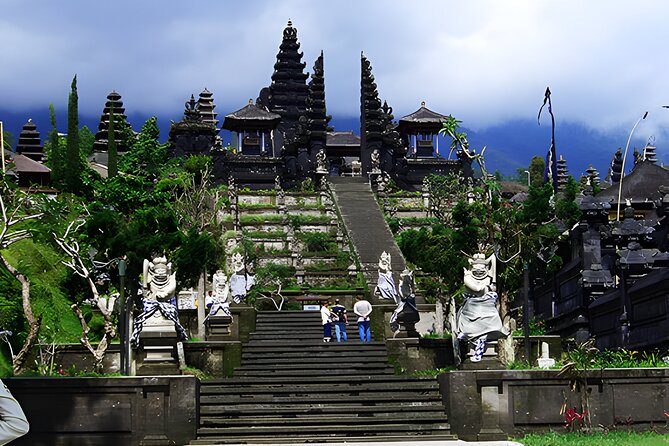
Next is Besakih Temple, often called Bali’s Mother Temple. This is the kind of stop that makes you understand why people travel specifically for temples, not just beaches. The complex is associated with “classic Bali temple energy,” meaning terraces, shrines, and a layout that feels spread out rather than cramped.
You get about an hour here, and that can be enough if you’re not trying to do every possible path. The practical move is to focus on the main views and the most significant areas first, then use your remaining time for extra angles.
What makes Besakih worth it on a private itinerary is flexibility. If you want to slow down, your guide can adjust. If you’re more interested in symbolism and design, you’ll get better explanations than you would on a tight group tour.
Dress rules can matter at major temples. If you arrive in smart casual clothes but still lack a sarong when one is needed, you’ll lose time at the entrance. Build a little buffer into your outfit choice.
Tirta Empul: The Holy Spring in Action
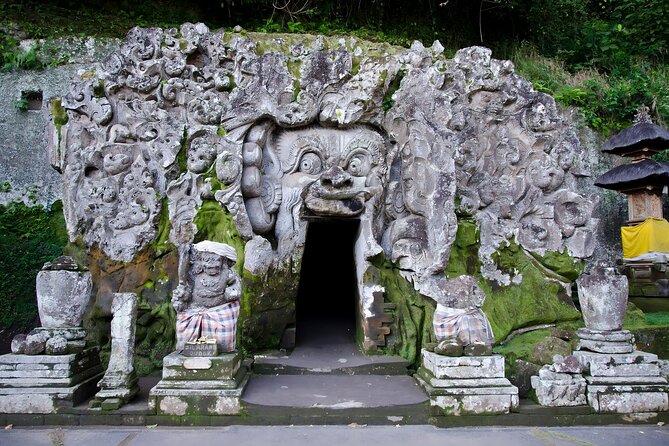
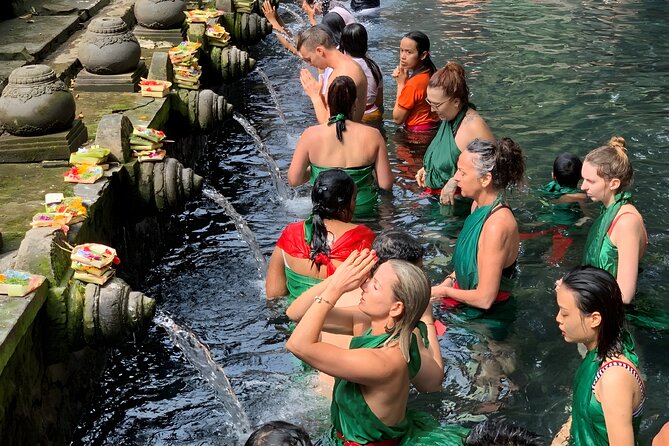
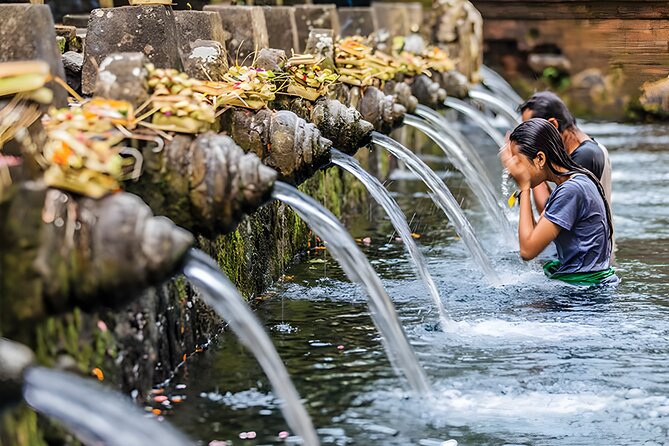
Tirta Empul Temple is the next stop, and it’s famous for the holy mountain spring. The setting is a temple complex centered on water rituals. This is where you see how Hindu symbolism becomes practical daily life.
The tour gives you about one hour, which usually means you’ll do two things well: walk the grounds and watch the ritual areas long enough to understand what you’re seeing. If you’re curious, ask your guide what’s happening in simple terms. You’ll learn more by matching what you see to the meaning than by trying to translate everything in your head.
A consideration here is behavior and crowding. This is not a quiet museum stop. People come to participate, wash, and pray. Keep your movements respectful, and think of yourself as a visitor in a working sacred space.
Gunung Kawi Sebatu: A Rocky Temple and a Lot of Steps
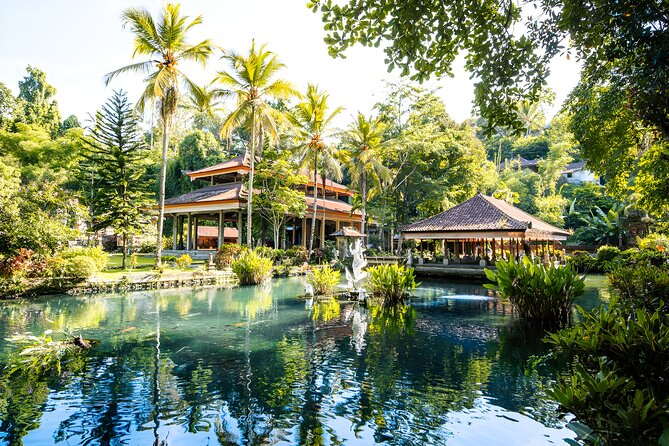
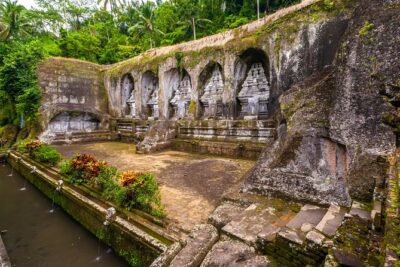
Stop four is Gunung Kawi Sebatu Temple, a rocky temple site. The key detail is the approach: you need to walk down toward the valley on hundreds of steps to reach the area.
This is the stop where your comfort level becomes the deciding factor. If you’re fit and enjoy ruins, it’s a great add-on because it feels less like a single monument and more like an archaeological environment. If you’re tired or have mobility limits, the descent can be the hardest part of the day.
Along the route, there may be shops. That’s normal in Bali, and it can be useful if you want a small snack or water. Still, confirm what your tour includes for refreshments, because one negative account specifically mentioned missing in-car water.
Plan for shoes that handle uneven paths and keep your footing steady. Even if you’re not walking fast, you’ll be walking.
Goa Gajah (Elephant Cave): Archaeology With Everyday Rhythm
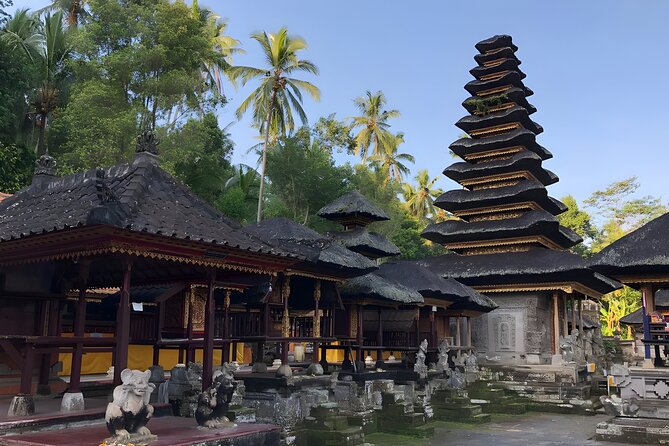
Your final temple stop is Elephant Cave, known locally as Goa Gajah. This one is billed as an archaeological site with significant historical value, and the location is described as being on the western edge of Bedulu village.
The experience here is different from the open terraces and spring rituals. Caves and carved stone spaces change the feel immediately. The rock textures, the way light hits stone, and the sense of old remains shape how you look around. It’s also the kind of site where your guide’s framing makes a big difference, because without context you might focus only on the cave opening rather than the whole setting.
You get about one hour. That’s typically enough time to see the main features, read the room with other visitors, and ask a few questions without feeling rushed.
A practical note: caves and stone spaces can feel cooler than the street, but the heat still follows you outside. You’ll likely alternate shade and sun.
The Drive in Between, and Why It’s Part of the Day
This tour is not only temples. On the way between stops, you pass recognizable Bali categories like a traditional village, a famous volcano, a wood carving village, a gold and silver village, and several temple areas along the route.
That matters because Bali’s temple culture is tied to daily life. Seeing the villages and crafts in transit helps you understand why temples are not isolated landmarks. They’re part of an economy, a community, and a rhythm.
Still, be realistic about transit time. A long day means long rides. This is one reason a private transfer setup is so valuable. You don’t have to do route planning, and you’re not stuck waiting for other groups to board. You can use the car time as recovery time.
How the Driver-Guide Makes or Breaks the Day
This is a tour where the human factor is huge. Many of the standout experiences came down to the same theme: a guide who can combine driving skill with cultural explanation.
Good drivers also handle traffic well. Bali traffic isn’t just annoying, it can also steal your best photo hours if you’re stuck in slow movement at the wrong time. A driver who knows how to route you can keep your day on track.
You also want someone who adjusts to what you care about. If you want more time at one stop or you’d rather skip a side area, a capable guide can help you manage the balance.
At the same time, there’s one important consideration. One account described a day where the driver acted as only a driver, ticket steps got messy, and the car did not provide water even though it was expected. That’s the kind of mismatch you want to prevent. If you’re choosing the all-inclusive option, I’d make sure your tickets and lunch are clearly covered for the version you booked.
Who This Tour Fits Best
This private temple circuit works especially well for:
- First-time Bali visitors who want the main temple hits plus quieter stops without the stress of planning.
- Temple fans who like variety, because the day includes spring rituals, cave archaeology, and rock-cut steps.
- People who value comfort more than speed, since you’re in an air-conditioned vehicle for long stretches.
It might be less ideal if:
- You have low stamina for lots of steps, since Gunung Kawi Sebatu involves a serious descent.
- You expect a completely hands-off experience with no guidance needed, because temple etiquette and access rules can still affect what you can see.
If you’re traveling as a couple or small group, the private format is where the value really shows. You’re paying for time savings and attention, not just transportation.
Should You Book This Full-Day Temple Tour?
I’d book this tour if your goal is a structured full-day temple plan where you can concentrate on temples instead of logistics. The private vehicle, pickup from your area, and the option for an all-inclusive package make it practical for a long itinerary.
I would hesitate only if you strongly dislike the idea of relying on a specific guide to manage ticket steps and on-the-day details. The experience can be excellent when the guide is actively interpretive, but if you want everything handled flawlessly without any questions, I’d choose the all-inclusive option and double-check inclusions before departure.
If you do book, your best move is simple: dress for temple entry expectations, bring sunscreen and water if you can, and set a flexible mindset. Bali temples reward calm pacing, and this is the kind of day that feels better when you let the guide steer the timing.
FAQ
How long is the private temple tour?
The tour runs for about 9 to 10 hours.
Do I get pickup and drop-off?
Yes. Pickup and drop-off are offered from hotels or villas across areas including Ubud and many south Bali locations such as Seminyak, Sanur, Denpasar, Nusa Dua, Jimbaran, Kuta, and Canggu.
Is this tour private?
Yes. It is a private tour, meaning only your group participates in the vehicle.
Are entrance tickets and lunch included?
It depends on the option you choose. The car charter option excludes entrance tickets and lunch. The all-inclusive option includes entrance tickets and lunch.
Is there a vegetarian lunch option?
Yes. A vegetarian option is available if you advise at the time of booking.
What should I wear to visit the temples?
The stated dress code is smart casual. If a sarong is required at certain temples, you may need to arrange proper temple coverage at the site.
Fresh Seminyak write-ups from the review desk




Full-Day, compared.
 ★ 5.0Best of Ubud Full-Day Tour with Jungle SwingFrom $568,571 reviews
 ★ 5.0Bali Full-Day Traditional Village Sightseeing Trip All InclusiveFrom $683,069 reviews
 ★ 5.0Full-Day Tour to Water Temples and UNESCO Rice Terraces in BaliFrom $392,539 reviews
 ★ 5.0Borobudur Sunrise from setumbu Hill , Merapi Volcano & Prambanan Full Day TourFrom $1051,030 reviews
 ★ 5.0Bali to Nusa Penida: Premium Private Full Day Tour-All InclusiveFrom $495764 reviews
 ★ 5.0Full-Day in Bali: Private Design-Your-Own TourFrom $35460 reviews
 ★ 5.0Private Full-Day Guided Tour: Explore Jakarta’s Top HighlightsFrom $65338 reviews
 ★ 5.0Private Full-Day Tour: Balinese Temples and Rice TerracesFrom $59246 reviews