
REVIEW · DENPASAR AND BALI AIRPORT TRANSFERS
Taste & Explore Bali: Denpasar Street Food & Historic Sites
Denpasar at night tastes like the real Bali. I really like the small-group focus, which makes it easy to ask questions and keep things relaxed while you eat. I also love the ceremonial Babi Guling angle, because you’re not just sampling pork, you’re learning why it matters. One possible drawback, if you need special diets, is that this tour focuses on authentic local food and can’t guarantee vegetarian, vegan, or gluten-allergy options.
This is a smart mix of local markets and historic stops, starting at a central Hindu temple and moving through key Denpasar sites before you hit the street-food zone. Guides such as Putra, Lena, Irfan, and Srix are repeatedly praised for making the history feel practical, not academic, while keeping the food stops flowing at a good pace.
At $45 for about three hours, you get a lot more than a snack run, and the end includes a proper cup of Indonesian Arabica coffee (hot or iced). The tour is capped at a maximum of 12 people, so it feels like a guided evening with friends rather than a mass-production food line.
In This Review
- Key Things to Know Before You Go
- A 4:00 PM Denpasar Night Walk With Real Food Stops
- Opening at Pura Agung Jagatnatha: A Temple Start That Sets the Tone
- Puputan Square and the 1906 Resistance Story
- Patung Catur Muka: Colonial-Era Landmarks and a Four-Faced Photo Moment
- Jalan Gajah Mada: Roast Pork and Bakso in the Middle of the Action
- Badung Market Night Market Snacks: Jaje Bali and Market Energy
- NADHI Heritage Coffee Wrap-Up: Hot or Iced Arabica
- Why This Tour Feels More Meaningful Than a Generic Street Food Run
- Price and Value: What $45 Buys You in Denpasar
- What’s Included on Your Plate, Plus What to Expect
- Dietary Limits and Who This Tour Fits Best
- Practical Tips So You Taste More and Stress Less
- Should You Book Taste & Explore Bali in Denpasar?
- FAQ
- How long is the Taste & Explore Bali tour?
- What time does the tour start?
- Where does the tour begin and end?
- What food is included in the tour?
- Is coffee included?
- Are there any dietary restrictions the tour can accommodate?
- Is the tour suitable for young children?
- How big is the group?
- What is the cancellation policy?
Key Things to Know Before You Go
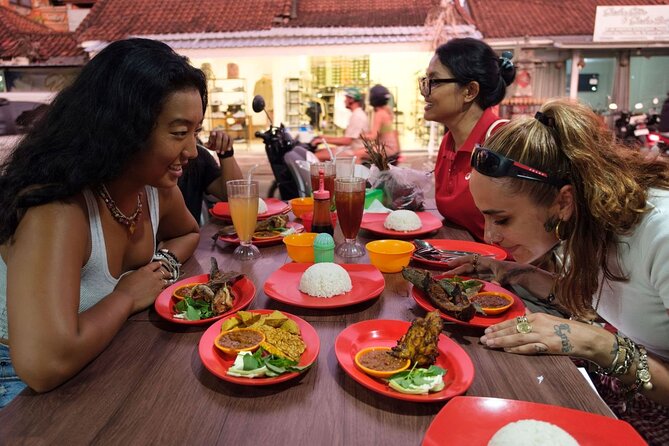
- Ceremonial Babi Guling, not just casual pork: You’ll try Bali’s roasted pork prepared in a way locals connect to ceremonies.
- Street food with locals doing the selling: The vendors you meet are the people earning a living in that market scene.
- Historic Denpasar stops are part of the meal: Temple, Puputan Square, and colonial-era landmarks help explain what you’re eating in context.
- A clear walking route through Central Denpasar: You’ll cover heritage streets on foot, then finish with a coffee stop.
- Coffee is included at the end: Indonesian Arabica, hot or iced, gives your evening a cozy landing spot.
Other ways to get from the airport to your room
A 4:00 PM Denpasar Night Walk With Real Food Stops
This tour runs for roughly three hours and starts at 4:00 pm, which is a great time for Denpasar. You’re catching the transition from late-day heat to evening bustle, when markets start feeling more alive and food stands are ready for the crowd.
It’s a guided walking tour of central Denpasar, with a small group of up to 12. That matters because the best street-food experiences are usually about micro-moments, like asking what something is made from, watching how locals eat it, and learning what to try first.
You should come with a light plan and an empty-ish stomach. The pace is walking plus short stalls. The goal is tasting, not stuffing, but you’ll still want room for several dishes and snacks.
Opening at Pura Agung Jagatnatha: A Temple Start That Sets the Tone
You begin at Pura Agung Jagatnatha, Bali’s central Hindu temple. The first stop is short, about 15 minutes, and admission is free. The value here is not sightseeing for sightseeing’s sake. It’s orientation: you’re stepping into the spiritual heart of the city before you move into the eating part of the night.
Even if you’re not deep into religion, you can usually feel the difference. Temple environments teach you how locals treat the space around daily life, and that makes later historic and cultural stops click faster.
Practical tip: dress respectfully. You’ll be in a sacred setting first, then moving through markets. A simple, modest outfit helps you stay comfortable and also avoids awkward moments.
Puputan Square and the 1906 Resistance Story
Next, you’ll pause at Puputan Square, including the symbolic 0 km landmark area. This is one of those stops that can be easy to skim past on your own, but with a guide it turns into context. You’ll stand where people reflect on Bali’s resistance in 1906 and learn why the location is symbolically important.
Why this matters on a food tour: food in Bali is never floating in a vacuum. It’s connected to rituals, community, and identity. When you learn the story behind places like Puputan Square, it’s easier to understand why certain dishes are tied to ceremonies later in the evening.
Patung Catur Muka: Colonial-Era Landmarks and a Four-Faced Photo Moment
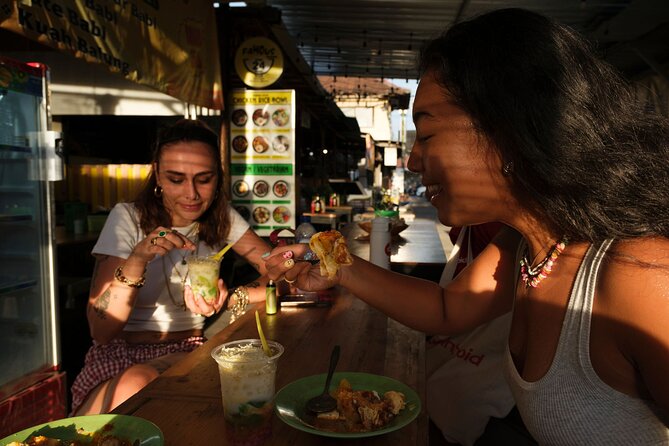
You also stop at Patung Catur Muka for about 15 minutes, with admission marked free. This is a photo-friendly stop, and it also gives you something useful: a visual anchor for colonial-era landmarks in the area.
The four-faced god statue is iconic in style, and the point of the stop is to connect the imagery to what shaped the city. You’re seeing layered influences, not just one neat “traditional postcard” story.
How to make this stop pay off: take a minute to listen rather than just shoot. A good guide will link the monument’s meaning to what you’ll see in the surrounding streets and market culture.
- Bali Full-Day Traditional Village Sightseeing Trip All Inclusive★ 5.0 · 3,069 reviews
- Experts Bali Driver : Best Bali Private Driver for Tour in Bali★ 5.0 · 1,339 reviews
- Bali Hai Sunset Dinner Cruise★ 5.0 · 1,173 reviews
- Mount Batur Sunrise Trekking★ 5.0 · 947 reviews
- Private Arrival Transfer: Bali Airport to Hotel★ 4.5 · 739 reviews
Jalan Gajah Mada: Roast Pork and Bakso in the Middle of the Action
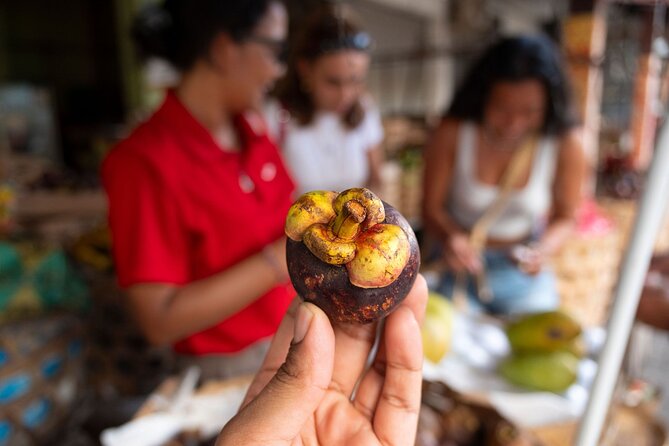
Now you get to the part most people booked for: eating. On Jalan Gajah Mada, you’ll stroll heritage streets lined with local shops and colonial-era buildings, then stop for two signature dishes: Babi Guling and Bakso.
This part is about tasting Bali’s flavors in a straightforward, street-level way. It’s also about learning the social role of the dishes.
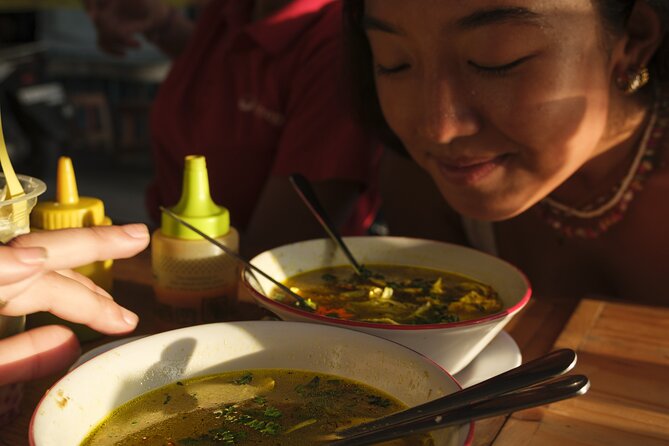
- Babi Guling: Bali’s famous roasted pork. The tour frames it as traditionally served during ceremonies, which gives you more appreciation for what you’re eating. You’re not just trying a popular dish, you’re tasting something with ritual roots.
- Bakso: a comforting Indonesian meatball soup. If you’ve ever craved something warm and filling after a long day, this is usually that moment. It’s a great balance to the richer flavors you may taste elsewhere on the route.
This stop lasts around 30 minutes, and admission for the stop is marked free. Your guide will guide the order of things so you don’t end up with a stomach full of one style while missing out on another.
Practical tip: if you’re unsure what portion to start with, follow the guide’s lead. Street portions can be bigger than you expect once sauces and accompaniments hit the table.
Badung Market Night Market Snacks: Jaje Bali and Market Energy
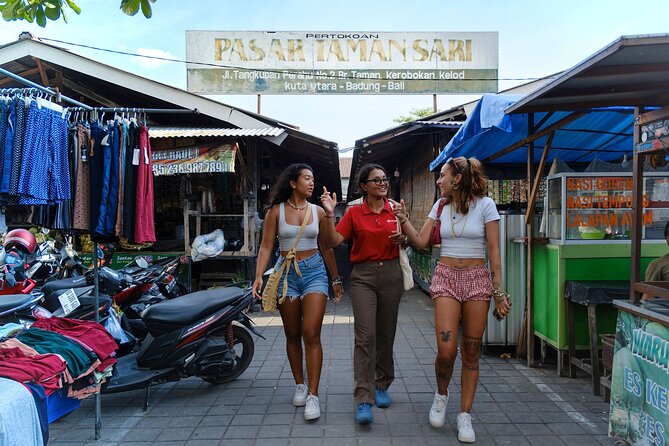
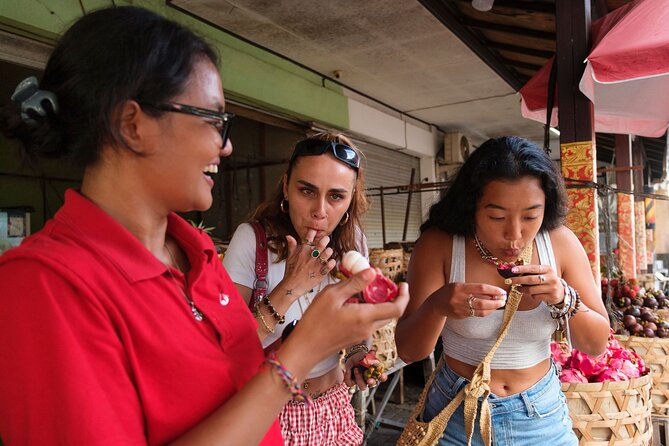
After the main savory dishes, you’ll head to Badung Market (Denpasar) for roughly 30 minutes. This is where the snack tasting really turns into fun, because you’ll sample traditional Jaje Bali snacks along with vibrant market vibes.
Jaje Bali refers to colorful Balinese sweets often made with rice flour and coconut. You may see multiple variations, and the guiding theme is texture and sweetness rather than “one perfect dessert.” You’re learning the building blocks of what Balinese people snack on, not just buying one Instagram-worthy plate.
This is also where your guide’s on-the-ground instincts become useful. A good street guide doesn’t just point and translate. They tell you what to look for, what’s fresh, and how locals typically eat it.
From past groups, guides often help people feel confident trying things they might skip at first, like choosing cakes and learning what to expect from soups and savory snacks. If you’re the type who worries you’ll order wrong, this is where you’ll feel better.
NADHI Heritage Coffee Wrap-Up: Hot or Iced Arabica
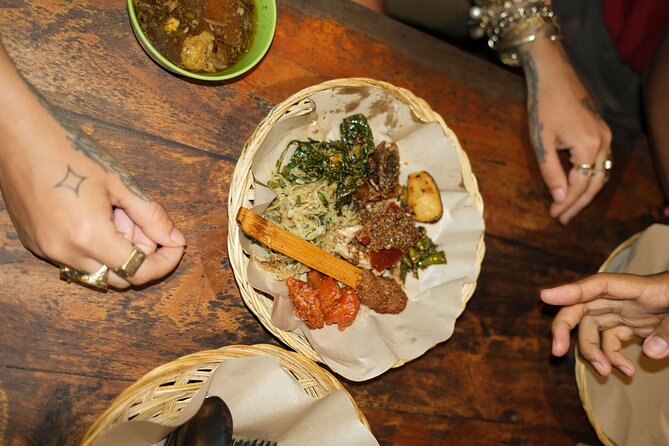
You finish at NADHI Heritage at Jalan Gajah Mada, with another 30 minutes built in. This is your coffee landing spot, with authentic Indonesian Arabica coffee served hot or iced, depending on what you want.
Coffee at the end is a smart choice. After pork, soup, and sweets, your palate needs a reset. Coffee also turns the tour from pure tasting into a calm close, where you can ask a few last questions about what you saw.
Tip: if you’re sensitive to caffeine, go for iced and take your time. If you want the afternoon afternoon buzz for evening, hot coffee might hit you harder once you’re already full.
Why This Tour Feels More Meaningful Than a Generic Street Food Run
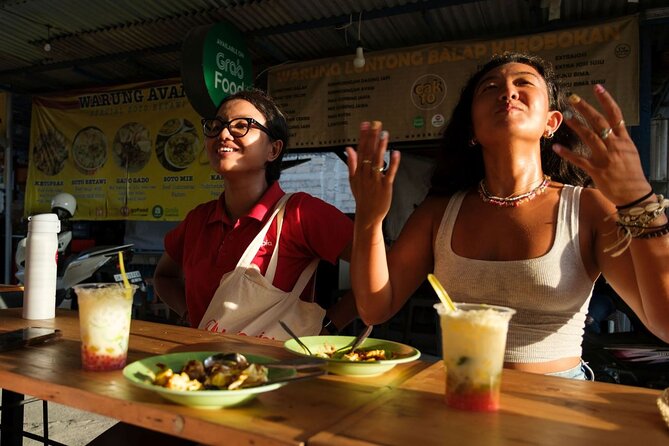
What sets this tour apart is the way it connects food to place. You’re not just eating your way through Denpasar. You’re seeing temple grounds, Puputan Square, and colonial-era landmarks first, then tasting dishes tied to local life.
Several details make it feel grounded:
- Local sourcing: the food prepared at the venues you visit is grown and bought locally.
- Local vendors: the vendors at the food market are locals selling food for a living.
- Community support: the experience supports around 4 to 6 local food stalls, which helps money flow to the people operating these stands daily.
That last part matters. A cheap street food night can still be fun, but it won’t always support the specific sellers who depend on foot traffic. Here, the tour structure is built to move you through the local economy in a way that’s likely to be steadier for vendors.
And because you’re guided, you’re less likely to miss the right choices. Street food is great, but it can also be intimidating if you don’t speak the language or don’t know what questions to ask.
Price and Value: What $45 Buys You in Denpasar
At $45 per person for about three hours, the value is in the mix. You’re paying for:
- Guided walking through Central Denpasar
- Visits to Pura Agung Jagatnatha and Puputan Square
- Colonial-era landmark stops, including Patung Catur Muka
- Food and drink included: Babi Guling, Bakso, traditional Jaje Bali snacks
- Coffee at NADHI Heritage with Indonesian Arabica (hot or iced)
Admission is marked free for key stops like the temple and the landmark areas. What is not included is additional food and drinks beyond the tastings, plus gratuities.
For a solo traveler, $45 can feel like “is this just paying for someone to walk with me?” The answer is usually yes or no depending on whether the guide helps you order and understand what you’re eating. Based on repeated feedback about guides like Putra, Lena, Irfan, and Srix, the tour leans into that education and makes the tastings make sense as you go.
What’s Included on Your Plate, Plus What to Expect
Here’s the core of what you’re set up to try:
- Babi Guling: the roasted pork highlight
- Bakso: meatball soup, warm comfort food
- Jaje Bali snacks: traditional sweets, often rice flour and coconut based
- Indonesian Arabica coffee: hot or iced
Keep your expectations realistic. This is a street food experience, so you should expect small-to-medium portions across multiple stops rather than one massive restaurant meal. That’s part of the fun because you get variety without needing to find a menu.
Also, the tour explicitly focuses on authentic local gastronomy. That’s wonderful if you’re flexible. It can be frustrating if you need predictable diet options.
Dietary Limits and Who This Tour Fits Best
If you eat in a very strict way, plan ahead. The tour says it does best but cannot cater to vegetarian, vegan diets or gluten allergies/intolerances. That’s not a small caveat. If your dietary needs are central to your trip, this might not be your best match.
Age matters too. It’s best suited for adults and older children, and kids under 6 aren’t permitted. The reason is simple: the food and environment are very local, and there won’t be kids’ meals.
If you’re an adventurous eater who wants authentic flavors, you’ll likely love it. If you prefer international chain food or need guaranteed substitutions, you may feel constrained.
Practical Tips So You Taste More and Stress Less
This tour is only three hours, so small choices matter.
- Arrive hungry, not starving. You’ll eat multiple tastings, and you’ll also walk. Feeling overly full can cut your enjoyment of sweets and coffee at the end.
- Ask about choices. Good guides will help you pick items confidently, including learning how to choose cakes like Jaje Bali and what to expect from soups and snacks.
- Go easy on heavy add-ons. Additional food and drinks are not included, so it’s smart to budget extra only if you find something you truly want again.
- Wear comfortable shoes. It’s a walking route through central Denpasar, and markets tend to involve uneven sidewalk sections and tight stalls.
If you’re the kind of person who likes knowing why you’re eating something, this tour is built for you. The cultural stops give the food extra meaning, especially around ceremonial dishes like Babi Guling.
Should You Book Taste & Explore Bali in Denpasar?
Book it if you want an evening that mixes food, history, and local sellers in one route. This isn’t a cooking class and it’s not a sit-down dinner. It’s a guided street-to-temple-to-coffee story, and that format is exactly why it’s worth doing in one organized chunk.
Skip it if you need vegetarian, vegan, or gluten-free guarantees, or if you’re traveling with young kids under 6. Also, if you already know your way around Denpasar markets and prefer total freedom, you might do fine on your own. But if you want the shortest path to the right snacks plus cultural context, this guided walk gives you structure without feeling stiff.
If your goal is to eat like locals in the city’s real lanes, this tour is a strong choice.
FAQ
How long is the Taste & Explore Bali tour?
It lasts about 3 hours.
What time does the tour start?
The start time is 4:00 pm.
Where does the tour begin and end?
It starts at Pura Agung Jagatnatha on Jl. Surapati No. 7, Denpasar Tim., and ends at NADHI Heritage on Jl. Gajah Mada No. 122, Pemecutan Bar., with the Nadhi Heritage location shown at Jl. Gajah Mada No. 122.
What food is included in the tour?
You’ll taste Babi Guling and Bakso, plus traditional Jaje Bali snacks from the Badung market area.
Is coffee included?
Yes. The tour includes a cup of authentic Indonesian Arabica coffee, hot or iced.
Are there any dietary restrictions the tour can accommodate?
The tour says it does not cater for vegetarian, vegan diets, or gluten allergies or intolerances.
Is the tour suitable for young children?
It’s best for adults and older children. Kids under 6 are not permitted.
How big is the group?
The tour has a maximum group size of 12 travelers.
What is the cancellation policy?
You can cancel for a full refund up to 24 hours before the experience’s start time. If you cancel less than 24 hours before, the amount paid is not refunded.
Airport Runs and Denpasar Pickups
Fresh Seminyak write-ups from the review desk




Denpasar and Bali Airport Transfers, compared.
 ★ 5.0Mount Batur Sunrise Trekking Private Tour with Breakfast and Hotel TransferFrom $49885 reviews
 ★ 4.5Private Arrival Transfer: Bali Airport to HotelFrom $6739 reviews
 ★ 5.0Bali Airport Private Arrival TransferFrom $6329 reviews
 ★ 5.0Bali Private arrival airport transferFrom $7276 reviews
 ★ 5.0Private Departure Transfer: Hotel to Bali AirportFrom $7188 reviews
 ★ 5.0Bali Airport Transfer Service in PrivateFrom $23139 reviews
 ★ 4.5Denpasar Arrival Transfer: Airport to HotelFrom $25105 reviews
 ★ 5.0Private Arrival Transfer: Bali Airport to Ubud AreaFrom $2273 reviews
Browse the lists this tour appears in