
REVIEW · SURABAYA AND MALANG DAY TRIPS
Majapahit Heritage Archaelogy tour via surabaya
Majapahit ruins have a way of grabbing you. This Surabaya day tour is built around the Hindu Majapahit kingdom in East Java, with photo-ready temples and focused time at the Trowulan museum. I like how the stops are varied, from tall red-brick gateways to smaller shrines, so the history feels grounded in real places.
One thing to plan for is language fit. The Trowulan museum is a big highlight, but some visitors find the presentation less helpful for English readers, so go in expecting visuals and artifacts more than text-based explanations.
In This Review
- Key Highlights Worth Your Time
- Majapahit From Surabaya, Built for Real Site Time
- Price and Time: Is $80 a Fair Deal?
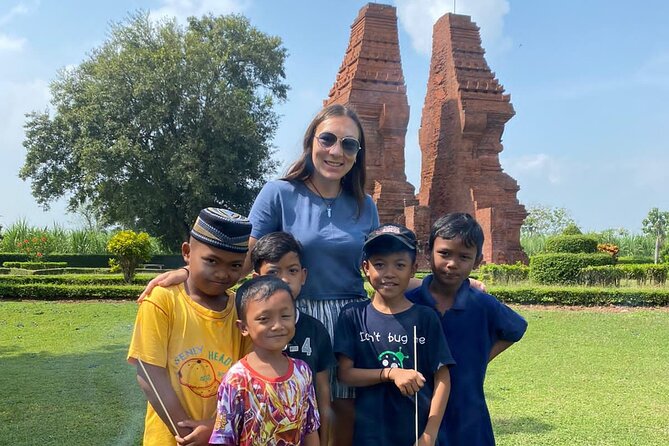
- Stop 1, Candi Wringinlawang: Majapahit’s Gateway Energy
- Stop 2, Trowulan Archaeological Site Museum: Artifacts and Everyday Majapahit
- Stop 3, Candi Bajangratu: A Small Temple With Big Character
- Stop 4, Tikus Temple: The Box Shape and the Holy Bath Idea
- Stop 5, Candi Brahu and Gentong: When Hindu and Buddhist Coexisted
- Lunch and Snacks: A Practical Win on a Long Archaeology Day
- Getting the Best Day From Your Guide and Driver
- What You Should Pack and Plan For
- Who This Tour Fits Best
- Should You Book This Majapahit Heritage Tour?
- FAQ
- How long is the Majapahit Heritage Archaeology tour from Surabaya?
- What’s included in the tour price?
- Are admission tickets included for each candi and the museum stop?
- Do you offer pickup in Surabaya?
- Is it a private tour or a shared group?
- Is there a vegetarian lunch option?
- Do I need a passport to join?
- Are mobile tickets provided?
- Is there a refund if I cancel?
- Is the tour suitable for children?
Key Highlights Worth Your Time
- Photo-ready candi gateways that are easy to frame and fun to walk around
- Admission tickets included at every main stop, so you avoid last-minute ticket hassles
- Trowulan archaeological site museum time for artifacts tied to Majapahit life
- Red-brick temple variety, from compact shrines to taller tower forms
- Lunch with traditional cuisine and snacks, which keeps the long day from getting heavy
- Guide-led pace and stories, especially if you get Pak Barli, who’s praised for clear, entertaining context
More East Java departures worth a look
Majapahit From Surabaya, Built for Real Site Time
This tour is all about Majapahit-era remains and the daily world behind them. You’re not just driving past temples. You’re getting into the compound areas, spending actual time looking, and then moving to the next candi so you can compare styles and functions.
The overall structure works well if you like history you can see. Each stop gives you a different “angle” on the Majapahit story: gate structures tied to the capital, a museum-style archive of objects and daily life, and multiple temples that show how religious practice shaped the built environment in East Java.
It also helps that it’s a private group tour. Your group stays together, and the day can feel less rushed than a packed bus format.
Price and Time: Is $80 a Fair Deal?
At $80 per person, this is positioned as a practical, day-long history outing from Surabaya. For the price, you’re getting private vehicle transport, lunch, snacks, and admission tickets across the main sites.
Why that matters: in Java, getting from one archaeological area to another can eat time and energy. Here, the transport is handled, and the tickets are included at each stop, so you’re not spending half your day figuring out ticket lines or entrance rules.
The duration is listed as 6 to 10 hours, which is a wide range. That means your comfort depends on your schedule and the time your guide spends at each location. If you prefer a brisk pace, you might ask for a tighter timing plan. If you like photos and slower walking, that’s usually where a good guide can help you pace it.
If you’re sensitive to long days, keep this in mind: you’re moving through multiple temple sites plus a museum stop. That’s usually best done with water, snacks (which are included), and a relaxed attitude about travel time.
Stop 1, Candi Wringinlawang: Majapahit’s Gateway Energy
You start at Candi Wringinlawang, described as one of the gateways to Majapahit’s old capital. It’s a tall structure, and that alone makes it a great first stop because your eyes can catch the shape right away.
This is also a solid photography moment. You’ll have the “big architecture” feel early, which helps you orient your brain for what’s coming later: the temples are not all huge and dramatic, but the red-brick style and the design language make more sense once you’ve seen a gateway form.
What to watch for here is simple: take a minute to look at the way the structure frames a path. Gateways were functional. They guided movement and signaled importance.
The timing is listed as about 1 hour, and with a stop this visually strong, that hour tends to feel like the right length. You get enough time to walk around, take photos, and regroup before the day shifts into the museum archive side.
Stop 2, Trowulan Archaeological Site Museum: Artifacts and Everyday Majapahit
Next comes Trowulan Archaeological Site, which functions as a museum holding Majapahit relics and historical objects tied to how people lived. This stop is listed as about 3 hours, and that time is the difference between just seeing a few displays and actually forming a sense of the broader culture.
I like this part because it changes the pace. Temples are place-based. Museums are object-based. Together, they make the story feel more complete.
A key consideration: if you rely heavily on English interpretive text, you might find this museum less satisfying than you hope. One person flagged that the museum can feel underwhelming for English readers. That doesn’t mean it’s not worth visiting. It just means you should treat it like an artifact-focused stop: pay attention to materials, shapes, and how everyday items show up beside religious or state-related objects.
Practical tip: this is the best time in the day to slow down and pick out a few objects that catch your eye, then let your guide’s explanations connect them to the temples you’ll see next.
- Active Volcanoes Bromo and Ijen – Start Surabaya 3 Days and 2 Nights★ 5.0 · 292 reviews
- Mount Bromo Sunrise 1 Day Private Tour★ 5.0 · 210 reviews
- 4D3N Bromo Ijen Tumpak Sewu Waterfall Tour from Surabaya/Malang★ 5.0 · 202 reviews
- Mount Bromo Private Sunrise Day Tour – From Surabaya or Malang★ 4.5 · 122 reviews
- 12 Hours Bromo Midnight Sunrise From Surabaya & Malang★ 5.0 · 100 reviews
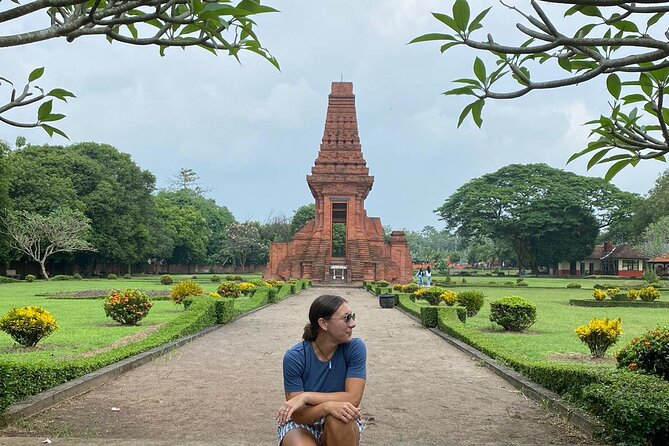
Stop 3, Candi Bajangratu: A Small Temple With Big Character
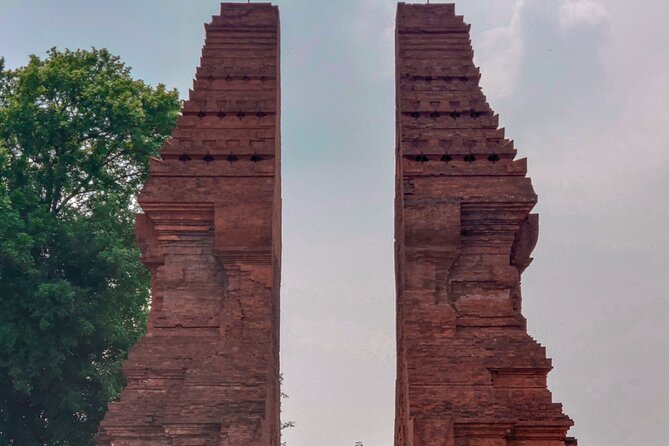
Candi Bajangratu is a smaller temple stop, listed at about 1 hour. It’s described as unique and beautiful, made of red bricks, and distinct in how it looks compared to more generic temple forms.
What I like about a stop like this is contrast. After a gateway and then a museum, a compact candi gives you a chance to focus on form. You can often see brickwork patterns, structural proportions, and detailing more clearly than at a massive site where you’re always zooming out for the whole scene.
Because it’s only an hour, you’ll want to use that time wisely: look for the features that repeat across East Javanese temples. Even if you cannot fully “read” the symbolism on your own, patterns in construction and layout can still teach you a lot.
If your goal is photos, this is a friendly stop. Smaller temples usually cooperate better with angles, steps, and close-ups without you needing to dodge crowds or rush your composition.
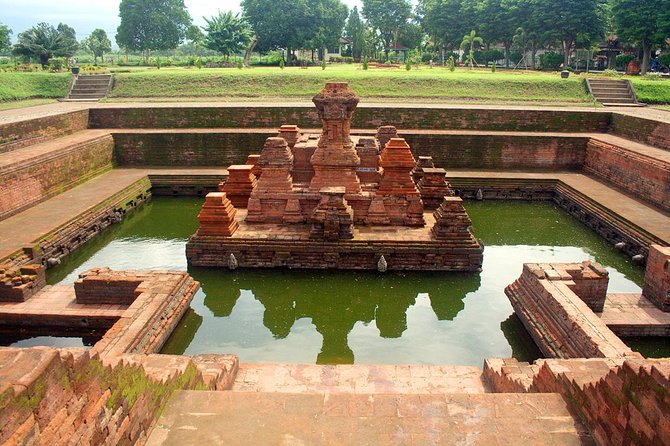
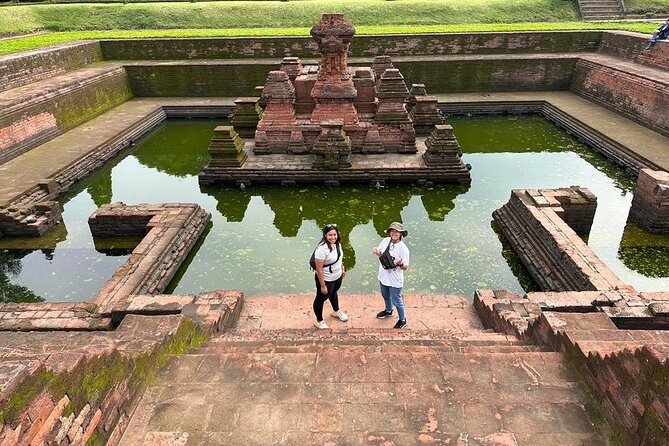
Stop 4, Tikus Temple: The Box Shape and the Holy Bath Idea
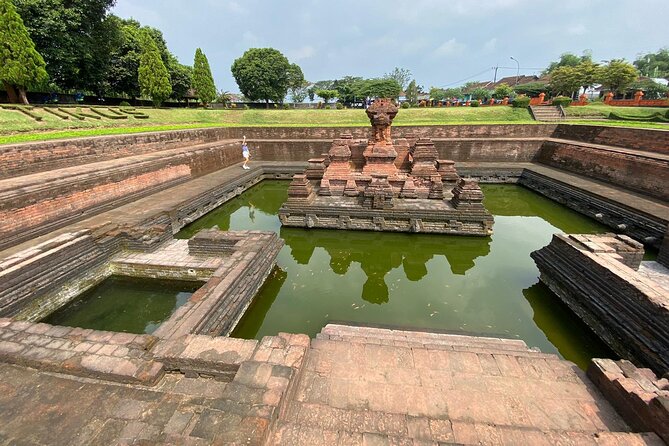
Then you head to Tikus Temple, described as a worship place shaped like a box, with a pool of water in the middle. It’s believed to be a holy Hindu bath for worship.
This is the stop where you’ll likely notice how function and symbolism overlap. A pool in a temple setting is not just decoration. It signals ritual use and suggests how sacred practices were built into the architecture.
The time is listed as about 1 hour, so you may not get a huge amount of back-and-forth time here, but it’s still enough to understand the main concept: the shape is intentional, and the water element turns the structure into more than a look-only monument.
If you’re the type who likes questions, ask your guide what they think visitors miss when they only glance at the structure without thinking about ritual function. You’ll usually get a better explanation than you expect.
Stop 5, Candi Brahu and Gentong: When Hindu and Buddhist Coexisted
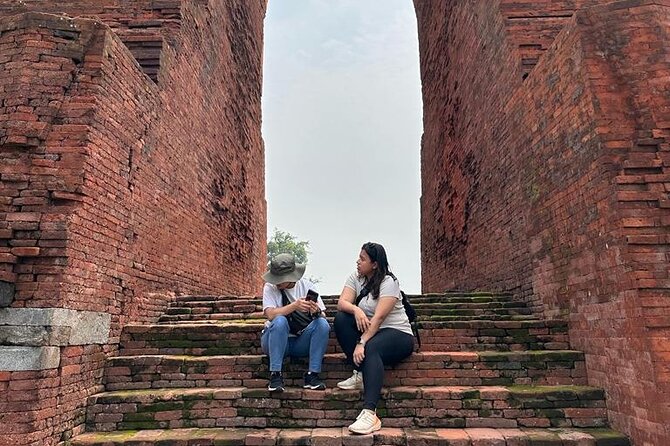
The day’s final temple pair is Candi Brahu and Gentong. The description calls them Buddhist temples, round and tower upward, also built in red bricks. They symbolize tolerance between Hindus and Buddhists in the past.
This is a great ending because it frames the Majapahit world beyond one strict religious viewpoint. Even if you’re not a religious-history specialist, the takeaway is clear: architecture carried messages about social and spiritual life, not just worship.
You’ll spend about 1 hour here, which usually means you’ll focus on the form, the shape and layout, and the guide’s explanation of why the combination of traditions mattered.
If you like cultural context, ask how the guide connects that tolerance message to what you saw earlier, like the gateway form and the ritual-bath idea. When you connect stops, the day stops feeling like separate photos and starts feeling like a single story.
Lunch and Snacks: A Practical Win on a Long Archaeology Day
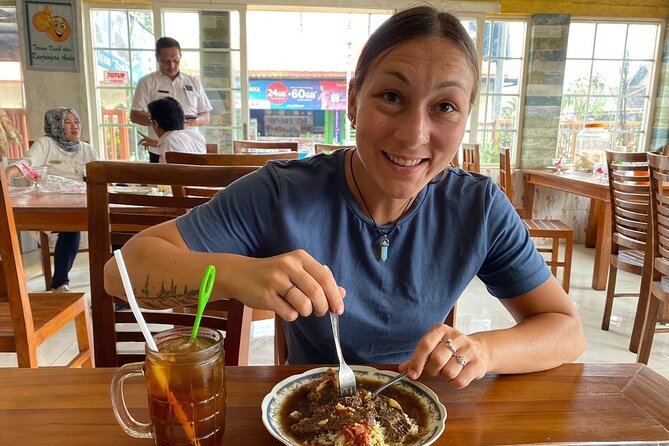
Lunch is included, along with snacks. That’s not a minor detail. A 6 to 10 hour day in Surabaya and the surrounding sites can wear you down if you have to buy everything yourself.
The lunch is described as traditional cuisine, and that’s one of the best ways to keep the experience authentic without turning it into a separate “food tour” you did not plan.
What to do: treat lunch as a reset point. If you’re going to buy water later, do it earlier rather than waiting until you feel tired. Snacks included help, but they’re not a substitute for staying comfortable during travel time.
Also, there’s a vegetarian option available if you request it at booking. If that matters for you, do it early so the kitchen has a clear heads-up.
Getting the Best Day From Your Guide and Driver
Many people rate this tour highly for the guide experience, and the name that pops up in positive feedback is Pak Barli (also seen as Barli). The praise is consistent: clear explanations about the relics, plus an entertaining style that makes temple details easier to understand.
Here’s how you can benefit from that, even if your guide’s style differs:
- Ask one question at each stop, not five at the end of the day
- Use your photos as prompts, point at details, and ask what they are
- Take notes on the one or two concepts the guide repeats, those tend to be the story pillars
Transport is handled by private vehicle, and pickup is offered. That matters because archaeological sites often do not feel “city easy.” You want a driver who knows how to position the day so you spend time at the sites instead of in traffic searching for entrances.
There is one caution from a low-rating experience about timing and confirmation. The lesson is simple, double-check your pickup time and message confirmations before the day begins. If you do that, you reduce the chance of stress if anything gets miscommunicated.
What You Should Pack and Plan For
Based on the structure of the day, you should plan for sun, walking, and multiple site entries. Even if your tour includes admission tickets and snacks, you still need personal comfort items.
I recommend you bring:
- Comfortable walking shoes for uneven outdoor temple grounds
- A hat or sunscreen for daytime stops
- A charged phone for photos and the mobile ticket
- Any dietary notes you made during booking, especially if you requested vegetarian
Also, the tour requires a current valid passport on the day of travel, and it asks for passport name, number, expiry, and country at booking. If you’re traveling on short notice or your documents are not easy to access, handle this early.
Who This Tour Fits Best
This Majapahit heritage tour is a strong match if you:
- Love archaeology and temple architecture you can see up close
- Want a structured day without juggling tickets and transport
- Prefer a private group approach over a large bus day
- Are okay with museum stops that may rely more on objects than English text
It’s also good for first-timers to Majapahit history. You start with a gateway, then move into artifact context, then return to temples where those ideas become visible again.
If you want a heavy lecture style tour with lots of English interpretive text throughout, you might feel the museum presentation is not your ideal format. But you can still get plenty from guides and from looking closely at what’s on display.
Families can join, with a note that children must be accompanied by an adult.
Should You Book This Majapahit Heritage Tour?
If you want a practical, temple-and-museum day that helps you connect Majapahit political life with religious architecture, this is worth considering. The value is strong on paper because admission tickets, lunch, snacks, and private transport are included in the $80 price.
I’d book it if:
- You like the idea of multiple candi stops in one day
- You care about seeing red-brick forms and comparing temple styles
- You want a guide you can ask questions to, especially if you get Pak Barli
I would pause and ask questions first if:
- You rely heavily on English text explanations inside the museum
- You are very timing sensitive, since this day can run up to 10 hours depending on pace and logistics
Bottom line: book this when you want an efficient Majapahit-focused day from Surabaya, with enough built-in support to keep it smooth.
FAQ
How long is the Majapahit Heritage Archaeology tour from Surabaya?
The tour lasts about 6 to 10 hours.
What’s included in the tour price?
The package includes transport by private vehicle, lunch, snacks, all taxes and fees, and admission ticket entry for the listed stops.
Are admission tickets included for each candi and the museum stop?
Yes. Admission tickets are included for Candi Wringinlawang, Trowulan Archaeological Site, Candi Bajangratu, Tikus Temple, and Candi Brahu dan Gentong.
Do you offer pickup in Surabaya?
Pickup is offered, and the tour starts and ends in Surabaya.
Is it a private tour or a shared group?
It’s described as a private tour/activity, with only your group participating.
Is there a vegetarian lunch option?
Yes. A vegetarian option is available if you advise the provider at booking.
Do I need a passport to join?
Yes. A current valid passport is required on the day of travel, and you must provide passport details (name, number, expiry, country) at booking.
Are mobile tickets provided?
Mobile ticket is listed as a feature.
Is there a refund if I cancel?
Free cancellation is available. You can cancel up to 24 hours in advance for a full refund.
Is the tour suitable for children?
Children can join, but they must be accompanied by an adult.
Leaving From Surabaya or Malang
Fresh Surabaya write-ups from the review desk
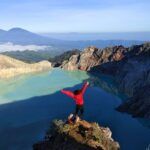


Surabaya and Malang Day Trips, compared.
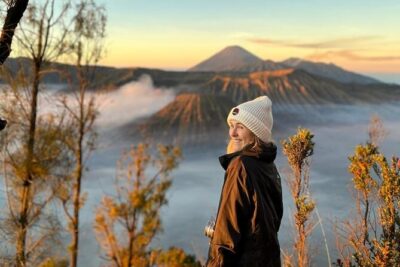 ★ 5.0Mount Bromo Sunrise Tour from Surabaya or Malang – 1 DayFrom $1531,759 reviews
 ★ 5.01 Day Amazing Bromo Sunrise tour from Malang Surabaya 7 spotsFrom $40879 reviews
 ★ 5.03Days – Tumpaksewu Bromo Ijen Adventure via Malang or SurabayaFrom $282405 reviews
 ★ 5.0From Surabaya / Malang : Mt Bromo Sunrise – Ijen Blue Fire 3D2NFrom $387351 reviews
 ★ 5.0Surabaya – Mount Bromo – Tumpak Sewu Waterfall – Ijen Bluefire Tour – Bali 4d3nFrom $500350 reviews
 ★ 5.0From Surabaya / Malang : Mt Bromo Sunrise – Ijen Blue Fire 2D1NFrom $333330 reviews
 ★ 5.0Active Volcanoes Bromo and Ijen – Start Surabaya 3 Days and 2 NightsFrom $325292 reviews
 ★ 5.04D3N Bromo Ijen Tumpak Sewu Waterfall Tour from Surabaya/MalangFrom $527202 reviews
Browse the lists this tour appears in