
REVIEW · BALI SURF LESSONS AND BOARD HIRE
The best surf lessons in Kuta
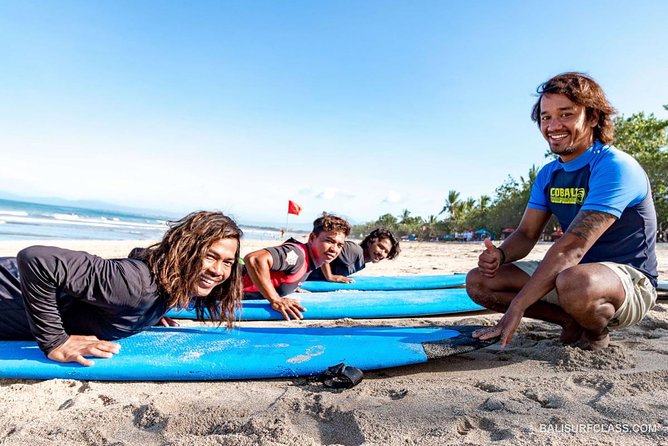
Your first wave starts with simple coaching. This private beginner lesson on Kuta Beach takes you from quick surf safety to two real sessions in the water, with an instructor watching what you do the whole time.
I love the clear, paced structure: theory first, then dry-land practice, then two 45-minute rounds with a short break to regroup. I also love the value details, surfboard, rash vest, and bottled water are included, so you show up and focus on learning. One consideration is that conditions can shift with weather and tide, so your lesson quality depends on what the ocean is doing that day.
In This Review
- Key things that make this surf lesson worth your time
- Kuta Beach beginner surfing: why this spot works
- The two-hour lesson flow: what you actually do
- Safety theory first: how they help you feel confident
- Dry-land practice and the first water session
- The break matters: why the second round can be better
- Gear, comfort, and what’s included for $25
- Meeting point on Kuta Beach: where to show up
- Weather and tide reality: what to expect when conditions change
- Instructors and teaching style: what the reviews consistently reward
- Who should book this lesson in Kuta
- Price and value: is $25 a fair deal
- Should you book this Kuta beginner surf lesson?
- FAQ
- Is this surf lesson only for complete beginners?
- What is included in the price?
- Is the lesson private?
- How long is the lesson, and what happens during it?
- Where do we meet on Kuta Beach?
- Are there showers and toilets nearby?
- Do I need any particular fitness level?
- What if weather or beach conditions are poor?
- Can I cancel for a full refund?
Key things that make this surf lesson worth your time

- Private, beginner-focused coaching where the instructor can correct your form as you try
- Two water rounds (about 45 minutes each) so you get a real chance to improve during the same session
- Safety and wave choice taught first, including practical guidance to keep you confident in the lineup
- Kuta Beach setup for first timers, often described as beginner-friendly with fewer reef worries where you start
- Gear plus comfort basics included, surfboard, rash vest, and a full 500ml bottle of water
- Coaches with personality, with many lessons featuring friendly, encouraging vibes (and even some fun moments like singing a Justin Bieber song)
More beginner beaches and board pickups

Kuta Beach beginner surfing: why this spot works
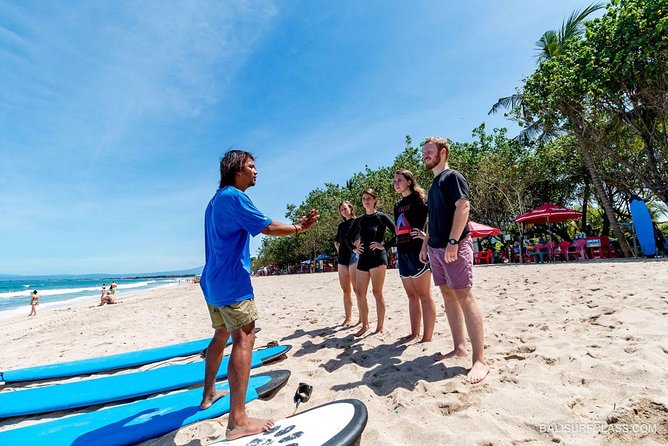
Kuta has a reputation for being a good place to learn, and for you that matters because first attempts are all about confidence. The better beginner beaches tend to give you manageable conditions and less “instant panic” energy. One key detail I picked up from the vibe here is that the area is often described as no-reef near where you start, which helps you focus on popping up and catching a wave instead of scanning hazards every second.
Another reason Kuta makes sense for beginners is practical rhythm. This lesson is set up for repeat attempts, not one magical wave and done. You’ll get coached, corrected, and sent back out so you can try the same skill again with better timing and a calmer head.
If you’re worried you’ll look silly, good. That means you’re learning. The instructors are used to that exact moment when your arms are doing their own workout and your board has other plans. Your job is to listen, try, and keep moving.
The two-hour lesson flow: what you actually do
This is an approx 2-hour private session, and the pacing is built around how beginners learn fastest. The schedule is simple enough to follow even when you’re a little nervous.
First, you get about 20 minutes of surf safety and theory. This is where you learn how to think about the ocean, not just how to stand on a board. You’ll cover the basics that keep you safer, plus the kind of wave and lineup choices that prevent you from getting worked over.
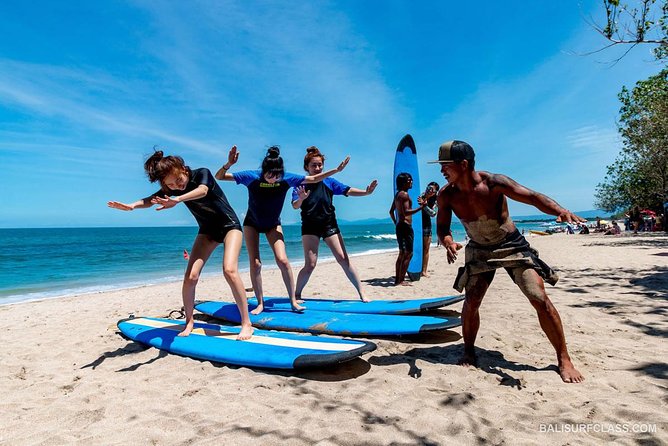
Next comes a short beach practical section. This is where you get some quick dry-land practice, so when you hit the water you aren’t starting from zero. It’s also mentally useful, because you can shake out confusion before you’re ankle deep and the waves start talking back.
Then the ocean work begins with round one. You’ll spend about 45 minutes paddling, catching waves, and attempting to stand. This is the part where you feel the real surfing learning curve, your timing, balance, and pop-up all get tested at once.
After that, you head back to the beach for a quick break. You drink water, rest a little, and reset. It’s not a long lunch break. It’s a focused recovery moment so you can go again with better energy.
Finally, you return for round two, another about 45 minutes in the water. By this point you’re not just collecting falls, you’re starting to connect instruction to what you feel in your body. When you’re done, you pack up and return together to the surf school meeting point.
Safety theory first: how they help you feel confident
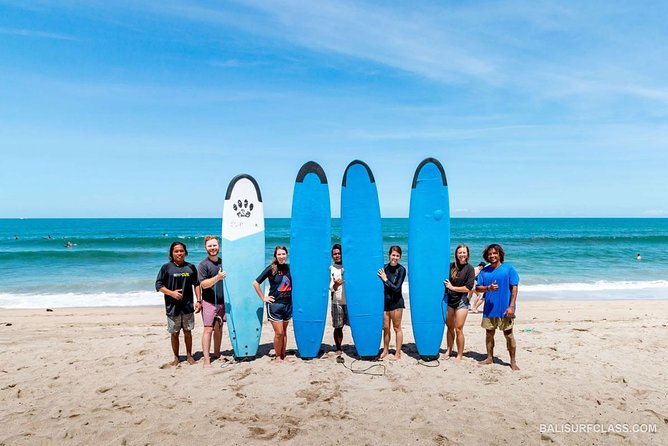
I like that this lesson doesn’t treat safety like a side lecture. It’s placed at the start because that’s when you need it most. When you understand what to watch for and how your actions connect to wave conditions, you get calmer faster.
You also get taught wave choice. One review noted that even during rougher conditions at high tide, instructors helped students pick the right waves to catch and matched guidance to skill level. That is exactly what you want as a beginner, someone steering you away from waves that will frustrate you, and toward waves that teach you.
There’s also a simple, practical teaching style showing up in the reviews. Instructors like Harman and Jerry are described as patient, giving clear instructions, and keeping a close eye on whether you’re okay. Even if you’re starting from scratch, that attention matters. It turns the ocean from an intimidating mystery into a set of problems you can solve one attempt at a time.
Dry-land practice and the first water session
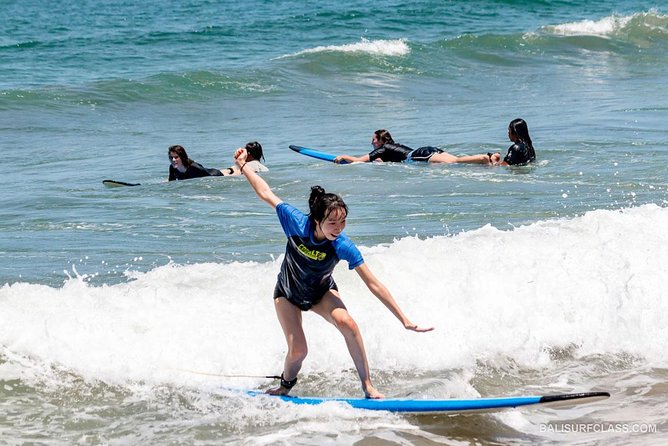
Dry-land practice might sound like filler, but it’s not. For beginners, most frustration comes from trying to remember everything while the board is moving and your timing is off. A short beach section gives you a chance to get your fundamentals wired before the ocean adds chaos.
Then round one hits, and it’s usually about building a rhythm. You’ll be paddling, positioning, watching sets, and then reacting when a wave offers a path. Your first goal is not to surf like a movie character. Your goal is to feel your board under you, learn the basics of getting your feet set, and experience how waves lift and drop you.
Most people improve quickly inside a single session when the coaching is direct. Several reviews mention fast progress for first timers, including couples and even older beginners who had never surfed before. That tells me the teaching method is designed for real bodies, real balance issues, and real learning speed.
- Nusa Penida day trip: boat, 4 snorkeling, Manta rays & Land tour★ 5.0 · 2,033 reviews
- Bali Nusa Penida West Private All-Inclusive Tour★ 5.0 · 1,277 reviews
- Mount Batur Sunrise Trekking Private Tour with Breakfast and Hotel Transfer★ 5.0 · 885 reviews
- Individual Bali Day Trip with Private Driver and Free WiFi★ 5.0 · 755 reviews
- Waterbom Bali Tickets – Single Day Pass★ 4.5 · 620 reviews
The break matters: why the second round can be better
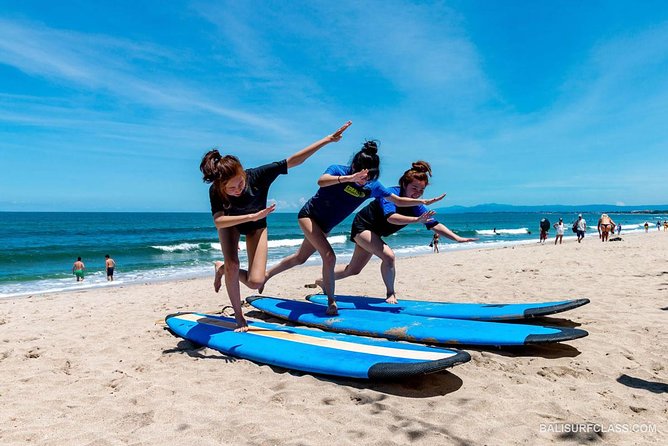
That short break between the two water sessions is more important than it looks. Surfing is tiring in ways you don’t expect. Your arms burn from paddling, your legs get tense from balancing, and your brain gets overloaded from constant new information.
When you return after the break, you’re able to try again with better focus. One review specifically called out that the lesson included a break in between, and the structure helped them enjoy two full rounds instead of burning out halfway through.
This is also where you can drink water and reset your emotions. If round one was messy, the second round gives you a chance to turn the learning into something you can feel, not just something you heard once.
Gear, comfort, and what’s included for $25
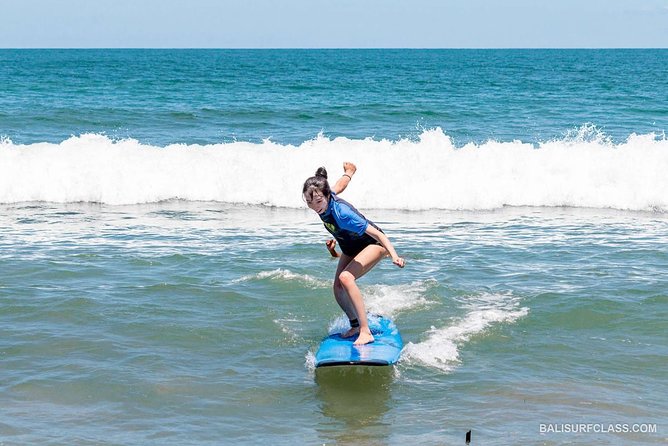
Let’s talk value, because this lesson is priced at about $25. For that money, you’re getting more than just “time in the ocean.”
Included:
- Surfboard
- Rash vest
- Bottled water, one 500ml bottle per person
Those items remove hassle. You do not need to rent gear separately, and you do not need to hunt down a rash vest that fits and protects you. The bottled water detail also matters in Bali sun, you can’t really learn if you’re dehydrated and grumpy.
A quick note on showers and toilets: public showers and toilets exist on the beach, but they cost extra. So plan to use what you can access, and don’t assume everything is free.
Also, this is a private tour, so your group only participates. That is a quiet but real advantage. You’re not competing for a coach’s attention with a large class, and you’re less likely to wait while someone else gets adjusted.
Meeting point on Kuta Beach: where to show up
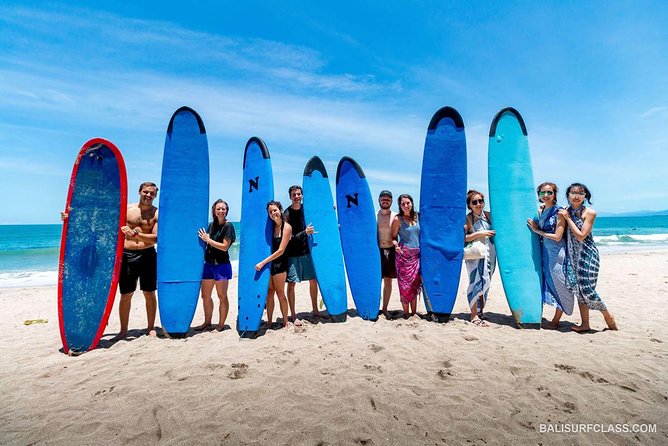
You meet at Bali Surf Class on the beach in front of ROSSO VIVO Italian Restaurant, on Jl. Pantai Kuta in Kuta.
I like this kind of meeting point because it anchors you to something visible. When you’re arriving at Kuta Beach, it can be easy to feel turned around. A restaurant landmark helps you find the right stretch of sand fast.
They also use a mobile ticket. That means less paper chaos and less risk of losing something before you start paddling.
The activity ends back at the meeting point, which is convenient. You don’t have to figure out your next move while your legs are still deciding whether they want to work today.
Weather and tide reality: what to expect when conditions change
This lesson is weather dependent, and the beach conditions can change during the year. That’s not the provider being vague. It’s the ocean being the ocean.
What I think is important for you is how the instruction adapts. One review mentions being there during high tide, with rougher conditions, but feeling okay because the instructors stayed with them and helped them choose the right waves.
So treat this as an experience built around flexibility. If the tide is wrong or weather turns, you can’t expect perfect conditions all the time. But you can expect safety decisions and coaching adjustments so the lesson still makes sense for beginners.
If weather cancels the session, you’ll be offered an alternative date or a full refund. That’s the kind of policy you want when you’re paying for water time, not a dry-land slideshow.
Instructors and teaching style: what the reviews consistently reward
One theme shows up again and again in the feedback: instructors are patient, encouraging, and good at explaining what to do next.
Named examples you might hear referenced in past lessons include Harman, Jerry, Eric, Robbie, and the wider team. Harman stands out in multiple accounts for clear instructions and making sure students are okay. Jerry is described as flexible and patient, even when a student spent more time falling than standing.
The teaching style also seems to include technique coaching at the right moments. Some reviews mention students progressing to riding waves and standing by the end of the lesson, which suggests the instructors aren’t just keeping you busy. They’re guiding you toward actual changes in your paddling, takeoff timing, and body position.
And then there’s the human side. The instructors aren’t just instructors. People mention friendly conversations, a fun vibe, and even playful moments like singing Justin Bieber’s Baby. That matters because surfing is emotional. When you’re worried you’re doing it wrong, it helps to have someone make you laugh while they fix your stance.
Who should book this lesson in Kuta
This is best for you if:
- You are a complete beginner and want structured coaching.
- You want a private setup where your instructor can focus on your progress.
- You’d like a fun workout and not a slow, sit-down experience.
- You want to learn in a beginner-friendly beach area rather than chasing unknown surf spots.
It can also work for older beginners or anyone with moderate physical fitness. One review specifically mentioned instructors getting two people in their 50s up on boards, which tells me the lesson is not strictly for elite athletes.
If you already surf, this may still be enjoyable, but it’s designed for foundational learning. The value is in your first real attempts, plus building habits that keep you safer.
Price and value: is $25 a fair deal
At $25 per person for a private 2-hour lesson, the value is in what’s included and how the time is used.
You’re not just paying for access to boards. You’re paying for:
- Safety theory and wave guidance
- Beach practical coaching
- Two separate sessions in the water
- Equipment (board and rash vest) plus water
Many beginner activities charge extra for gear, and you still end up paying for basic necessities. Here, the essentials are bundled. That makes it easier to budget a Bali day without hidden add-ons.
The only cost heads-up is showers and toilets on the beach, which can cost extra. Plan around that, and the $25 starts to look even better.
Should you book this Kuta beginner surf lesson?
If you want a straightforward way to learn to surf in Bali, I think this is a strong choice. The big selling points are the private attention, the two-round structure that helps you improve during the same session, and the inclusion of board, rash vest, and bottled water.
Book it if you like a clear plan, you’re okay with learning through falls, and you want instructors who stay close and encourage you. Skip it only if your schedule is tight and you cannot handle the possibility of weather or tide changes, because surfing quality depends on the ocean that day.
If you do book, show up on time at the ROSSO VIVO meeting point, bring a good attitude, and listen in the safety briefing. Your first wave is mostly about timing and nerves, and those coaches are there to help you get both under control.
FAQ
Is this surf lesson only for complete beginners?
Yes, the lesson is ideal for complete beginners. It is structured around surf safety, basic practice on the beach, and then time in the water for your first attempts.
What is included in the price?
The price includes a surfboard, a rash vest, and bottled water (one 500ml bottle per person).
Is the lesson private?
Yes. It is listed as a private tour or activity, so only your group will participate.
How long is the lesson, and what happens during it?
The experience is about 2 hours. You get surf safety and theory for about the first 20 minutes, then beach practice, then about 45 minutes in the water, a short break, and another about 45 minutes in the water.
Where do we meet on Kuta Beach?
You meet at Bali Surf Class on the beach in front of ROSSO VIVO Italian Restaurant on Jl. Pantai Kuta, Kuta, Bali.
Are there showers and toilets nearby?
Public showers and toilets are available on the beach, but they are listed as an additional cost.
Do I need any particular fitness level?
The information says travelers should have a moderate physical fitness level.
What if weather or beach conditions are poor?
The experience requires good weather. If it is canceled due to poor weather, you will be offered a different date or a full refund. Beach conditions can also change during the year.
Can I cancel for a full refund?
You can cancel up to 24 hours in advance of the experience start time for a full refund. If you cancel less than 24 hours before the start time, the amount paid is not refunded.
Learning to Surf in Bali

Fresh Kuta write-ups from the review desk




Bali Surf Lessons and Board Hire, compared.
 ★ 5.0HOT PROMO. Beginner Surf Lessons in BaliFrom $13193 reviews
 ★ 4.5Surf Lesson with a Personal Instructor at Kuta BeachFrom $50192 reviews
 ★ 5.0Canggu: Surfing lesson with ISA certified instructorFrom $25102 reviews
 ★ 5.0The funniest private 2 hour surf lesson, CangguFrom $3370 reviews
 ★ 5.0Surfnesia Surf Lesson and GuidingFrom $3346 reviews
 ★ 5.0Private Beginner 1 on 1 Surf Lesson at Kuta BeachFrom $4639 reviews
 ★ 5.0Sunny Surf School Gili TrawanganFrom $5535 reviews
 ★ 4.0Private Surf Lessons in Padang Padang – Uluwatu – BaliFrom $14930 reviews
Browse the lists this tour appears in