
REVIEW · JAKARTA CITY TOURS
Afternoon Guided Chinatown Tour in Jakarta
Lanterns, temples, and traffic, all in one walk. This afternoon-to-night route threads through Glodok Chinatown, colonial-era Old Town streets, and big Jakarta sights so you get the story behind the sights, not just photos. You also finish with a night view at MONAS, plus time in areas where you can eat dinner and watch the city shift gears.
I especially love how the guide connects the dots between Chinese presence in Jakarta and the Dutch colonial period. It makes stops like a 1650 pagoda feel like more than a pretty building, and it turns “why is this here” into an actual answer. I also like the mix of scenes, from temple calm to market energy to modern business-district lights at PIK Avenue.
One thing to consider is that Jakarta traffic is real. Even with an efficient drive plan and air-conditioned comfort, your timing depends on the flow of the city, so build in patience.
In This Review
- Why this Chinatown tour is worth your time
- Glodok Chinatown and the old pagoda built in 1650
- Jakarta Old Town: Chinese-European style buildings and the city hall garden
- Muara Angke fish market: floating dining by the water
- PIK Avenue lanterns: Chinatown in Jakarta’s business district
- MONAS at night: finishing with a 132-meter gold moment
- Price and value: what $53 buys you in real terms
- Guides and pacing: how it feels hour by hour
- Who should book this afternoon Chinatown route
- Practical tips so your day runs smoother
- Should you book this tour or go on your own?
- FAQ
- How long is the Afternoon Guided Chinatown Tour in Jakarta?
- What does the tour cost?
- Is pickup and drop-off included?
- Is this tour private or shared?
- What is included in the price?
- Are admission tickets included?
- Is there time to eat dinner during the tour?
- Do I get a physical ticket?
- What is the cancellation policy?
- How far in advance is this typically booked?
Why this Chinatown tour is worth your time
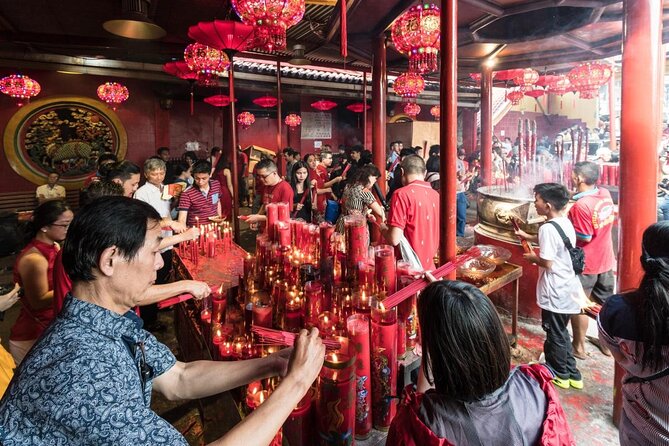
- Glodok’s old pagoda: a temple visit tied to the area’s long timeline, including a pagoda built in 1650
- Dutch-colonial Old Town context: Chinese-European style buildings and a quiet garden space in the middle of the old city
- Muara Angke fish market area: a chance to eat and watch how Jakarta food culture works by the water
- PIK Avenue at the lights hour: lantern atmosphere in a Chinese-dominant business district, with photo-friendly stops
- Night photo stop at MONAS: a 132-meter monument with gold lighting in the evening
- Comfort and logistics handled: air-conditioned vehicle, bottled water, licensed guide, and pickup and drop off
Other days out in the capital
Glodok Chinatown and the old pagoda built in 1650
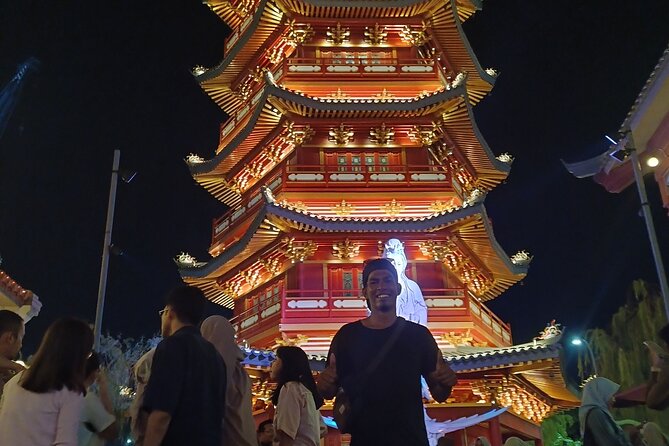
Glodok is Jakarta’s best-known Chinatown area, and I like the way this tour starts there. You’re not just looking at storefronts, you’re guided into the religious heart of the neighborhood, including a temple with an old pagoda built in 1650. That date matters because it gives you a sense of how long Chinese community life has been woven into this part of the city.
This early stop also works well because the energy of Chinatown is easier to read in the afternoon. You can see the mix of old-world faith and everyday neighborhood activity without rushing through everything. And since the admission ticket is listed as free, you can spend your time on the people and the details, not on extra costs.
If you enjoy architecture and street-level atmosphere, this is the moment to slow down. The guide’s job here is to help you notice what locals take for granted, like the way temple space shapes the feel of the area around it. It’s also where you’ll often get the first clear sense of why the Chinese community in Indonesia has complex stories tied to colonial rule and later economic changes.
What to watch for: wear shoes you’re comfortable in for walking in older streets. Also, if you’re sensitive to crowds, you might find the Chinatown lanes busy at peak times, even during an organized stop.
Jakarta Old Town: Chinese-European style buildings and the city hall garden
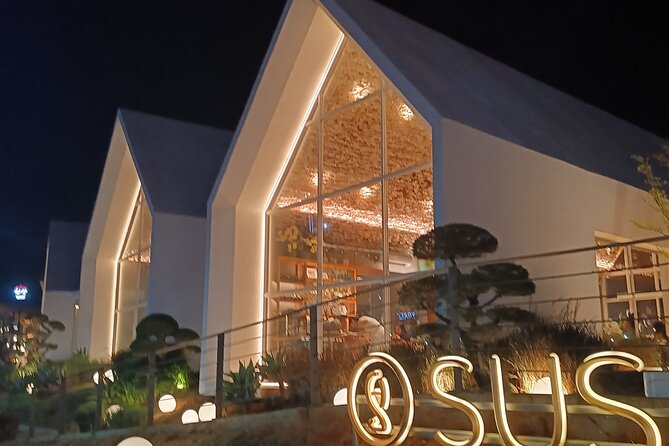
After Glodok, the tour shifts to Jakarta Old Town, where the vibe feels more formal and staged, even though it’s still very much a real place. You see older buildings designed in a Chinese-European style, with structures that have been standing since the colonial era. That mix is the whole point here, because it explains why parts of Jakarta look European in form but Chinese in detail.
One of the best moments in this stop is the garden space in the City Hall area, listed at 139 sqm. It’s a useful reset from the street, and it gives you a breather while still staying in the old-city setting. Even if you’re not a garden person, I think you’ll appreciate the contrast, because it helps you photograph buildings with some breathing space around them.
The guide’s historical framing makes this stop more meaningful. The tour includes context about how Glodok was historically treated as an area where people could be controlled in the past, and how business connections shaped Chinese life in South and Southeast Asia over time. In other words, you’re not only seeing Dutch-era leftovers, you’re learning why communities were positioned this way.
A practical note: this is a short visit, around 30 minutes. If you love old-city exploring, you’ll likely want to return later on your own. Still, as a first introduction, it hits the key visual beats fast.
Muara Angke fish market: floating dining by the water
Then the day moves to a part of Jakarta that feels built for food. Pusat Perikanan Muara Angke is a fish-market zone, and the tour focuses on the culinary angle through a floating restaurant concept at Resto Floating Muara Angke.
This stop is scheduled for about an hour, and I like it because it’s not a museum-style stop. It’s a chance to understand why Jakarta’s food culture is tied to location, especially water and trading routes. Even if you don’t linger for a full meal, the area gives you a sense of how everyday seafood life connects to what you eat later in the evening.
Also, it’s a smart place to plan dinner if you want something with more local texture. The tour description explicitly frames this as a chance to try dinner either in a more “classy” place or in the fish market area. One of the strongest tips from the experience is simple: if you want a more authentic atmosphere, eat around the fish market.
What to watch for: this is a working area, so expect that it can be lively. If you’re prone to motion sickness, don’t stress, just be aware you’re dealing with a floating-dining concept. And if you’re photographing, keep your camera protected from salt air.
PIK Avenue lanterns: Chinatown in Jakarta’s business district
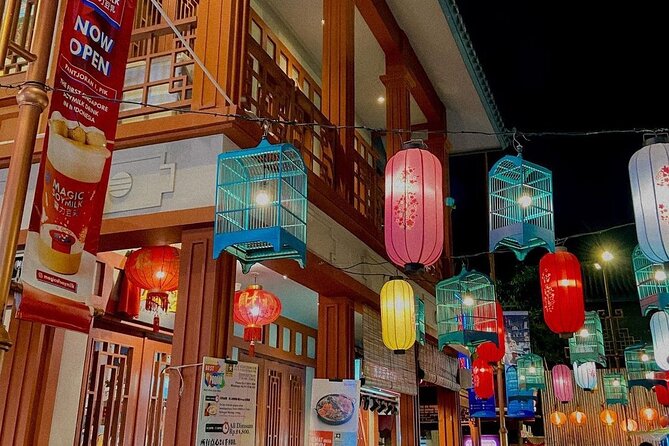
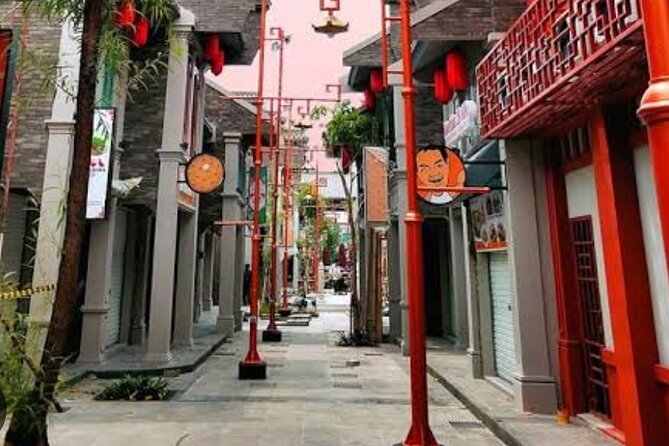
The highlight, in my view, is PIK Avenue. This is where the tour leans into the visual magic of Chinatown in a more modern setting. The afternoon lantern atmosphere is the draw, and it’s also described as a Chinese-dominant business district area, so you get a different Chinatown flavor than old lanes and temple alleys.
This stop runs about two hours, which is a healthy chunk of time for photos and for settling in. One praised detail from the experience is that the guide helps you time your viewing for night light changes on a bridge in the area. That’s the kind of small planning detail that makes a big difference. Instead of just arriving and guessing what will happen, you’re pointed toward what’s worth waiting for.
It’s also a great moment if you want a dinner option with a cleaner, more “organized” setting. In the same way, one tip stands out: there’s a dinner place at PIK where you can eat, then get a photo with a pagoda backdrop. In practical terms, that means you can combine food and sightseeing without doubling back across town.
What to watch for: since this is a business district, the feel can be more controlled than Glodok. If you want maximum street chaos, you might prefer to spend extra time earlier. If you want photos that look crisp and lights that pop against the night, PIK Avenue delivers.
- Jakarta Bogor Botanical Garden, Waterfall and Rice terrace, Lunch★ 5.0 · 157 reviews
- Jakarta Heritage of Old Batavia Private City Tour (Historical)★ 5.0 · 143 reviews
- Jakarta Half-Day Sightseeing Tour To Modern City and Old Town★ 5.0 · 137 reviews
- Jakarta Night Tour : Enjoyable Night time in Jakarta (Hotel Pick-up)★ 5.0 · 117 reviews
- Halfday Excursion Old city Batavia with Lunch and Souvenir★ 4.5 · 105 reviews
MONAS at night: finishing with a 132-meter gold moment
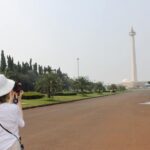
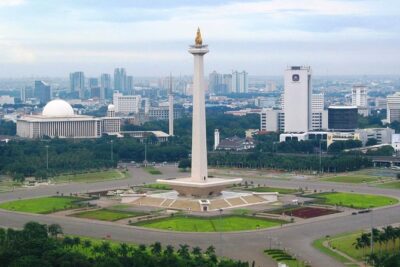
To wrap up, the tour heads to National Monument (MONAS). This is a straightforward but very effective ending. You get a photo stop at the national monument with gold lighting, described as sparkling and shining at night, and it rises 132 meters.
I like finishing here because it gives your day a “you are in the capital” signature. It’s also a practical photo target because it’s easy to understand visually even if you’re not reading much signage. After hours of Chinatown streets, old-town architecture, and market culture, MONAS feels like a reset to Jakarta’s main stage.
The photo stop is scheduled for about an hour, and that means you can take your time, check different angles, and still make it back without feeling rushed.
What to watch for: night photos depend on light and your camera settings. If you want clean shots, bring a steady grip, and consider turning on your phone camera’s night mode if you use one.
Price and value: what $53 buys you in real terms
The price is $53 per person, which you should think of as paying for three things at once: time, context, and transportation.
First, you’re not negotiating taxis or juggling schedules across widely spaced neighborhoods. The tour includes an air-conditioned vehicle, private transportation, and pickup and drop off. Jakarta traffic can be brutal, so having a driver doing the driving matters more than it sounds on paper.
Second, you’re getting a licensed guide, and the guide is the difference between seeing buildings and understanding them. With a route that touches Chinese temples, colonial-era architecture, markets, and modern business district lights, the “why” matters. This tour is designed to explain that, not just transport you.
Third, you get practical extras like bottled water. It’s small, but in heat and crowds, it helps.
Also, the tour lists admission tickets as free for the stops included. That doesn’t mean you’ll have zero spending, since dinner is something you may choose during the day, but it does mean you’re not paying separately for each fixed stop.
Group discounts and mobile ticket are also part of the value. If you’re traveling with friends, those discounts can help reduce the per-person cost. And the mobile ticket makes the day easier when you’re moving quickly between locations.
Guides and pacing: how it feels hour by hour
A tour like this can either feel rushed or well-paced. Here, the pacing is built around short, focused blocks. You get quick time at Glodok and Old Town, then a longer window at PIK Avenue, then a final stretch at MONAS.
That structure works because each stop serves a different purpose:
- Glodok gives you religious and community context
- Old Town gives you colonial-era architecture and old-city layout
- Muara Angke adds food culture and a waterfront atmosphere
- PIK Avenue gives you the night light payoff
- MONAS gives you a final landmark “capstone” photo moment
In the experience details, guides like Fitri and Enok have been praised for knowing the area and keeping the storytelling clear. Even if you do not get the exact same guide, the pattern is consistent: the tour is set up so you learn while you look.
Who should book this afternoon Chinatown route
I think this tour is a great fit if you want:
- A guided history angle on Chinese life in Jakarta and Dutch colonial influence
- Chinatown street scenes plus modern night lights in one day
- A practical plan for seeing multiple areas without planning your own logistics
- A day that can end with a landmark photo at MONAS
It may be less ideal if you prefer unstructured wandering. This is organized, with set time windows. You will have downtime for photos and meals, but it’s not a “stay all day in Chinatown” experience.
It also helps to be okay with the rhythm of Jakarta. Traffic is part of the deal, and the tour accounts for that by using driving time and scheduling. If you get easily frustrated, bring that patience mindset.
Practical tips so your day runs smoother
A few things I’d do to make the day feel easy:
- Plan your dinner choice in advance, then use the Muara Angke and PIK Avenue stops as your decision points
- Bring cash or card for food, since the tour description focuses on sightseeing and transport rather than saying meals are included
- Wear comfortable shoes for temple and old-city walking, since this mixes streets and buildings
- Keep your phone charged. You’ll want it for lantern photos and night shots at MONAS
- If you want to maximize photos at PIK Avenue, arrive ready to wait a bit and catch the light moments the guide points out
And one more small thing: if your guide suggests a specific moment for photos or lights, take that advice. Those “timed viewing” moments are what make the evening feel special.
Should you book this tour or go on your own?
If you like guided context, this is an easy yes. The route mixes places that look similar to many visitors but mean different things locally: Glodok temples, old-city colonial architecture, market food culture, and modern Chinese-dominant business district lights. You’ll get the connections faster with a guide than by random exploring.
If you are comfortable with navigation and you only care about one neighborhood, you could go on your own. But for most first-time visitors, the big benefit is that the tour handles the jump between areas and keeps the pacing workable.
My decision rule is simple: book it if you want an efficient, story-driven afternoon that ends with real Jakarta night views.
FAQ
How long is the Afternoon Guided Chinatown Tour in Jakarta?
The tour runs about 5 to 6 hours (approximately).
What does the tour cost?
The price is $53.00 per person.
Is pickup and drop-off included?
Yes. Pickup and drop off service is included.
Is this tour private or shared?
This is a private tour or activity, and only your group participates.
What is included in the price?
Included features are an air-conditioned vehicle, private transportation, bottled water, a licensed guide and driver, and pickup and drop off.
Are admission tickets included?
Admission tickets for the listed stops are free.
Is there time to eat dinner during the tour?
The tour description specifically mentions trying dinner in places you visit, including options around the fish market area or in the PIK area.
Do I get a physical ticket?
You receive a mobile ticket, and confirmation is received at the time of booking.
What is the cancellation policy?
You can cancel for a full refund up to 24 hours in advance. If you cancel less than 24 hours before the start time, the amount paid is not refunded.
How far in advance is this typically booked?
On average, it is booked 15 days in advance.
Days Out in Jakarta
Fresh Jakarta write-ups from the review desk


Jakarta City Tours, compared.
 ★ 4.9Volcano, Tea/Rice Fields, Hot Spring, Local FoodFrom $114515 reviews
 ★ 5.0Private Full-Day Guided Tour: Explore Jakarta’s Top HighlightsFrom $65338 reviews
 ★ 5.0Jakarta Half-Day Guided Tour with a Private Fun Local HostFrom $55292 reviews
 ★ 5.0Jakarta Bogor Botanical Garden, Waterfall and Rice terrace, LunchFrom $95157 reviews
 ★ 5.0Jakarta Heritage of Old Batavia Private City Tour (Historical)From $65143 reviews
 ★ 5.0Jakarta Half-Day Sightseeing Tour To Modern City and Old TownFrom $55137 reviews
 ★ 5.0Jakarta Night Tour : Enjoyable Night time in Jakarta (Hotel Pick-up)From $55117 reviews
 ★ 4.5Halfday Excursion Old city Batavia with Lunch and SouvenirFrom $70105 reviews
Browse the lists this tour appears in