
REVIEW · JAKARTA CITY TOURS
Halfday Excursion Old city Batavia with Lunch and Souvenir
Jakarta can feel like a moving target. This half-day tour is a tight route through the city’s old pulse, from Glodok Chinatown to Monas, with door-to-door pickup and a licensed guide who keeps it organized. You also get a planned lunch break so you are not sightseeing on an empty stomach.
What I really like is how the stops are spread across different Jakarta identities, so you see the Chinese quarter, the Dutch-era Old Town, and today’s big national landmarks in one go. The second big plus is the way shadow puppets and related cultural stops fit naturally into the day, not as a random add-on. One thing to consider is that Jakarta traffic can eat time, and a few sites can take longer than planned, so you may want a flexible mindset if you are on a tight schedule.
In This Review
- Key highlights you should care about
- A half-day route that actually feels doable
- Private door-to-door pickup, and why it matters in Jakarta
- Glodok Chinatown market: colors, food smells, and everyday history
- Dharma Bhakti Temple: the oldest layers of faith
- Old Town and Dutch-era remnants you can picture
- Sunda Kelapa harbor: maritime Jakarta in one concentrated look
- Batavia Cafe break and Fatahillah Square: colonial buildings and shadow puppets
- Makutharama Puppet Studio: how the puppets get made
- Istiqlal Mosque and Jakarta Cathedral: the skyline of two faiths
- Merdeka Square and the Presidential Palace area: monument scale
- National Monument (Monas) and the Proclamation Monument: what the symbols mean
- Lunch, bottled water, and a free souvenir: how value adds up
- Price and logistics: watch the timing, not the hype
- Cultural sites need the right mindset
- Should you book this Old Batavia and Monas half-day tour?
- FAQ
- How long is the half-day excursion?
- Is pickup included?
- Is this tour private?
- What is included in the price?
- Is lunch included, and what type of food is it?
- Which major sights are part of the route?
- Are entrance fees covered?
- Do I need to tip?
- What should I do if weather is bad, or I need to cancel?
Key highlights you should care about
- Hotel pickup and drop-off inside Jakarta saves you from guessing transport times in heavy traffic
- Licensed English guide means you get context without the back-and-forth
- Glodok Chinatown plus Dharma Bhakti Temple gives you contrast between everyday markets and older faith history
- Old Town Batavia landmarks and Sunda Kelapa harbor connect the city to its maritime past
- Shadow puppet stops include both a performance focus and a maker-style visit
- Monas, Proclamation Monument, Istiqlal, and Merdeka Square cover the national story and the religious skyline
Other days out in the capital
A half-day route that actually feels doable

This tour is built for people who want Jakarta essentials without turning the day into a hopscotch of tickets, rides, and confusion. You are looking at around 5 hours, with a morning or afternoon departure option, so you can match it to your other plans.
The big idea is simple: you get a guided loop that hits several major areas, then you finish with iconic landmarks like Monas and the monuments around Merdeka Square. The pacing is usually comfortable for a first visit, as long as you accept that time moves differently in a major city.
Private door-to-door pickup, and why it matters in Jakarta
Your best advantage here is the pickup and drop-off at your Jakarta hotel. That sounds basic, but in Jakarta, saving even 30 to 60 minutes can be the difference between seeing everything and rushing the last stops.
You are also in a private setup, meaning your guide can adjust the pace for your group. In past experiences with guides tied to this tour, names like Annisa, Asep, Agus, Elvis, Isabella, and Rehan (Ryan) come up repeatedly for clear explanations and friendly energy. The pattern is that when the guide can talk comfortably, you get more meaning from each location, not just photos.
Glodok Chinatown market: colors, food smells, and everyday history
Glodok Chinatown is not a museum district. It is a working area with alleys where you can see trade in action, from Chinese-style goods to fresh fruits and vegetables. The stop is short, so I treat it like a quick orientation lap, then I pick one or two lanes to focus on.
You will also pass through the China town area by car, which helps you understand the layout before you walk. For many first-timers, that is the key. You stop guessing, and your eyes start catching details like signage styles, shop patterns, and how the market sits in everyday street life.
Dharma Bhakti Temple: the oldest layers of faith
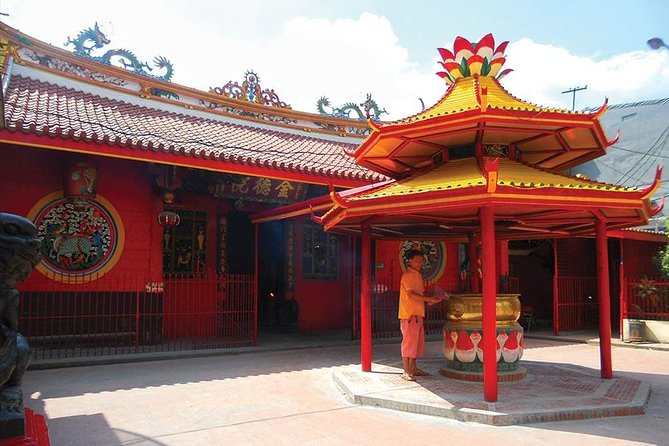
Right after the market energy, you visit Dharma Bhakti Temple, described as the oldest Buddhist temple in Jakarta. It has ties back to Chinese captain Oei Tjhie, with the current temple dating to 1755 after an earlier Buddhist temple from 1650 was demolished.
This is a good stop because it is not only about architecture. It is also a reminder that Jakarta’s Chinatown is not just about commerce. People have lived, prayed, and built institutions here for centuries, and the temple gives you that deeper anchor.
- Jakarta Bogor Botanical Garden, Waterfall and Rice terrace, Lunch★ 5.0 · 157 reviews
- Jakarta Heritage of Old Batavia Private City Tour (Historical)★ 5.0 · 143 reviews
- Jakarta Half-Day Sightseeing Tour To Modern City and Old Town★ 5.0 · 137 reviews
- Jakarta Night Tour : Enjoyable Night time in Jakarta (Hotel Pick-up)★ 5.0 · 117 reviews
- Halfday Excursion Old city Batavia with Lunch and Souvenir★ 4.5 · 105 reviews
Old Town and Dutch-era remnants you can picture
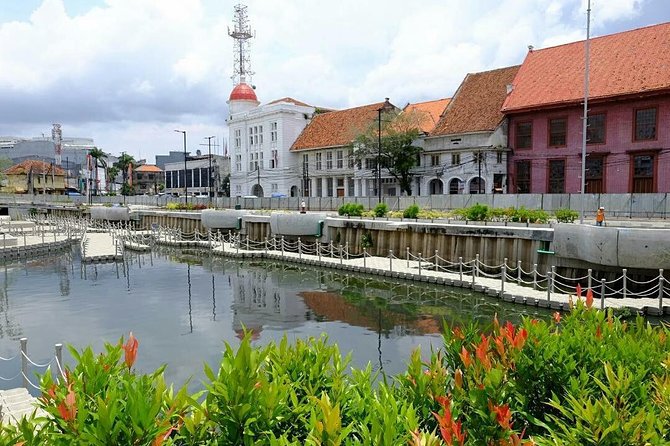
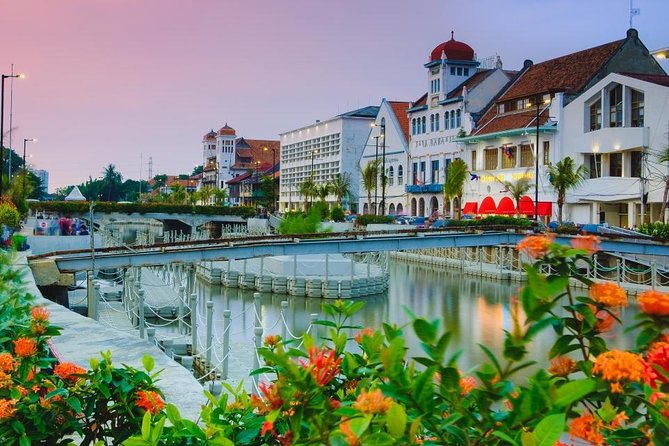
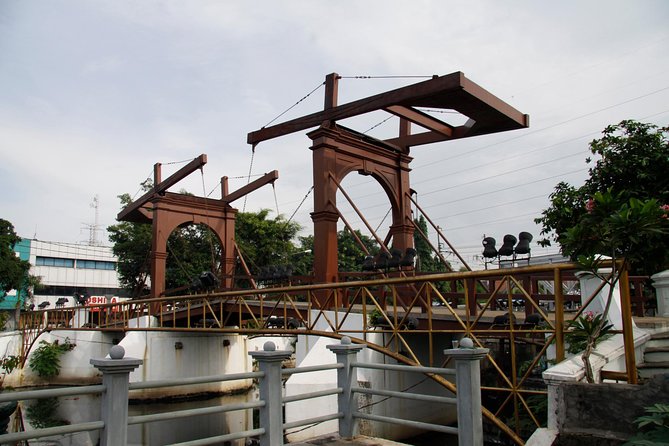
Old Town Batavia is where the city starts feeling like a story you can read with your feet. The route connects you to key points, including Dutch colonial references like the Kota Intan Bridge, built in 1730, with its wooden construction and lifting mechanism designed for ships and boats.
If you like “how it worked” details, this part is satisfying. You are not just seeing a landmark, you are hearing why it mattered to the harbor and warehouses. It helps you imagine the river and shipping connections that shaped what Jakarta became.
Sunda Kelapa harbor: maritime Jakarta in one concentrated look

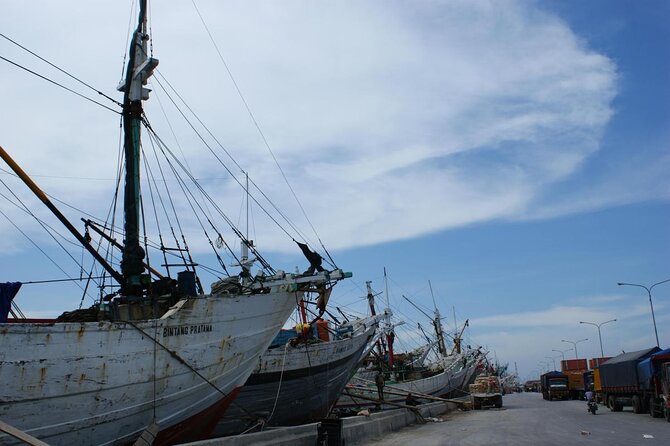
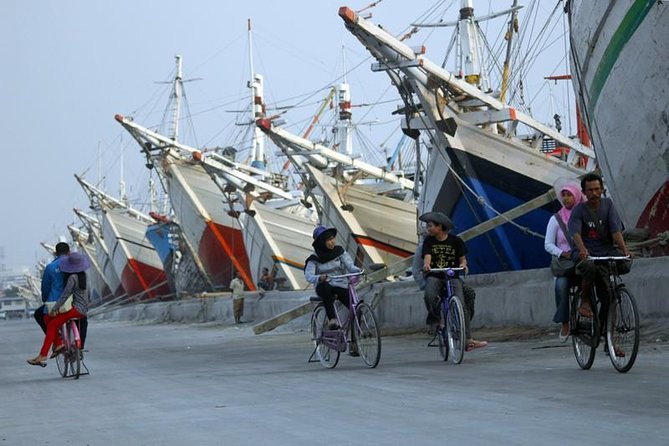
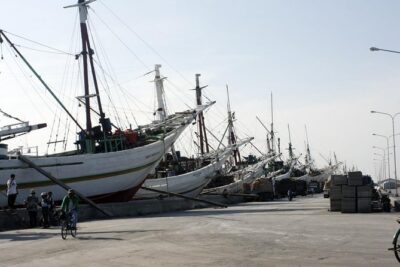
Sunda Kelapa harbor is a 500-year-old area that was tied to outside-world trade links through the 15th-century Pajajaran kingdom. It is also described as an active historic place, with tradition still visible around it.
Here is how I recommend approaching this stop: treat it as a chance to see Jakarta as a port city. Even if you do not get a long walk, you can still notice how the water, vessels, and surrounding activities create a different mood than the inland city streets.
Batavia Cafe break and Fatahillah Square: colonial buildings and shadow puppets
The tour includes time in the Old Town area with a coffee break at Batavia Cafe, noted as housed in a 200-year-old building and said to be the second oldest building in Jakarta after Fatahillah Museum. A short pause here is practical, and it also helps you reset your eyes after the busy market and harbor scenes.
Then you move to Fatahillah Square, linked to the former city hall (Stat Huis) during Dutch settlement periods. This is also where the shadow puppet performance fits in. The puppet tradition is described as being on UNESCO’s Representative List of the Intangible Cultural Heritage of Humanity, so you are seeing craft and storytelling with serious cultural weight, not just a quick show for tourists.
Makutharama Puppet Studio: how the puppets get made
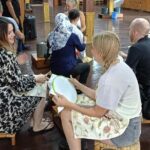
One of the most interesting parts of this day is the stop at Makutharama Puppet Studio. You are not just watching, you are getting a peek at the making process.
The tour description highlights materials and technique, including that puppets use buffalo skin and that makers boil it with spices to preserve it. That small detail is the kind that makes the show click. When you understand the raw material and preparation, the performance feels like the end result of real labor and traditional knowledge.
Istiqlal Mosque and Jakarta Cathedral: the skyline of two faiths
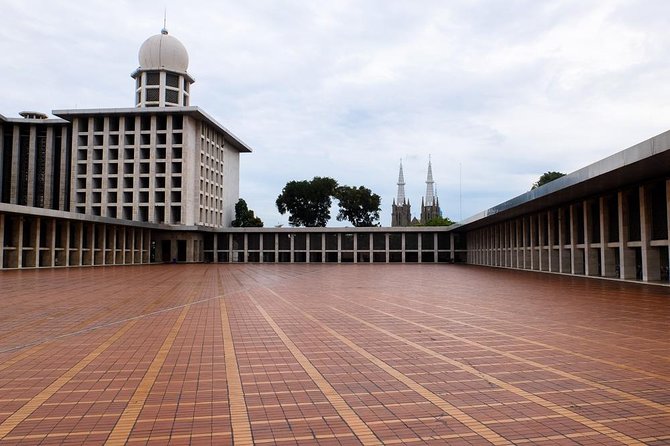
From culture and craft, the tour shifts into the big, public landmarks. First comes Istiqlal Mosque, described as the largest mosque in South East Asia, able to accommodate up to 200,000 people.
Across the street is the Jakarta Cathedral, noted as a neo Gothic Catholic church consecrated in 1901. The pairing is intentional. Even with limited time at each site, you get the visual sense of how different religious communities occupy space side-by-side in the same urban center.
Practical note: mosque visits often require modest dress. The tour lists the stops and time, but it does not specify dress rules for you, so I suggest carrying a light scarf or a covering option just in case.
Merdeka Square and the Presidential Palace area: monument scale
Next comes Merdeka Square, also called Liberty Square, with time to see the Presidential palace area. This stop is shorter, so I think of it as a “set your bearings” moment.
It also connects nicely to what comes next. Merdeka Square is like the foundation the national monuments are built on, and once you see the wide space and scale here, Monas later feels like a logical climax.
National Monument (Monas) and the Proclamation Monument: what the symbols mean
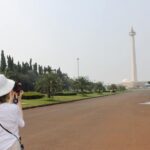
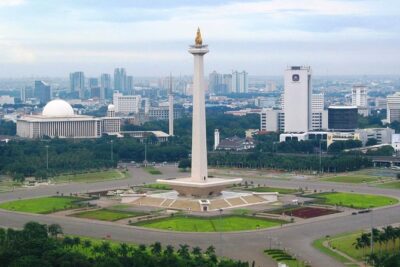
The National Monument, known as Monas, is described as a 132-meter tall tower symbolizing Indonesia’s fight and struggle for independence. Even if you only have a brief visit, it helps to think of the monument as a physical summary of the country’s modern story.
After that, you visit the Proclamation Monument, described as an Art-Deco-style building designed by J.F.L. Blankenberg. The description notes it was built in 1920 and includes historical property details from 1931 involving an insurance company. Even if you only absorb the basics, it adds depth to the Independence theme, so the day does not feel like “just photo stops.”
Lunch, bottled water, and a free souvenir: how value adds up
This is a private, door-to-door tour that includes lunch Indonesia food, bottled water, entrance fees for many sites, travel insurance, and a free souvenir gift.
At $70 per person, the value depends on what you would otherwise spend on a guide, rides, and tickets for multiple landmarks. If you tried to build this yourself, you would likely pay for several separate admissions, then add transport across different neighborhoods, which is the part that gets expensive in time and money.
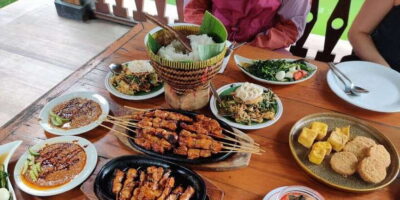
Lunch is included as part of the package, and multiple positive comments in the provided experience details point to the meal being tasty and plentiful. Still, I treat included lunch as a bonus, not a guarantee of fine dining. It is there to keep you fueled through a packed half-day.
One more thing: tipping is noted as not included. I usually budget for it, even when the tour feels like good value, because the staff experience depends on your crew.
Price and logistics: watch the timing, not the hype
This tour is well-structured, but the practical risk is always the same in Jakarta, traffic. The route includes multiple neighborhoods, and even with efficient driving, you might spend more time in transit on certain days.
Also, the itinerary contains several stops that can take time due to group coordination, security, or the natural length of visits at large sites like Istiqlal Mosque. That can be great for depth, but it can also squeeze the later monuments if your day starts late.
I would book this tour if you want a guided highlights route and you like having your schedule handled. I would be more cautious if you have a strict deadline, like a very early cruise departure or a hard appointment, because you can only compress the day so much without losing the point.
Cultural sites need the right mindset
Some stops here are “learn while you look” places, like Chinatown market lanes, Dharma Bhakti Temple, and the puppet studio. Others are “scale and symbolism” places, like Merdeka Square and Monas.
If you go in wanting only photos, you will still get the photos. But you get a much better payoff if you treat it like guided interpretation. That is where the licensed English guide matters, because the context changes how you understand what you are seeing.
In several guide-focused mentions tied to this tour experience, people highlight English clarity and engaging explanation. Names that come up include Rehan (Ryan), Isabella, Agus, Elvis, and Asep, and the recurring theme is that the guide turns the route into an easy-to-follow story.
Should you book this Old Batavia and Monas half-day tour?
Book it if:
- You want a first-time Jakarta overview that blends Chinatown, Old Town, and national monuments in one outing
- You prefer private, door-to-door convenience over sorting transit on your own
- You like cultural stops with context, especially the shadow puppet performance and puppet-making visit
- You value having lunch and key entrance fees handled for you
Skip it or shop carefully if:
- You are extremely time-restricted and cannot absorb traffic delays
- You dislike tours where some stops are short and you need to be okay with quick looks
- You expect a guide to do every stop at the same depth, nonstop, without any coordination moments
FAQ
How long is the half-day excursion?
The duration is about 5 hours.
Is pickup included?
Yes, pickup and drop-off are offered, with direct service to your Jakarta hotel.
Is this tour private?
Yes. It is a private tour/activity, with only your group participating.
What is included in the price?
Included features are lunch, private transportation, entrance fee tickets, a professional licensed English guide and driver, travel insurance, bottled water, and a free souvenir gift.
Is lunch included, and what type of food is it?
Lunch Indonesia food is included.
Which major sights are part of the route?
The route includes Glodok Chinatown, Dharma Bhakti Temple, Kota Intan Bridge, Sunda Kelapa harbor, Jakarta Old Town with time in the Batavia Cafe area, Fatahillah Square and a shadow puppet studio visit, Istiqlal Mosque, Jakarta Cathedral, Merdeka Square, Monas (National Monument), and the Proclamation Monument.
Are entrance fees covered?
Entrance fees are included for the stops marked with tickets in the tour schedule, and some sites are listed as admission free.
Do I need to tip?
Tipping for the crew is not included.
What should I do if weather is bad, or I need to cancel?
The experience requires good weather. If it is canceled due to poor weather, you will be offered a different date or a full refund. You can cancel up to 24 hours in advance for a full refund.
Days Out in Jakarta
Fresh Jakarta write-ups from the review desk


Jakarta City Tours, compared.
 ★ 4.9Volcano, Tea/Rice Fields, Hot Spring, Local FoodFrom $114515 reviews
 ★ 5.0Private Full-Day Guided Tour: Explore Jakarta’s Top HighlightsFrom $65338 reviews
 ★ 5.0Jakarta Half-Day Guided Tour with a Private Fun Local HostFrom $55292 reviews
 ★ 5.0Jakarta Bogor Botanical Garden, Waterfall and Rice terrace, LunchFrom $95157 reviews
 ★ 5.0Jakarta Heritage of Old Batavia Private City Tour (Historical)From $65143 reviews
 ★ 5.0Jakarta Half-Day Sightseeing Tour To Modern City and Old TownFrom $55137 reviews
 ★ 5.0Jakarta Night Tour : Enjoyable Night time in Jakarta (Hotel Pick-up)From $55117 reviews
 ★ 5.0Private FullDay Jakarta Wonderfull Tour with Lunch & SouvenirFrom $79104 reviews
Browse the lists this tour appears in