
REVIEW · WORKSHOPS
Threads of Tradition Miniature Keliki Painting Workshops
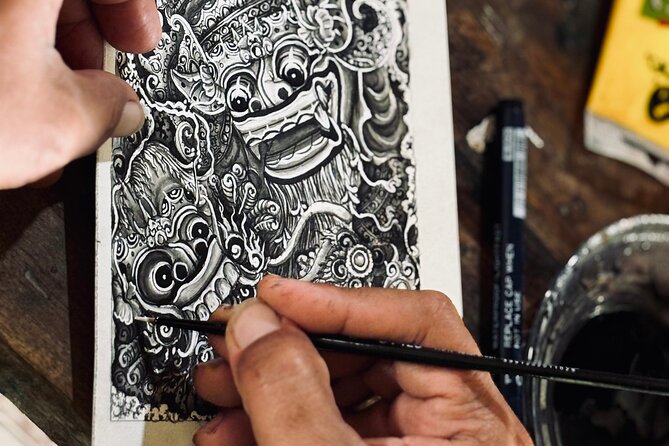
Miniature Balinese paintings, taught slowly. In Ubud’s Keliki area, you spend about 3 hours learning Keliki painting using traditional tools, working in layers with Chinese ink and acrylic. I like that it’s beginner-friendly, so you’re not expected to already know how to draw to enjoy the process.
I also love that the class feels social without getting noisy. You’ll work with two local artists, Gusti and Kedek, and you get afternoon tea during the session to talk art, village life, and the myths behind the scenes. One consideration: at this length, you’ll likely complete a small miniature piece, not a large, show-stopping painting.
In This Review
- Key points to know before you go
- Keliki painting: what you’re really learning in 3 hours
- Arriving at Five Arts Studio in Keliki, Ubud
- The practical flow: ink layers, acrylic color, and careful details
- Gusti and Kedek: teaching style that fits nervous beginners
- Tea, snacks, and smart-casual comfort for a relaxed afternoon
- Price and value: what $29 really buys you in Bali
- What you should expect to take home
- Who this Keliki workshop is best for
- Quick practical checklist for your day
- Should you book Threads of Tradition Miniature Keliki Painting Workshops?
- FAQ
- How long is the Keliki painting workshop?
- How much does it cost?
- Is prior painting experience required?
- What’s included in the ticket price?
- Is lunch included?
- Is there a vegetarian option?
- What should I wear?
- How large is the group?
- What is the cancellation policy?
Key points to know before you go
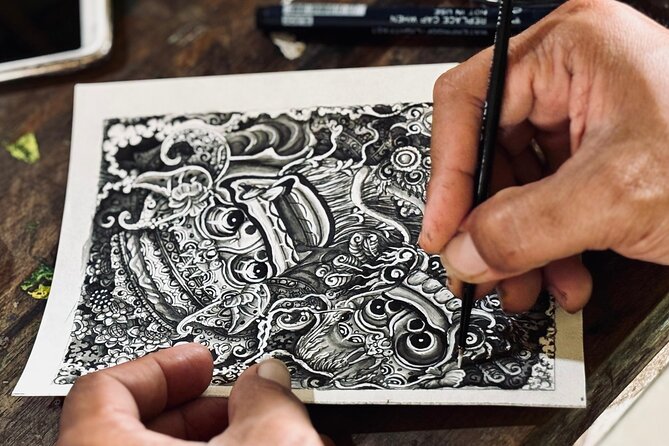
- Traditional Keliki materials with layered technique using Chinese ink plus acrylic
- Two instructors, Gusti and Kedek, who guide you step by step
- Afternoon tea included, so it feels like a cultural hang, not a fast class
- Friendly for beginners, no prior drawing experience needed
- Small group size, max 20 travelers, which helps you get attention
- You take your artwork home, making the whole afternoon more satisfying
Not decided yet? These Ubud trips held up when we went through them.



Keliki painting: what you’re really learning in 3 hours
This workshop is about more than copying a pretty picture. Keliki paintings are built in stages, so the real skill is learning how one layer sets up the next. You start with materials and methods that match the traditional style, then you gradually build the image, with careful linework and controlled color.
That layered approach matters because it changes how you see your own progress. Instead of trying to get everything perfect at once, you work in steps. That is also why this works well for first-timers. You’re not being tested. You’re being guided through a repeatable process.
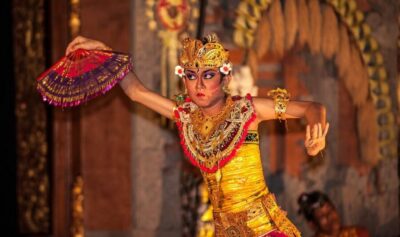
You’ll also hear context while you paint. Keliki scenes often focus on rural village life and local myths. Even if you’re not a history buff, this gives the painting meaning. It also helps you understand why certain elements show up again and again, like everyday activities and storytelling themes.
Arriving at Five Arts Studio in Keliki, Ubud
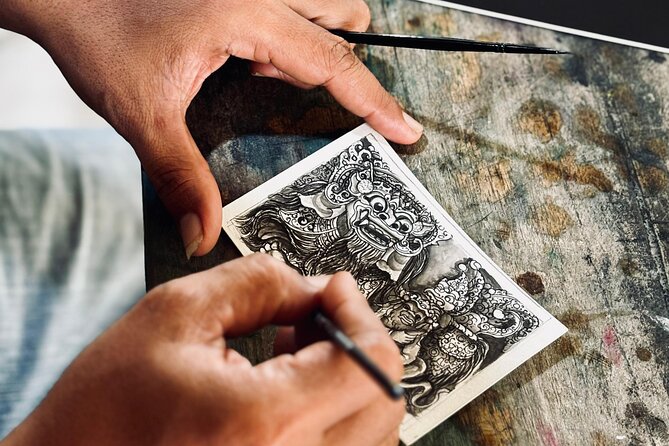
The workshop meets at Five Arts Studio in the Keliki area (Jl. Raya Keliki, Keliki, Tegallalang, Bali 80561). The setting is a Balinese home-studio atmosphere, which helps you slow down. This is not a warehouse classroom vibe. You’re in a traditional house compound feel, where the focus is on craft and conversation.
Group size is capped at 20 travelers, which is a big deal for a short 3-hour class. In a bigger class, you might lose time waiting for help. Here, you can reasonably expect someone to check your work and answer questions as you go.
Logistically, you’ll also be okay if you’re not renting a private driver. It’s described as near public transportation, and the end of the activity returns you to the meeting point. If you do have a driver, you can plan your rest of the afternoon around a simple pickup.
The practical flow: ink layers, acrylic color, and careful details
Expect a clear rhythm. You’ll learn the unique multi-step Keliki technique, using traditional materials. The key components you can plan around are:
- Working in layers so each step supports the next
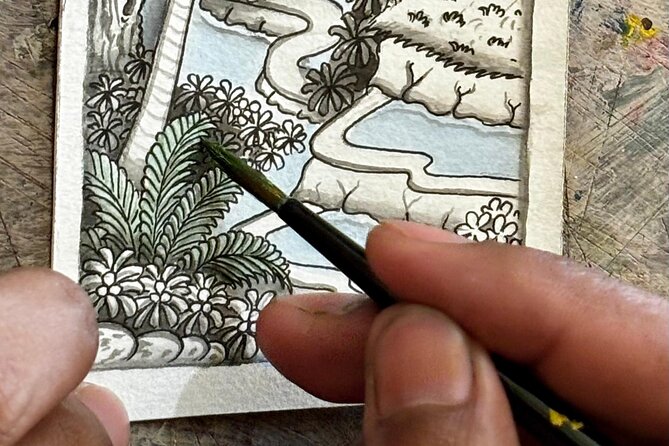
- Using Chinese ink for linework, then adding color with acrylic
- Practicing how the style handles detail and spacing, not just subject matter
Even the most basic painting gets more interesting when you understand what each material is doing. Ink can help with crisp outlines and expressive lines, while acrylic brings the color structure. When you treat them as a team rather than separate stages, your final piece starts looking more like Keliki.
The class is also paced for real learning. One of the best parts of this experience is that it’s not rushed. If you need extra time to get your lines right, you can work at your own pace. That matters because Keliki is all about precision. Speed kills the look.
Gusti and Kedek: teaching style that fits nervous beginners
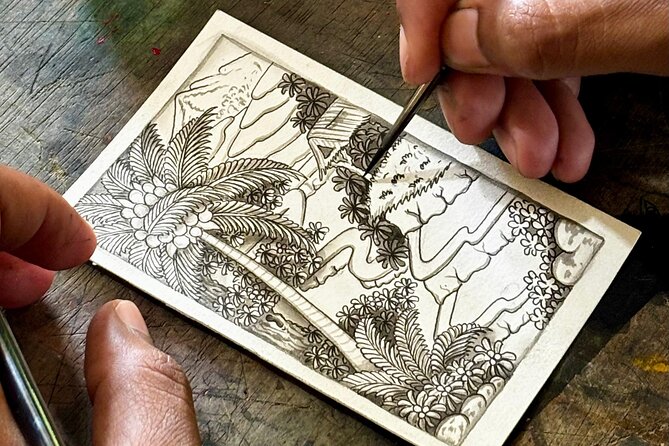
The workshop is run by two local artists, and the names Gusti and Kedek come up for a reason. They’re personable and fun, and they keep the energy light while still teaching technique seriously.
What you’ll likely appreciate most is how they translate a traditional style into something you can actually do. Keliki has its own logic, and you’re not expected to invent anything from scratch. Instead, you’re guided through the process of getting from blank page to finished miniature.
That teaching approach also makes it easier to ask questions. If you’re worried about feeling out of place because you don’t draw, this format helps. You’re in a workshop where no prior knowledge is needed, and the instructors are focused on getting you through the steps correctly.
- Uluwatu Sunset, Kecak Dance, and Dinner Jimbaran Beach★ 5.0 · 3,681 reviews
- Tanah Lot and North Bali Tour: Scenic Journey★ 5.0 · 3,620 reviews
- Body Massage Experience in Ubud Traditional Spa★ 5.0 · 3,506 reviews
- Best of Bali Waterfalls: Tibumana, Tukad Cepung and Tegenungan★ 5.0 · 3,047 reviews
- Bali: Ubud Kecak and Fire Dance Show Tickets★ 4.4 · 2,631 reviews
Tea, snacks, and smart-casual comfort for a relaxed afternoon
This isn’t a “paint in the dark and leave fast” kind of tour. Snacks, coffee and/or tea, and mineral water are included. That small set of inclusions makes a difference. It keeps you comfortable during the session and lets you focus on the work instead of thinking about when you’ll eat.
Dress code is smart casual. That’s useful advice because you’ll be working with art materials, and you want to be comfortable enough to sit for a while. I’d avoid anything you’re worried about staining. Bring clothes you can move in, and plan to wipe your hands as needed.
One more practical win: the tea portion is built into the experience. That means you get time to connect with the artists instead of treating the class like a one-way instruction. It’s a cultural rhythm, not just a break.
Price and value: what $29 really buys you in Bali
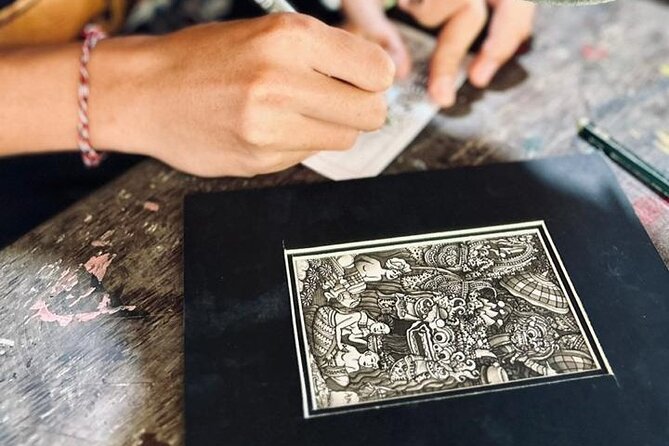
At $29 per person, this is a serious value for an experience that includes instruction, traditional materials practice, and refreshments. Many art activities cost more once you factor in guided teaching time and the tools used during the session.
Here, you get a lot packed into a short window:
- 3 hours of guided hands-on painting
- Traditional style training with Chinese ink and acrylic
- Snacks, coffee and/or tea, and mineral water
- A small-group format with a max of 20 travelers
- The finished artwork to take home
If you compare it to other ways to spend a few hours in Ubud, you’re not just buying a ticket. You’re buying the chance to learn a technique that becomes a souvenir. That’s the main value story here. A store-bought souvenir is nice, but making the piece yourself changes how you remember the day.
Alcohol is not included, but it may be available to purchase. Lunch is also not included, though you can order local food. In one case, someone enjoyed a transport add-on, where a driver took them to a nice lunch place on the way back. If you want that kind of planning, it’s worth asking about options when you book.
What you should expect to take home
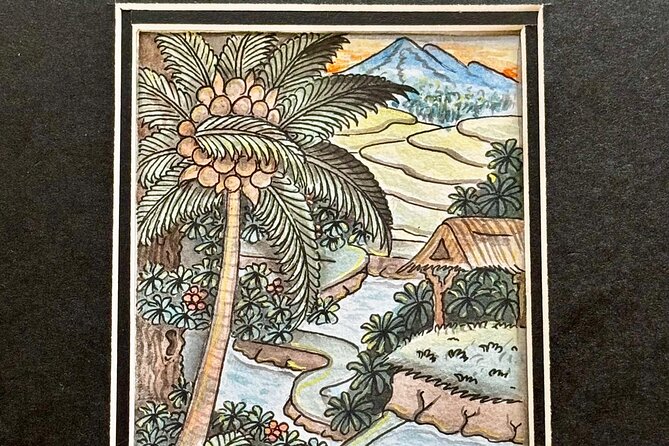
You’ll end up with artwork you can take home. Since the workshop time is limited to about 3 hours, the piece is designed to be achievable. In practice, that means you should think in terms of a small-format miniature style result, not a massive canvas.
That’s not a drawback if you’re honest with your expectations. A miniature is easier to finish cleanly and still look stylish in Keliki form. It also makes the experience more approachable. You leave with something you can actually be proud of because it’s completed through the full technique, not abandoned mid-step.
Who this Keliki workshop is best for

This works well for:
- First-time artists who want a guided intro to a specific Balinese painting style
- People who want something cultural and hands-on in Ubud besides temples and rice terraces
- Couples or friends who enjoy doing a shared creative activity
- Travelers who like small-group classes and don’t want to get lost in a big crowd
It may be less ideal if you want:
- A long, multi-session painting project
- A large-format painting outcome
- A lesson focused on learning composition from scratch rather than technique in the Keliki style
Quick practical checklist for your day
Before you go, keep these details in mind so the class stays comfortable:
- Book ahead if possible. On average, this is booked about 10 days in advance
- Confirm your arrival plan. The meeting point is Five Arts Studio, and you return there
- Bring smart-casual comfort, and avoid your most delicate outfits
- If you have dietary needs, there’s a vegetarian option available if you advise at booking
- If you need accessibility support, service animals are allowed, and you can rely on it being near public transportation
A final tip: if you’re coming from the center of Ubud, decide whether you want to use a driver or public transport ahead of time. The workshop is in Keliki, Tegallalang area, so you’ll get the smoothest experience when your schedule around the 3-hour session is realistic.
Should you book Threads of Tradition Miniature Keliki Painting Workshops?
I think you should book this if you want a short, friendly art workshop that teaches a real Balinese technique with traditional tools. The biggest reasons are the step-by-step Keliki process, the relaxed pacing, and the chance to connect with Gusti and Kedek over tea while you learn.
Skip it only if your goal is a long painting session or a large-scale masterpiece. At $29, the value is strongest when you’re happy with making a complete miniature piece in a focused few hours.
If you’re in Ubud and you want one genuinely hands-on experience that feels different from the usual sightseeing loop, this is a smart afternoon choice.
FAQ
How long is the Keliki painting workshop?
It runs for about 3 hours.
How much does it cost?
The price is $29 per person.
Is prior painting experience required?
No. The workshop welcomes all levels, including people with no prior knowledge of painting.
What’s included in the ticket price?
Snacks, coffee and/or tea, and mineral water are included.
Is lunch included?
Lunch is not included. You can order local food if you want lunch.
Is there a vegetarian option?
Yes. A vegetarian option is available if you advise at booking.
What should I wear?
Dress code is smart casual.
How large is the group?
The maximum group size is 20 travelers.
What is the cancellation policy?
You can cancel for a full refund up to 24 hours in advance. If you cancel less than 24 hours before the experience starts, the amount you paid is not refunded.
Fresh Ubud write-ups from the review desk





Workshops, compared.
 ★ 5.0Ubud Silver Class Jewelry making in baliFrom $36978 reviews
 ★ 5.0PRIVATE Authentic Balinese Cooking Class in Ubud at Putu’s HomeFrom $75644 reviews
 ★ 5.0Balinese Farm Cooking Class by Pemulan BaliFrom $39410 reviews
 ★ 5.0Learn to cook Indonesian food at Gili Cooking Classes TrawanganFrom $33352 reviews
 ★ 5.0Balinese Cooking Class in SeminyakFrom $66281 reviews
 ★ 5.0Ubud Monkey Forest Silver Class – Craft Your Own Silver JewelryFrom $41254 reviews
 ★ 5.0Anggrek Putih Lombok Cooking ClassFrom $30253 reviews
 ★ 5.0Balinese Authentic Cooking Class in UbudFrom $39239 reviews
Browse the lists this tour appears in