
REVIEW · BALINESE COOKING CLASSES
PRIVATE Authentic Balinese Cooking Class in Ubud at Putu’s Home
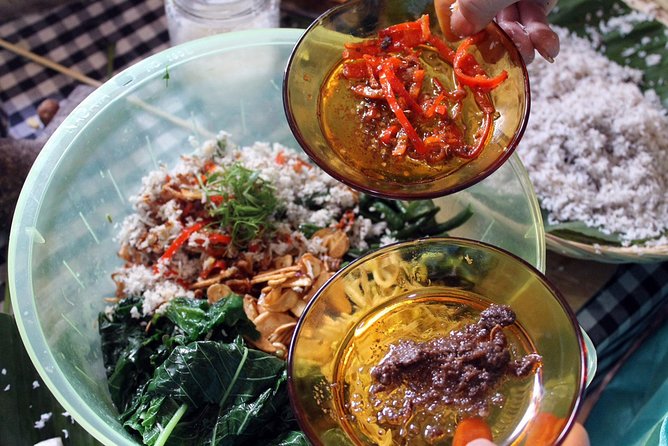
Watching dinner become your project in Bali. This private class at Putu’s home turns into a hands-on food lesson built around farm-fresh ingredients, not a classroom script. I like that you cook and eat what you make, plus you get real context on Balinese home life and spices. One thing to consider: the kitchen is outdoors and rural, and the ride from central Ubud can be around 40 minutes, so plan your timing accordingly.
Here’s the best part for most people, you are not stuck waiting your turn. You chop, grind, grill, and taste as you go, then you sit down for a proper Balinese meal that feels like you’ve been invited into family routines.
It also helps that the host team is used to teaching mixed experience levels. Expect a warm welcome, patience, and a lot of humor, which makes this easier than many cooking classes that can feel stiff or overly formal.
In This Review
- Key Points to Know Before You Book
- A Private Kitchen Experience, Ubud-Style
- Meet Putu and Her Family Compound
- The Farm and Spices: Where Flavor Starts
- Cooking Class Flow: From Chopping to the Final Feast
- Lunch or Dinner: How to Pick Your Timing
- Price and Value: What $75 Buys You
- Practical Tips for a Smooth, No-Stress Day
- Who This Balinese Class Fits Best
- Should You Book Putu’s Private Cooking Class in Ubud?
- FAQ
- What dishes do I cook in this private Balinese cooking class?
- How long is the experience?
- Is pickup and transport included?
- Is this a private class or a group class?
- Do you include alcohol with the meal?
- Are vegetarian or vegan options available?
- Can you accommodate allergies or dietary restrictions?
- Do you get recipes to take home?
Key Points to Know Before You Book
- Putu and family teach from their home compound, not a commercial kitchen
- Five dishes are made hands-on, with a mix of chopping, grinding, and grilling
- Seasonal menu + farm ingredients, including homegrown rice and garden produce
- Door-to-door private transfers from Ubud keep the day stress-free
- Lunch or dinner options, so you can match the class to your Bali pace
- Vegetarian and vegan options available if you request them ahead of time
Other kitchens taking bookings, compared
A Private Kitchen Experience, Ubud-Style
This is the kind of Bali activity that makes you feel like you left the tourist script behind. You start in Ubud, then you head out to an ancestral village area where cooking is part of daily life, not a performance. Putu’s kitchen setup may look simple, but the flavors you build from scratch are anything but.
You’ll spend about 3 hours total in the experience window, with the hands-on class part clocking in at about 1.5 hours. That structure matters. Enough time to learn real technique, but not so long that you lose patience after the fifth round of tasting.
Because this is private, only your group participates. No awkward “classroom energy,” no crowding around ingredients. If you’re traveling with kids, grandparents, or a mix of cooking abilities, this format usually works better than a group tour.
Meet Putu and Her Family Compound
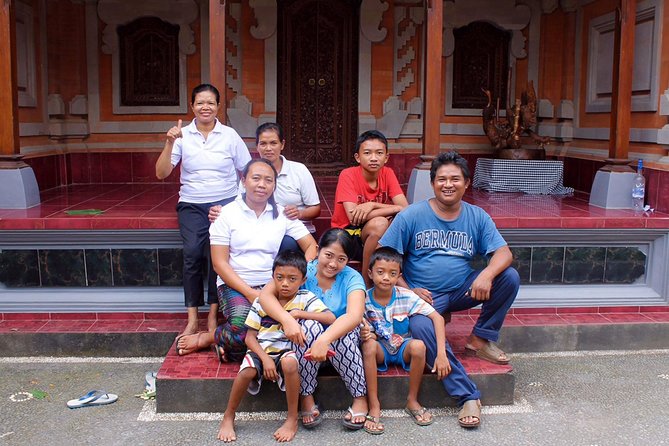
You’re welcomed by Putu and her multigenerational family, including her husband, grandparents, and children. That family setting is not just charming, it’s functional. It’s how you get explanations that feel grounded in routine, like why certain spaces exist in the home, and how Hindu practices show up in everyday life.
A big part of the experience is seeing the traditional compound layout and learning the cultural meaning behind it. One of the most repeated moments people talk about is the sense that Putu genuinely wants to share, not just instruct. She walks you through sections of the home and temple area, and the explanations come with a sense of humor, which keeps it from feeling like a lecture.
If you’re the type who likes context as much as food, you’ll appreciate how the lesson ties cooking to belief, family work, and local ceremonies happening during the week you visit.
Practical note: you’ll be moving around a home compound area. Wear shoes you can walk in comfortably, and be ready for uneven ground since this is rural village space, not a polished hotel courtyard.
The Farm and Spices: Where Flavor Starts
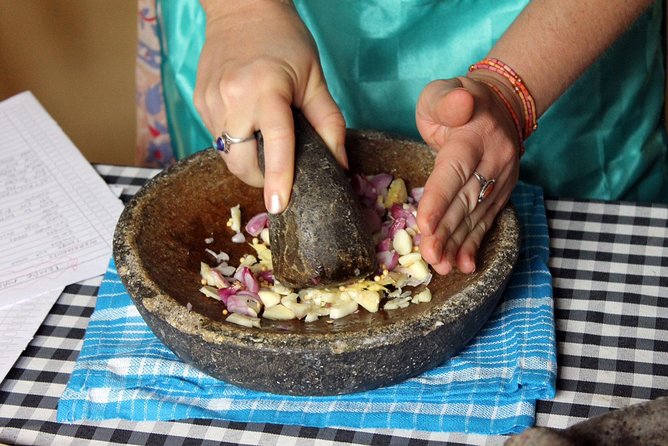
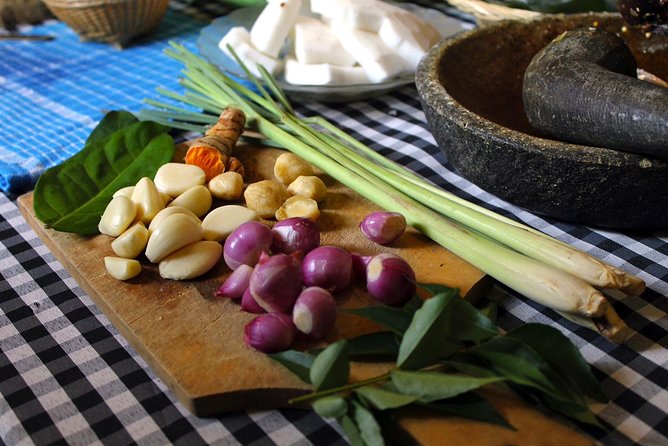
This class is built around ingredients that come from Putu’s garden and farm. You’ll see produce growing, and you’ll learn which spices she uses and how she puts them to work. A lot of cooking lessons list spices. This one explains why they matter and how they change flavor as they’re combined.
People also highlight the way the spice work is hands-on. Expect grinding and mixing that feels slower and more deliberate than using a food processor. That matters because many Balinese flavor layers come from texture and timing, not just final seasoning.
Another fascinating angle is traditional Balinese medicine. Putu shares information about ingredients used for healing properties, which is not something most cooking classes cover at all. Even if you don’t plan to copy any herbal remedies, the explanation gives you a deeper sense of how local people think about food as part of body and balance.
And yes, you’ll work with fresh items like fruit and vegetables that are picked for the meal. One takeaway I’d bet you feel is simple: when ingredients are truly fresh, your finished dishes taste like they have a pulse.
Cooking Class Flow: From Chopping to the Final Feast
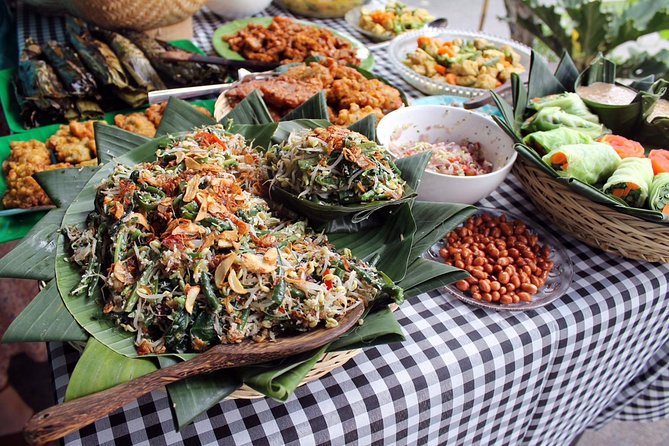
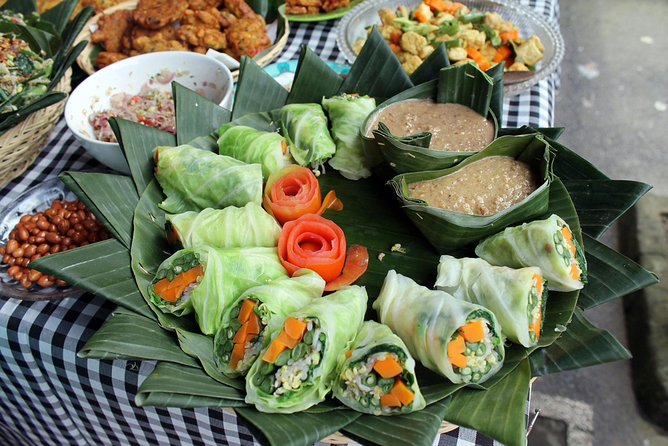
You’ll prepare five authentic Balinese dishes together. The exact menu can vary by season, but expect dishes in the style of things like grilled fish, banana leaf parcels, and curry. Depending on what you cook, you may also work with traditional methods for rice and grilling.
Here’s how the session typically unfolds once you’re in the kitchen area:
- You start with ingredient prep and basic technique, including chopping and organizing stations.
- Putu demonstrates how to combine seasonings, then helps you execute the steps.
- You’ll do more active tasks than passive watching, including grinding ingredients by hand and grilling or cooking the items.
- At the end, you sit down to eat everything you prepared as a shared Balinese feast.
The kitchen may be outdoors, and some tasks are done with simple traditional tools like wood blocks and small cleavers. It’s not “roughing it,” but it is authentic. The cleanliness and setup are usually praised, and the teaching is hands-on with safety and organization in mind.
One of the best practical things you’ll likely hear is how to adjust spice level. Putu encourages you to make it your preference, so you’re not trapped eating only one version of chili heat. If you love spice, you can push it. If you’re cautious, you can pull back.
And then comes the meal. Your feast is built around the dishes you cooked, plus homegrown rice from the family farming area. You’ll also be offered non-alcoholic beverages, plus 1 to 2 glasses of local alcohol with the meal. It’s a small pairing, more like a taste of local culture than a party situation.
- Uluwatu Sunset, Kecak Dance, and Dinner Jimbaran Beach★ 5.0 · 3,681 reviews
- Tanah Lot and North Bali Tour: Scenic Journey★ 5.0 · 3,620 reviews
- Body Massage Experience in Ubud Traditional Spa★ 5.0 · 3,506 reviews
- Best of Bali Waterfalls: Tibumana, Tukad Cepung and Tegenungan★ 5.0 · 3,047 reviews
- Bali: Ubud Kecak and Fire Dance Show Tickets★ 4.4 · 2,631 reviews
Lunch or Dinner: How to Pick Your Timing
You can choose between a lunch class or a dinner class. The core content stays similar, but your day changes.
Lunch tends to fit travelers who want to keep the evening open for Ubud walks, markets, or a relaxed spa visit. Dinner works well if you want the full “evening in Bali” feel, especially if you like cooking when the light changes and everything feels quieter.
One detail that matters: some people report that night bookings are well lit, so you’re not stumbling around. Still, if you’re sensitive to night driving or you’re planning an early wake-up the next day, lunch is usually the lower-stress option.
In either case, you should treat this as a true half-day activity. With transfers and the compound tour, it’s not a thing you squeeze into an errand list.
Price and Value: What $75 Buys You
At $75 per person, this is not the cheapest cooking class in Ubud. But the value comes from how it’s structured.
You get:
- A private class in a home compound, not a shared, scripted venue
- Five dishes taught hands-on from scratch
- Ingredients with an emphasis on farm and garden sourcing
- Round-trip transport from Ubud included
- Meal with the food you made, plus local alcohol and non-alcoholic drinks
If you’re comparing it to a group cooking class, the private setting and extra teaching time usually justify the cost. If you compare it to a restaurant meal, it’s not just “food.” You’re paying for technique, cultural context, and recipes you can try later.
The biggest value sweet spot is when you want something more personal than Ubud’s standard food stops. This class gives you a real view into how Balinese households eat, grow food, and practice religion in daily life.
One cost consideration: the transport inclusion is from Ubud. If you’re staying outside Ubud, expect an extra charge for pickup and drop-off.
Practical Tips for a Smooth, No-Stress Day
A few small preparations will make this class feel easy instead of chaotic.
Wear and pack:
- Wear comfortable clothes you don’t mind getting a little spice on
- Bring closed-toe shoes with decent grip, especially for compound paths
- If you’re sensitive to sun or bugs, consider light coverage
Communication:
- Use WhatsApp if you can. Putu’s team uses it for communication, and having it ready helps everything run on time.
Food preferences:
- If you have allergies or dietary restrictions, tell them at booking. Vegetarian and vegan options are available, but you need to request them in advance.
Spice expectations:
- You can typically adjust spice level during the lesson, so don’t worry if you’re not sure how you’ll react to chili. Start where you feel comfortable, then scale up if it’s manageable.
Timing:
- The ride from central Ubud can take about 40 minutes. Don’t schedule a hard reservation right after, and build in some buffer for traffic and rural roads.
Who This Balinese Class Fits Best
This cooking class is a strong match if you want a “lived in” Bali experience. It’s especially good for:
- Food lovers who want technique and ingredients, not just a meal
- Travelers who like cultural context alongside cooking
- Groups that want a private setting with mixed ages, because the pace can adapt
- People who prefer small, family-run experiences over big tourism operations
It may be less ideal if you’re looking for a polished, indoor cooking studio feel. This is practical, traditional, and outdoors in parts. If you need an ultra controlled indoor environment, you might prefer a more modern kitchen setting.
Also keep in mind the class includes local alcohol. Even if you don’t drink, you still get the cultural pairing, but if alcohol is a concern, mention it early so expectations are clear.
Should You Book Putu’s Private Cooking Class in Ubud?
Yes, I’d book it if you want the most personal type of cooking lesson you can find around Ubud. The combination of hands-on cooking, a family home setting, and ingredient sourcing from the garden and farm creates a payoff that goes beyond taste.
Choose this class when:
- You want five dishes made step-by-step with real guidance
- You care about how Balinese Hindu life shows up in the home
- You value a private experience with pickup from Ubud
- You want a chance to take recipes home and cook Balinese style later
Skip it only if you strongly prefer indoor venues, you don’t want to travel farther outside Ubud, or you’d rather spend your time on a different Bali activity that doesn’t center on cooking.
If that sounds like you, Putu’s class is an excellent way to spend part of your Ubud days, leaving with food, recipes, and a clearer sense of how Bali households actually live.
FAQ
What dishes do I cook in this private Balinese cooking class?
You’ll prepare five authentic Balinese dishes. The specific menu can vary depending on the season.
How long is the experience?
It runs about 3 hours total (approx.). The cooking class portion lasts about 1.5 hours, and it ends with a shared meal.
Is pickup and transport included?
Yes. Round-trip transport is included from Ubud hotel. If you’re staying outside Ubud, there is an additional transportation charge.
Is this a private class or a group class?
It’s private, meaning only your group participates.
Do you include alcohol with the meal?
Yes. You’ll be offered 1 to 2 glasses of local alcohol, along with non-alcoholic beverages.
Are vegetarian or vegan options available?
Yes. Vegetarian and vegan options are available if you request them at booking.
Can you accommodate allergies or dietary restrictions?
You should advise them at time of booking if anyone in your group has allergies, dietary restrictions, or cooking preferences.
Do you get recipes to take home?
Yes. People mention that Putu shares recipes after the class, so you have something to recreate your dishes later.
More Kitchens Taking Bookings
Fresh Ubud write-ups from the review desk




Balinese Cooking Classes, compared.
 ★ 5.0Balinese Ubud cooking school (9 Dish Cooking and Market Tour)From $58540 reviews
 ★ 5.0Balinese Farm Cooking Class by Pemulan BaliFrom $39410 reviews
 ★ 5.0Learn to cook Indonesian food at Gili Cooking Classes TrawanganFrom $33352 reviews
 ★ 5.0Balinese Cooking Class in SeminyakFrom $66281 reviews
 ★ 5.0Anggrek Putih Lombok Cooking ClassFrom $30253 reviews
 ★ 5.0Balinese Authentic Cooking Class in UbudFrom $39239 reviews
 ★ 5.0PRIVATE Balinese Cooking Class in Ubud with Dewa with TransfersFrom $69213 reviews
 ★ 5.0Balinese Cooking class with traditional morning market visitFrom $35161 reviews
Browse the lists this tour appears in