
REVIEW · BALINESE COOKING CLASSES
Balinese Authentic Cooking Class in Ubud
Spices, stone tools, and a story behind every bite. This Balinese cooking class in Ubud connects the food to a traditional market tour and a real small-group cooking flow, with a house and farm stop before you cook. I like how the day is built around fresh ingredients you help prepare and learn from, not just a demo you watch from your seat.
I also like that Lesung Bali offers vegetarian and vegan options alongside regular menus, so you do not have to settle. One consideration is the pace and structure, since some items may not be cooked by every person step by step, and the class depends on good weather to run smoothly.
In This Review
- Key Highlights You’ll Actually Care About
- Why This Balinese Cooking Class in Ubud Feels Different
- Price and Value: What $39.71 Per Person Really Covers
- The 5-Hour Flow: Market, House, Farm, Cook, Eat
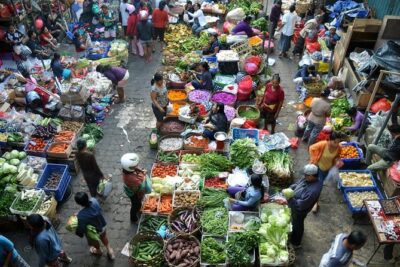
- Starting at a Traditional Morning Market (Morning Classes Only)
- A Balinese House Visit: Culture Through Daily Life
- The Farm Stop and Spice Harvest: Fresh Ingredients First
- Hands-on Cooking: Techniques You’ll Remember
- What You’ll Eat: More Than Just a Taste
- Vegetarian and Vegan Menus That Don’t Feel Like an Afterthought
- Picking a Chef and Letting the Teaching Style Work for You
- Location and Getting There from Ubud
- Tips to Get the Best Day (Without Overthinking It)
- Should You Book This Balinese Cooking Class in Ubud?
- FAQ
- How long is the Balinese cooking class in Ubud?
- Where is the class located?
- Does the tour include pickup?
- Is there a market tour?
- Can I choose a vegetarian or vegan menu?
- How big is the group?
- What is included in the price?
- What if I need transportation from outside Ubud?
- What happens if the weather is bad or I want to cancel?
- Will I get a mobile ticket?
Key Highlights You’ll Actually Care About
- Up to 15 people means you get real hands-on help, not a mass-production cooking show.
- Morning sessions include a traditional market tour where you can buy spices from locals.
- Farm harvest first so you cook with ingredients you picked, not pre-packaged ones.
- Lesung mortar and pestle technique so you learn the Balinese way to grind spice pastes.
- Ubud free shuttle and air-conditioned vehicle help you spend less energy on logistics.
Other kitchens taking bookings, compared
Why This Balinese Cooking Class in Ubud Feels Different
A lot of Bali cooking classes teach recipes. This one teaches the why behind them. You start with food culture, then you cook, then you eat what you made, with a group size that stays friendly.
What I like most is the rhythm. A day that begins at a traditional morning market (in the morning option) and then moves to a Balinese house and a farm gives your brain a map. Suddenly, the flavors feel tied to place, not just to a cookbook.
Price and Value: What $39.71 Per Person Really Covers
At $39.71 per person for about 5 hours, the value comes from what is included, not just the cooking part. Your ticket covers coffee and/or tea, mineral water, air-conditioned transfers, and all fees and taxes. You also get Balinese cake as part of the day.
Then there is the parts that cost extra in many tours elsewhere. You get a farm visit with spice harvesting, and you get both a cultural house stop and a (morning) market stop. That is the difference between a cooking workshop and a half-day “how Bali eats” experience.
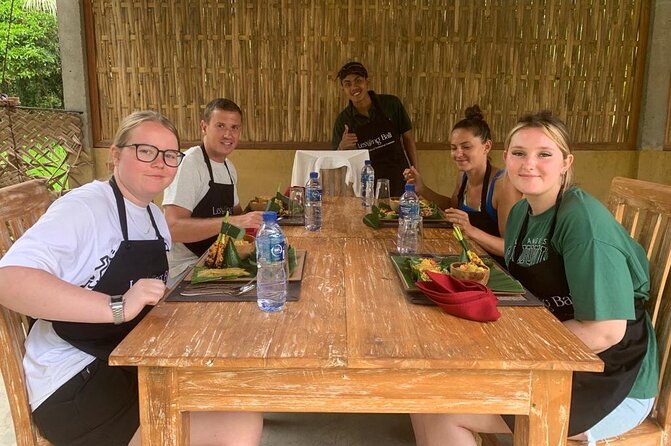
One more value note: you do not just sit and watch. With a maximum of 15 travelers, the instructors can actually guide each person through the hands-on steps, including using a mortar and pestle (a lesung).
The 5-Hour Flow: Market, House, Farm, Cook, Eat
This class runs about 5 hours and can be booked in the morning, afternoon, or evening. The order of activities is consistent, but the market stop is only for the morning class.
You will be based around the west side of Ubud, in an area with a countryside feel. Expect green surroundings and a calmer pace than you get in the busy center of town. That matters, because cooking works better when you are not stressed or rushing through traffic.
Starting at a Traditional Morning Market (Morning Classes Only)
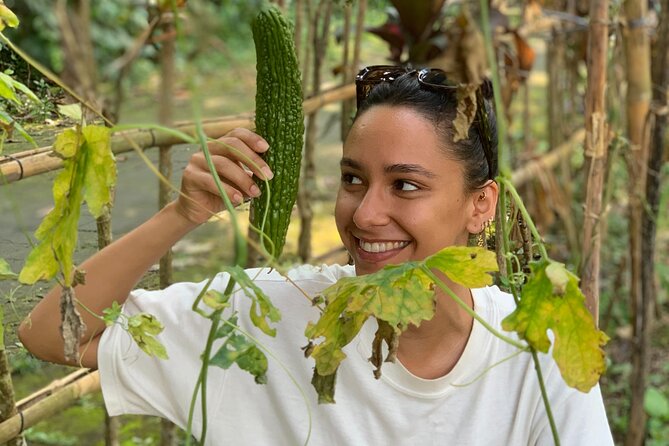
If you choose the morning session, your first big stop is a traditional market tour. The point is simple: you see ingredients up close and you learn how people select spices and produce for daily cooking.
You also have time to buy spices from local vendors as part of the experience. Even if you do not buy much, just watching how the market works helps you understand what you are tasting later.
Practical tip: markets can be lively and a bit warm. Plan to bring comfortable shoes and dress in breathable layers. Also, if you are sensitive to strong scents, you might want to pace yourself during spice browsing.
- Uluwatu Sunset, Kecak Dance, and Dinner Jimbaran Beach★ 5.0 · 3,681 reviews
- Tanah Lot and North Bali Tour: Scenic Journey★ 5.0 · 3,620 reviews
- Body Massage Experience in Ubud Traditional Spa★ 5.0 · 3,506 reviews
- Best of Bali Waterfalls: Tibumana, Tukad Cepung and Tegenungan★ 5.0 · 3,047 reviews
- Bali: Ubud Kecak and Fire Dance Show Tickets★ 4.4 · 2,631 reviews
A Balinese House Visit: Culture Through Daily Life
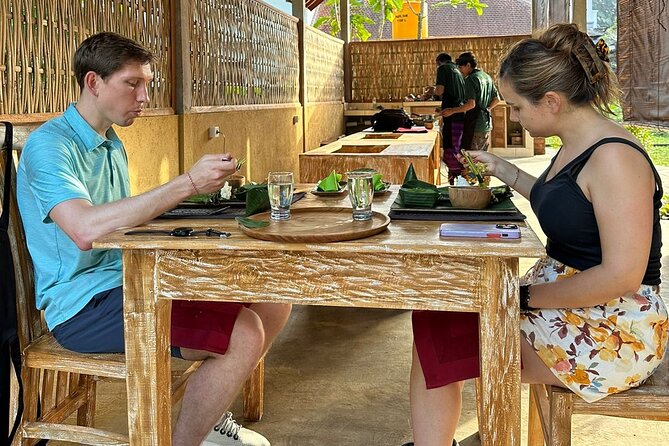
After the market, you head to a local house to see how Balinese culture shapes everyday living. This is not a glossy photo stop. It is meant to explain how the building is placed and how daily life works in a Balinese family compound.
You will also have coffee or tea during this portion, and there are snacks included as part of the welcome. Reviews describe the moment as relaxed, with time to ask questions and get a feel for how a Balinese household is organized.
Why this works: many cooking classes start at the cutting board. Here, you get the house and lifestyle context first, so the cooking lessons land better.
The Farm Stop and Spice Harvest: Fresh Ingredients First
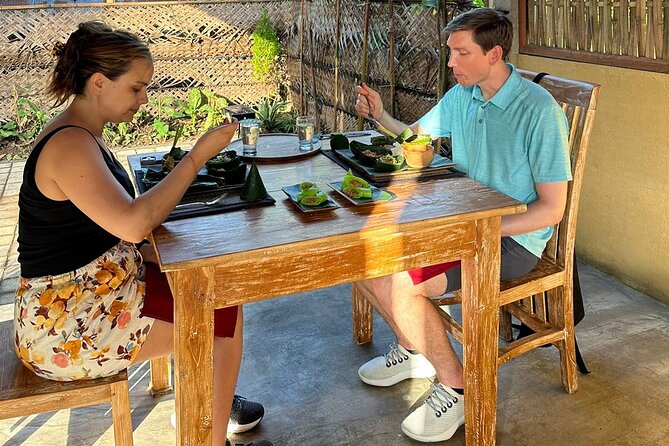
Next comes the farm. This is where you start working with the ingredients in a direct way. You may harvest the spices used during your menu, then you explore the farm grounds before the actual cooking begins.
The farm visit is also where the experience stops feeling “urban Ubud activity” and starts feeling like a rural day. You get to see how spices grow and how fresh ingredients look and smell before they become a sauce or spice paste.
One fun note from people who have done this class: a few mentioned playful moments around farm water features, including fish. It is not the main event, but it fits the farm vibe.
Hands-on Cooking: Techniques You’ll Remember
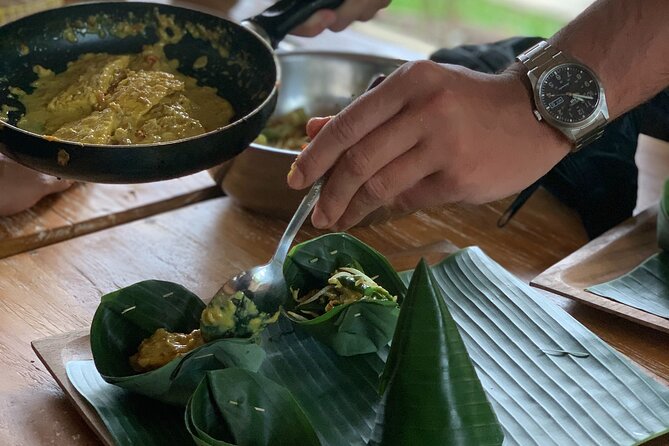
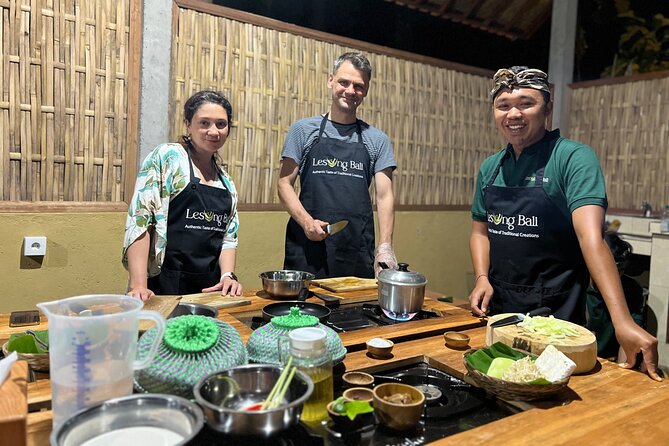
The cooking portion is guided by a Balinese chef, and the teaching style is hands-on. You start by deciding your menu option, and you can choose regular, vegetarian, or vegan.
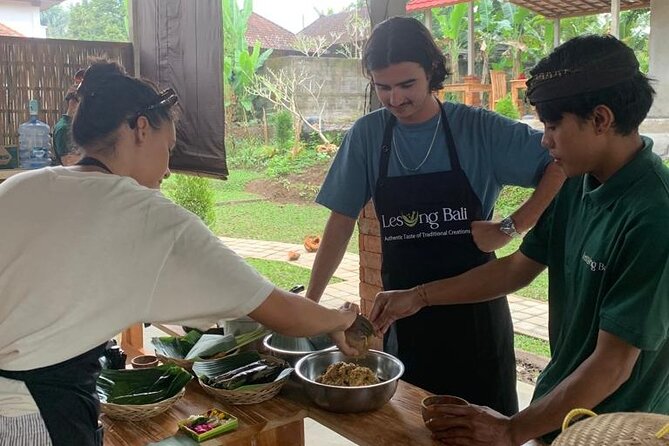
Then the chef shows you how to make authentic Balinese dishes with fresh ingredients. A big highlight is learning spice prep using lesung mortar and pestle technique. Grinding spices the traditional way matters because it changes texture and aroma, and it teaches you what to focus on when you try to recreate the flavor later at home.
During cooking, you learn chopping and pounding steps, plus how to cook the dish based on the menu. You also get help adjusting what you are doing, especially if you are not a confident cook.
If you want a class where you can ask questions and be corrected gently, this is the right format. Many people specifically praised instructors for being patient and explaining details clearly, even when someone is new to cooking.
What You’ll Eat: More Than Just a Taste
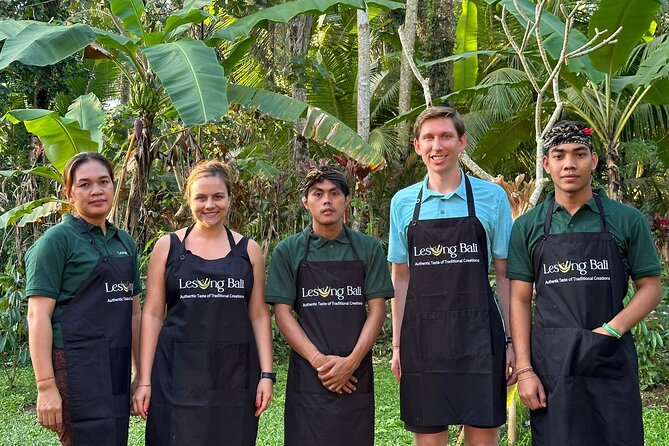
You do not come here for a tiny sample. You cook multiple dishes and then eat afterward.
The number and exact lineup depends on the menu you choose, but many experiences people describe include a multi-dish meal with dessert. Some people noted there was more food than they expected, so you should definitely come hungry.
Also, you are not only eating. You are tasting your own work and learning what each dish should smell and look like. That feedback loop is why cooking classes stick better than recipe-reading at home.
Vegetarian and Vegan Menus That Don’t Feel Like an Afterthought
Diet options are a major reason people book this class. You can choose regular, vegetarian, or vegan menus during the class.
That helps you in two ways. First, you are not stuck watching everyone else cook something different. Second, you get to learn Balinese flavor building blocks within your dietary limits, which makes it easier to adapt recipes later.
If you are traveling with a picky eater or you follow a strict diet, this structure is a comfort. You can keep the experience together while still respecting food preferences.
Picking a Chef and Letting the Teaching Style Work for You
Lesung Bali runs the class with instructors who have different teaching personalities. Names mentioned include Putri, Ron, Don, Gustie, and Begul.
What stays consistent is the goal: make it understandable and fun. Many descriptions highlight patient guidance, clear step-by-step support, and friendly humor. If you are the type who likes learning through doing, you will probably enjoy the way the chef keeps you active, not stuck waiting for your turn.
If you prefer strict timing and a very structured classroom feel, you might want to mentally prepare for a more relaxed farm-and-house rhythm. One person did note feeling slightly rushed at points, and that at least one dish component (like rice) was not cooked by every participant, but the overall experience was still described as high quality.
Location and Getting There from Ubud
The class takes place on the west side of Ubud, with a green, countryside atmosphere. Transfers from Ubud are included, and there is a free shuttle service for Ubud area only.
You also get an air-conditioned vehicle, plus mineral water. Reviews commonly mention clear pickup communication and on-time service, which is a big deal when you are dealing with a scheduled class.
If you are staying outside Ubud, note the extra transportation costs. The provider lists:
- Nusa Dua and Jimbaran area: IDR 500,000 per car
- Uluwatu area: IDR 550,000 per car
- Kuta, Seminyak, Sanur, and Canggu: IDR 450,000 per car
So if you are trying to budget, it helps to check where you are staying before you book.
Tips to Get the Best Day (Without Overthinking It)
Here are a few practical things that make a cooking day in Ubud smoother.
Wear comfortable clothes you can get a little spice smell on. Even with washing, some spice aroma lingers in fabric.
Bring an open mind about pacing. Some participants appreciate the full hands-on approach, while others note that a few components may be handled by the chef to keep the meal flowing.
If you are sensitive to strong smells or very spicy flavors, tell the instructor when you choose your menu option. The class does offer diet options, and the chef can adjust within that chosen menu.
And if you choose morning, start hydrated. You will be walking around a market and then moving through a farm area, before you begin grinding spices.
Should You Book This Balinese Cooking Class in Ubud?
Book it if you want a half-day in Ubud that is more than just cooking. This class gives you market context, a Balinese house look at daily life, and a farm visit that ties ingredients to the meal. The small group setup helps you actually participate.
Skip it or compare alternatives if you strongly want to cook every single component yourself, every step, with no exceptions. One person noted rice might not be prepared by participants, and any cooking class can have a few items handled to keep timing on track.
If you are deciding between morning, afternoon, and evening: choose morning if you value the market tour and spice shopping. Choose afternoon or evening if you want a slower start or you plan to do other activities earlier in the day.
Overall, for the price, you are paying for a full cultural food experience plus hands-on cooking, with regular, vegetarian, and vegan options and reliable Ubud transfers.
FAQ
How long is the Balinese cooking class in Ubud?
It lasts about 5 hours.
Where is the class located?
The class is in Ubud, on the west side of town, in an area surrounded by green countryside atmosphere.
Does the tour include pickup?
Pickup is offered, and transfers from Ubud are included. There is also a free shuttle service for the Ubud area only.
Is there a market tour?
Yes, there is a traditional market tour, but it is only included in the morning class.
Can I choose a vegetarian or vegan menu?
Yes. Regular, vegetarian, and vegan options are available, and you choose your menu option during the class.
How big is the group?
The experience has a maximum of 15 travelers.
What is included in the price?
Coffee and/or tea, air-conditioned vehicle, mineral water, Balinese cake, and all fees and taxes are included.
What if I need transportation from outside Ubud?
Extra transportation is not included for areas outside Ubud. The listed car fees are: Nusa Dua and Jimbaran IDR 500,000, Uluwatu IDR 550,000, and Kuta, Seminyak, Sanur, and Canggu IDR 450,000.
What happens if the weather is bad or I want to cancel?
The class requires good weather. If it is canceled due to poor weather, you will be offered a different date or a full refund. For cancellations, you can cancel up to 24 hours in advance for a full refund, and within 24 hours there is no refund.
Will I get a mobile ticket?
Yes. A mobile ticket is part of the experience details.
More Kitchens Taking Bookings
Fresh Ubud write-ups from the review desk





Balinese Cooking Classes, compared.
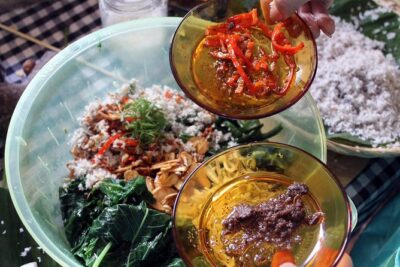 ★ 5.0PRIVATE Authentic Balinese Cooking Class in Ubud at Putu’s HomeFrom $75644 reviews
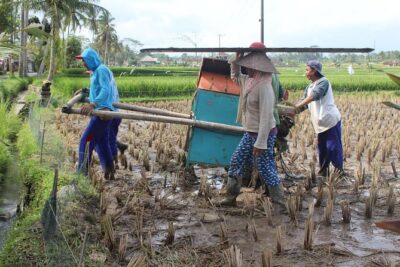 ★ 5.0Balinese Ubud cooking school (9 Dish Cooking and Market Tour)From $58540 reviews
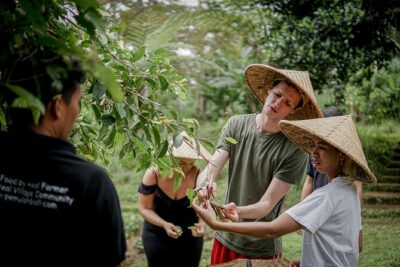 ★ 5.0Balinese Farm Cooking Class by Pemulan BaliFrom $39410 reviews
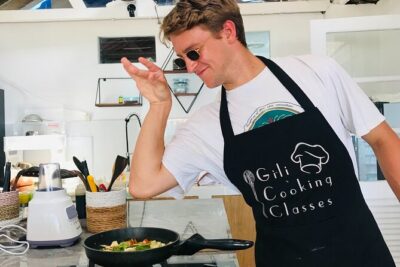 ★ 5.0Learn to cook Indonesian food at Gili Cooking Classes TrawanganFrom $33352 reviews
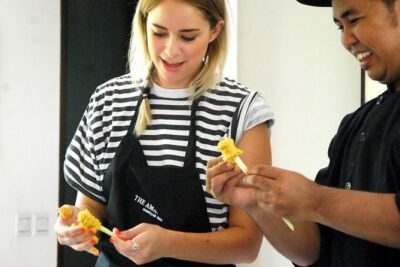 ★ 5.0Balinese Cooking Class in SeminyakFrom $66281 reviews
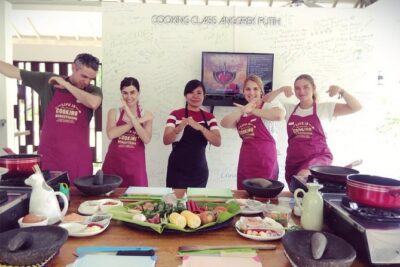 ★ 5.0Anggrek Putih Lombok Cooking ClassFrom $30253 reviews
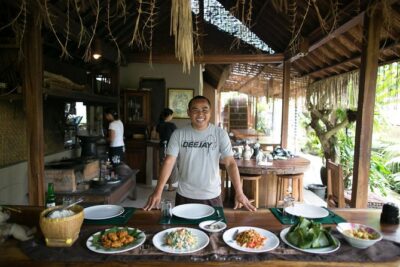 ★ 5.0PRIVATE Balinese Cooking Class in Ubud with Dewa with TransfersFrom $69213 reviews
 ★ 5.0Balinese Cooking class with traditional morning market visitFrom $35161 reviews
Browse the lists this tour appears in