
REVIEW · BALI SILVER, BATIK AND CRAFT CLASSES
Ubud Pottery Ceramic Class in Bali
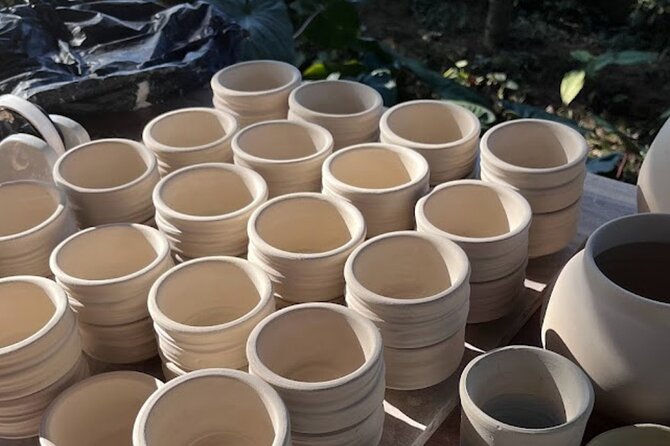
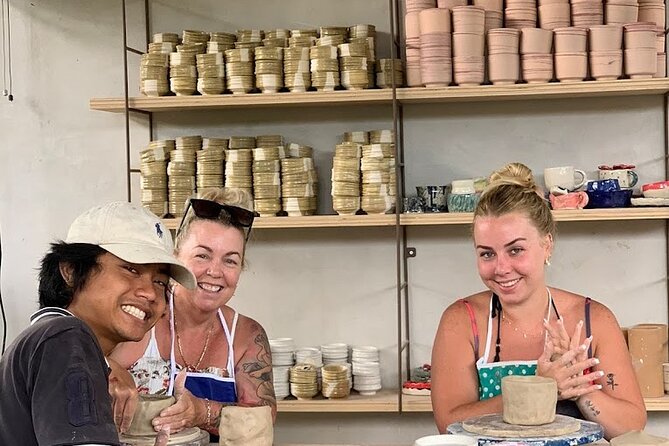
Climbing into clay is oddly calming. In this Ubud-area pottery class, you work with 2kg of clay and learn from local artisans in a quiet, garden-like setting, with a small group kept to 10 travelers. The point is simple: make something real, not just watch someone else make it.
I like the way the mentors teach the basics clearly, starting from early steps so you are not left guessing. I also like that you can make more than one piece, and you may get a mix of hand building and wheel work depending on how the class flows. It feels practical and you leave with a better sense of how ceramics actually comes together.
One key consideration: if you want to take your finished work home, you need at least 4 remaining days on your Bali trip. Also, the studio is in Singapadu, Sukawati, so plan for travel time from central Ubud, around 30 minutes in lighter traffic and longer when roads get busy.
In This Review
- Key things I’d mark on your plan
- Pottery near Ubud, why this class feels more real than most “Bali activities”
- The 3-hour class flow, what you’ll likely do with your 2kg of clay
- Hand-building and the wheel, the skills that actually transfer
- The setting at Tana ampo Pottery Studio, getting there without stress
- Price and value at about $31.31, what you really get
- Taking your pottery home, plan around the 4-day requirement
- Who this class is for, and who should skip it
- Practical tips to make your results look better
- Should you book this Ubud pottery class?
- FAQ
- How long is the Ubud pottery ceramic class in Bali?
- What is the price per person?
- Where does the class take place?
- Where does the class end?
- What is included in the price?
- Is a mobile ticket used?
- Can I take my pottery home?
- How many people are in the class?
- When will I get confirmation after booking?
- What is the cancellation policy?
Key things I’d mark on your plan
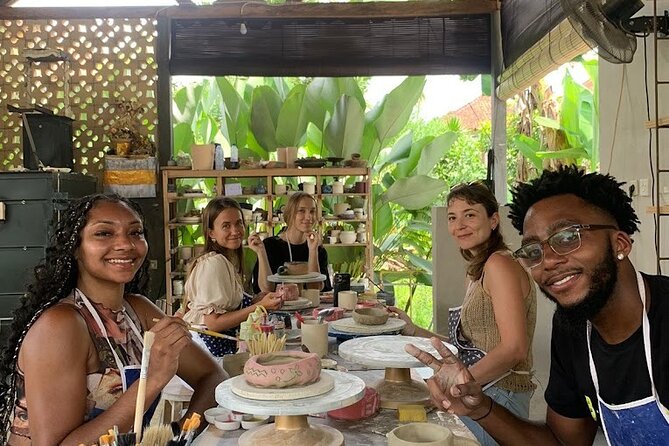
- Small group size keeps it hands-on, not crowded
- 2kg of clay gives you real working time and enough material to experiment
- Hand building and wheel throwing are part of the learning, with basics taught from scratch
- Garden setting makes the class feel calmer than most tourist workshops
- Take-home timing matters, so check your calendar before you book
Not decided yet? These Nusa Dua trips held up when we went through them.




Pottery near Ubud, why this class feels more real than most “Bali activities”
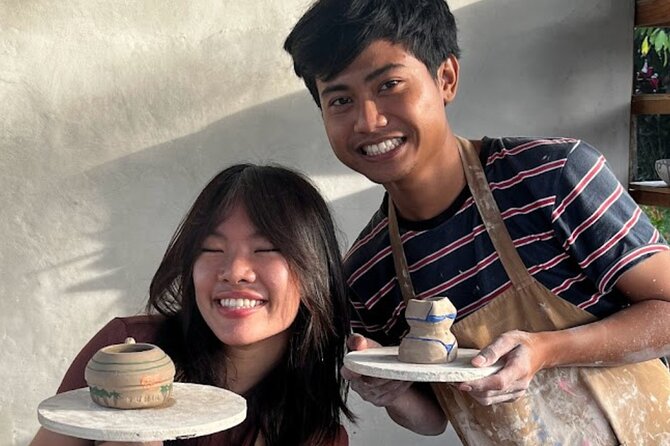
Bali has no shortage of classes, but this one earns its place because it is built around making. You are not just standing nearby while someone demonstrates. You get your hands on clay, you shape it, you add your touches, and you learn the logic behind the steps.
That matters because pottery is not magic. It is materials, technique, patience, and the right sequence of moves. Even if you have never tried ceramics before, you can still follow along because the mentors teach the fundamentals in a way that feels doable. One of the best clues from past sessions is that people often come away understanding things like the different types of clay, and that not all soils work for making ceramics.
The setting also helps. The studio experience is described as set in a beautiful garden, which turns a 3-hour activity into something you can actually enjoy without feeling rushed or stuck indoors.
The 3-hour class flow, what you’ll likely do with your 2kg of clay
This is listed as an approximately 3-hour guided pottery class, and the structure is focused on hands-on progress. You start at Tana ampo Pottery Studio, then you go into the guided session where you work with 2kg of clay provided for the class.
From the information you are given, the core steps revolve around:
- molding and shaping your clay
- adding personalized touches so it looks like you made it
- learning traditional techniques while you work
One thing that shows up in the class feedback is that people often end up with more than one piece. A past participant mentioned making two pieces, one made by hand and one using the wheel. Even if your exact outcome depends on class pace and the instructor’s setup, you can plan on getting proper guidance through more than one style of making.
Because this is a small-group experience (max 10), the pacing tends to support questions and adjustments. If your first attempt comes out lopsided, you have time to fix the next steps rather than feeling like you are behind.
Hand-building and the wheel, the skills that actually transfer
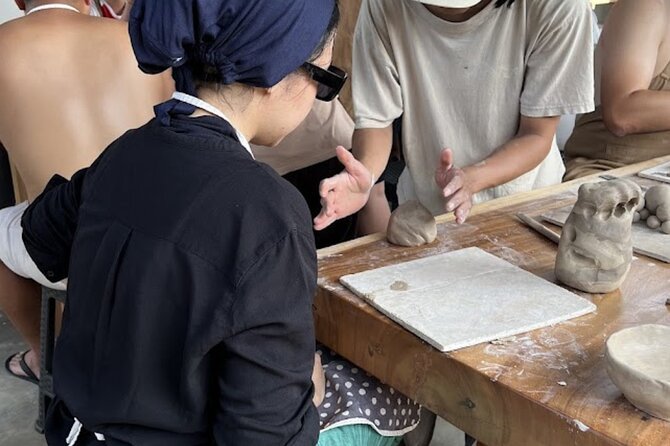
A pottery class should teach skills you can use again. Here, the learning seems grounded in fundamentals like spinning (wheel throwing) and hand building, plus basics like molding. You are not expected to already know what terms mean or what the clay is telling you.
This is especially valuable if you have done artsy things before but never ceramics. Clay has its own timing. It can be workable, then suddenly not. It can be forgiving, then fragile. When mentors teach the basics clearly, you stop treating the process like a lucky outcome and start understanding what to do next.
Another useful takeaway from feedback: people come away learning that different clay types behave differently, and not every soil is suitable. That is a big deal, because it explains why ceramics is its own craft, not just shaped dirt. Even if you never buy clay again, that knowledge makes the craft feel less mysterious.
The setting at Tana ampo Pottery Studio, getting there without stress
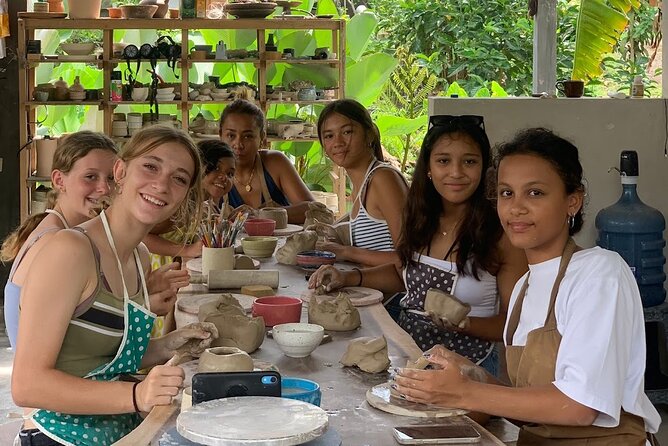
The meeting point is Tana ampo Pottery Studio, Central Singapadu, Sukawati area in Bali (address: C793+8PH, Central Singapadu, Sukawati, Gianyar Regency, Bali 80582, Indonesia). The activity ends back at the meeting point.
Location-wise, this is not in central Ubud proper. One piece of practical info from past experiences: it is about a 30-minute drive out of central Ubud, and it can take longer depending on traffic. So when you plan your day, do not schedule another “must-see” immediately after class with a tight buffer.
The good news is the class is only about 3 hours, so you still get a full day if your schedule is reasonable. If you are staying closer to South Bali or a bit outside Ubud, this kind of studio stop can also be easier than it sounds, since you are already near the Ubud area.
- Bali Instagram Tour – Lempuyang Bali Gate of Heaven★ 5.0 · 149 reviews
- Bali Parasailing Adventure,Banana Boat,Jet Ski and Donut Boat with Transfers★ 5.0 · 130 reviews
- Devdan Show★ 4.5 · 113 reviews
- Mount Batur Sunrise Trekking and Rice Terrace Adventure★ 5.0 · 111 reviews
- Uluwatu Temple, Beaches and Southern Bali Tour★ 4.5 · 81 reviews
Price and value at about $31.31, what you really get
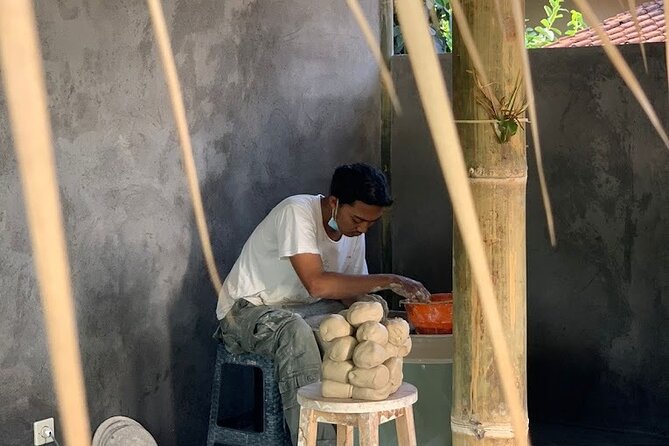
At $31.31 per person, this class sits in the category of paid experiences that many people consider “worth it” when they actually want to make something. The key value is not just the workshop itself. It is what is included.
You get:
- a guided pottery class
- 2kg clay
That is the heart of the value equation. If you are paying for a “watch and snack” workshop, $31 feels steep. But for a hands-on ceramics session where you work with a meaningful amount of clay, the price starts to make sense. The small group size (max 10) also supports the idea that you will not be lost in a crowd.
Another value point: you are learning foundational techniques, like wheel and hand building. That kind of skill is hard to get from generic arts and crafts. Even if you only keep the final items as souvenirs, you still gain understanding.
Taking your pottery home, plan around the 4-day requirement
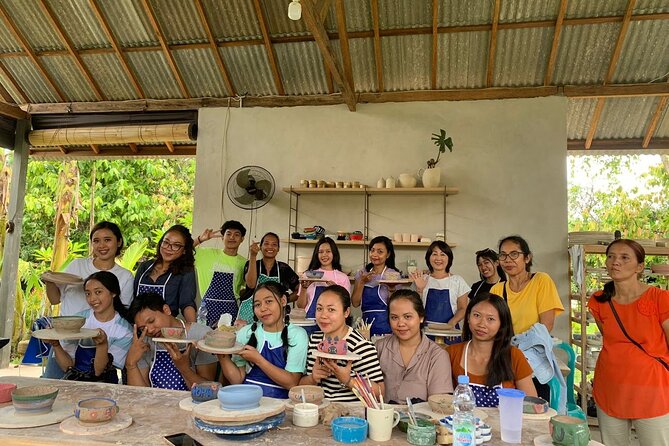
This is the one part I want you to treat like a checklist item. The experience specifically notes that if you want to take your work home, you should have a minimum of 4 remaining days left.
Why this matters in real life: pottery takes time beyond the moment you shape it. Clay needs finishing time, and the note is basically telling you that the studio needs buffer days before your pieces are ready to leave with you. If you book this on the last stretch of your trip, you may end up with delays that clash with flights and hotel checkouts.
If you are trying to time it perfectly, plan your class early enough in your stay that you are not rushing. If you have less than 4 days left, you can still do the class for the experience, but you should accept that you may not be able to take everything home immediately.
Who this class is for, and who should skip it
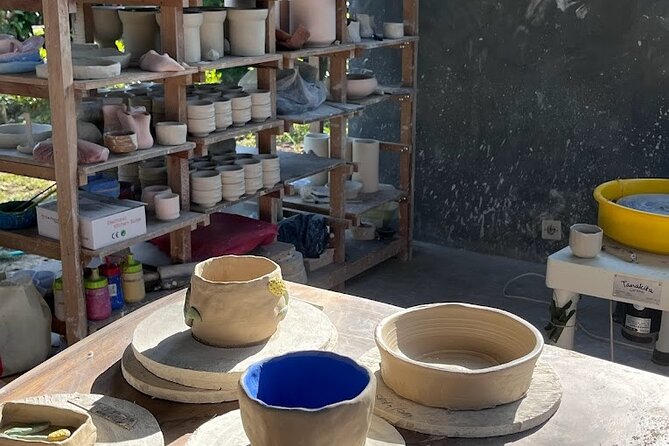
This suits you if you want a calm, hands-on cultural activity and you like learning by doing. It is also a solid fit for:
- beginners who want basics taught clearly
- people who like creative crafts but want real technique, not just a souvenir
- couples or friends who want a shared activity that is not a temple sprint
It may be less ideal if:
- you are short on time and do not have the required 4 days for take-home pieces
- you are expecting a long guided tour of Ubud highlights instead of a focused workshop
- you dislike workshops where you get hands-on and messy (yes, you will probably get some clay on you)
Also, the experience notes that most travelers can participate. So if you have basic mobility and you can sit or stand comfortably for a few hours, you are likely in the right spot.
Practical tips to make your results look better
You can make the class easier on yourself with a few simple moves:
- Wear clothes you do not mind getting dusty. Clay is messy, and it is part of the process.
- Bring water and take breaks if you need them. A 3-hour creative session can feel longer if you are working carefully.
- Don’t overthink perfect symmetry on the first try. Basics first. Adjustments come after you learn what the mentor is correcting.
- If you care about take-home timing, check your calendar first, then book. The class is great, but travel math matters.
One more small tip: since the studio is outside central Ubud, plan your day so you do not have to fight traffic right after. Give yourself a cushion. You will enjoy class more when you arrive with less stress.
Should you book this Ubud pottery class?
Yes, if you want a small-group, guided pottery session where you actually make things with provided clay and you are interested in learning real basics like hand building and wheel throwing. The garden setting and the teaching approach are strong reasons to book, especially if you like calm, practical activities over packed sightseeing.
Hold off or plan carefully if you are near the end of your Bali trip. The take-home note about having at least 4 remaining days is important, and you should build your schedule around it. Also, because the studio is in Singapadu, Sukawati, not central Ubud, plan for travel time.
If you want a souvenir that comes with skills attached, this is a good use of your time.
FAQ
How long is the Ubud pottery ceramic class in Bali?
The class is about 3 hours.
What is the price per person?
The price is $31.31 per person.
Where does the class take place?
It starts at Tana ampo Pottery Studio, Central Singapadu, Sukawati, Gianyar Regency, Bali 80582, Indonesia.
Where does the class end?
The activity ends back at the meeting point.
What is included in the price?
The guided pottery class and 2kg clay are included.
Is a mobile ticket used?
Yes, it includes a mobile ticket.
Can I take my pottery home?
You can take your work home if you have at least 4 remaining days left in your trip.
How many people are in the class?
The class has a maximum of 10 travelers.
When will I get confirmation after booking?
Confirmation is received at the time of booking.
What is the cancellation policy?
Free cancellation is available up to 24 hours in advance for a full refund. If you cancel less than 24 hours before the start time, the amount paid will not be refunded.
Fresh Nusa Dua write-ups from the review desk




Bali Silver, Batik and Craft Classes, compared.
 ★ 5.0Ubud Silver Class Jewelry making in baliFrom $36978 reviews
 ★ 5.0Ubud Monkey Forest Silver Class – Craft Your Own Silver JewelryFrom $41254 reviews
 ★ 5.0Crafting Heritage Batik Painting WorkshopsFrom $29164 reviews
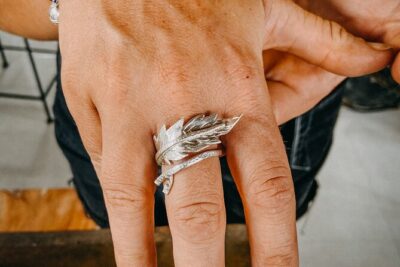 ★ 5.0Ubud Bali Silver Jewelry ClassFrom $50163 reviews
 ★ 5.0Ondox Silver Class and jewelry UBUDFrom $30132 reviews
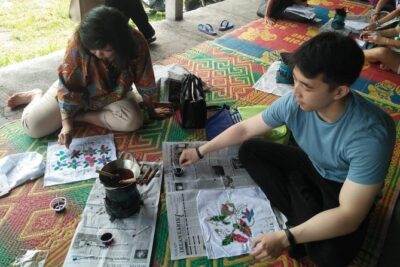 ★ 5.0Batik Master Class with Full ProcessFrom $19103 reviews
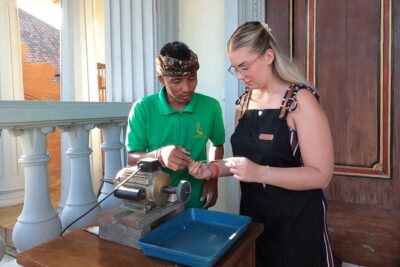 ★ 5.0Private Traditional Bali Silver Jewelry Making ClassFrom $4874 reviews
 ★ 5.0Kuta Bali Silver Jewelry Making Class Near Kuta BeachFrom $4557 reviews
Browse the lists this tour appears in