
REVIEW · BALINESE COOKING CLASSES
Afternoon Cooking Class & Making Bali Offering with Dinner
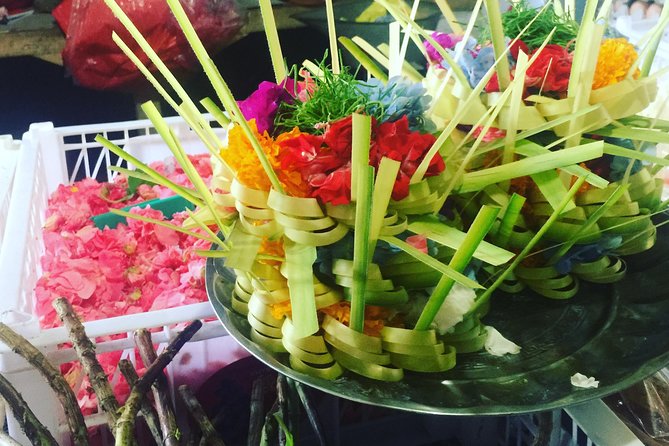
Nine dishes in five hours, that works. In Ubud at Subak Cooking Class, you start with a family welcome and jump quickly into the Balinese spice paste that powers the meal, led by host Wayan Aris. You’ll also make a canang bali offering early on, so it feels like culture class, not just cooking.
I also love the payoff: you make up to nine recipes yourself, then sit down to eat a big family-style meal made from your own hands. The class ends with a PDF copy of the nine recipes, so your memory has something practical to cling to after you leave Ubud.
One thing to double-check is the market stop. The notes for this afternoon class say there is no market visit in the afternoon, even though the overall idea of the experience is ingredient shopping.
In This Review
- Key highlights worth getting excited about
- Cooking in Ubud at 2:00 pm, and how the schedule really feels
- A family-run kitchen led by Wayan Aris
- Canang bali offering first: why that moment matters
- Market shopping: what you may miss in the afternoon
- The spice paste class: your flavor cheat code
- Making up to nine Balinese dishes, step by step
- Dinner at the family home: what the meal adds to the learning
- Price and value: what $46 gets you in real terms
- Small-group comfort tips (so you don’t feel rushed)
- Who should book this class, and who might not
- Should you book Subak Cooking Class for the afternoon?
- FAQ
- What time does the afternoon class start?
- How long is the experience?
- Is hotel pickup and drop-off included?
- Is there a market visit during the afternoon class?
- How many Balinese dishes will I cook?
- What does the price include?
- How large is the group?
- Can I cancel for a full refund?
- Do I need to bring cash?
Key highlights worth getting excited about
- Afternoon timing: starts at 2:00 pm and runs about 5 hours
- Canang bali offering + cold ginger tea: you begin with a Balinese offering and a welcome drink
- Spice paste fundamentals: learn the base paste used in many dishes
- Hands-on cooking for a small group: up to nine dishes, max 12 travelers
- You eat what you cook: dinner at the family home, plus bottled/mineral water
- Cash and pickup boundaries: bring cash for extra purchases, and pickup is free only in Ubud center
Other kitchens taking bookings, compared
Cooking in Ubud at 2:00 pm, and how the schedule really feels
This is an afternoon class, with a 2:00 pm start and about 5 hours total. That timing matters in Bali, because it helps you avoid the hottest hours and still get a real evening meal out of the experience. If you like tours that end with dinner, this one fits your day better than a morning option that can overlap with other plans.
You’ll also start with a set pickup plan. The activity lists a meeting point near Ubud Palace (use the provided pin at F7V7+72R), and pickup is described as free for Ubud center area hotels. If you’re staying farther out, the notes say pickup outside Ubud needs a request and may come with extra charges, so it’s smart to confirm early.
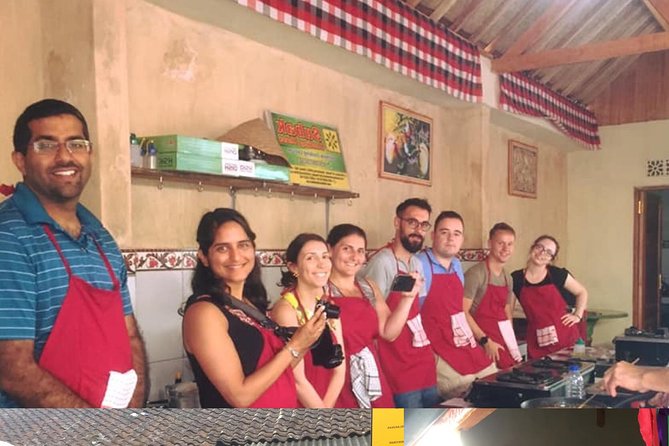
The class stays fairly compact, with a maximum of 12 travelers. That small group size is one of the reasons this kind of experience tends to feel personal, not like a factory line where you watch most of the work. You’ll still have a schedule, but it’s more “do it with the group” than “wait for your turn.”
A family-run kitchen led by Wayan Aris
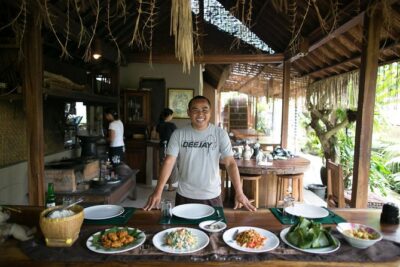
The biggest strength here is the way the class is set up around a local family home, not a big cooking school stage. The experience is run by Wayan Aris, and the tone in the descriptions is that you’re cooking alongside a household, with guidance from a host who’s focused on keeping things moving smoothly.
You should expect a clear progression. First you’re welcomed. Then you make an offering. Then you learn the spice paste base. After that, you start cooking the recipes, and you sample them as you go, before the final group meal at the house. It’s structured, but it still feels like you’re learning how meals actually happen in Bali.
One practical upside to a family-run setup is that it’s easier to ask questions without feeling rushed. If you’re the type who wants to know what that ingredient is, or why the paste is made that way, you’re likely to get real answers rather than a quick script.
Canang bali offering first: why that moment matters
Before any serious chopping, you’ll make a canang bali offering. That’s not just decoration. It’s one of the ways Balinese daily life shows up in food, because offerings and meals sit inside the same spiritual rhythm for many families.
Even if you don’t know the details in advance, you’ll get direction on what you’re making and how it fits into the bigger picture. It also changes the vibe of the day. Instead of jumping straight into food, you start with a cultural practice, then move into cooking with a better sense of why the flavors and ingredients matter.
You’ll also get a welcome drink of cold ginger tea. It sounds simple, but it’s a nice reset after travel around Ubud. It also gives you a moment to slow down before the pace of the cooking starts.
Market shopping: what you may miss in the afternoon
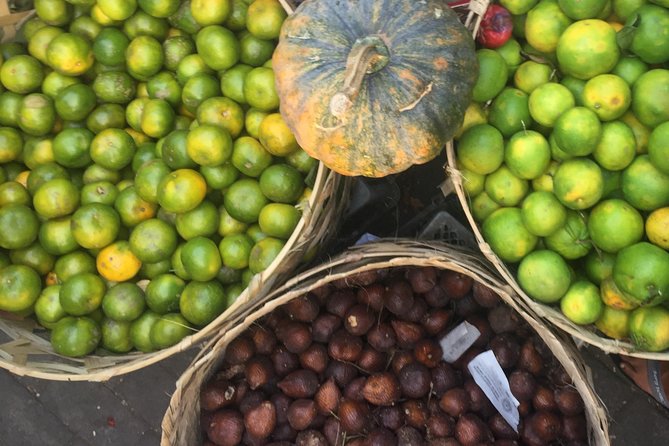
Here’s the one detail I’d treat as a checklist item: this afternoon class specifically notes that there is no market visit. The overall concept of the experience includes ingredient shopping in a local market, but the afternoon version may skip that step.
So how should you plan? If you came to Bali wanting the full market-to-kitchen arc, you might prefer a different time slot. If you mainly want the cooking and the chance to make spice paste plus multiple dishes, you’ll still get a strong experience even without the market stop.
If you’re someone who loves browsing for spices, herbs, and local ingredients, I’d ask the operator when you book what ingredient sourcing looks like for the afternoon session. The key is matching your expectations to the schedule, so you don’t feel like you missed a core part of the day.
- Uluwatu Sunset, Kecak Dance, and Dinner Jimbaran Beach★ 5.0 · 3,681 reviews
- Tanah Lot and North Bali Tour: Scenic Journey★ 5.0 · 3,620 reviews
- Body Massage Experience in Ubud Traditional Spa★ 5.0 · 3,506 reviews
- Best of Bali Waterfalls: Tibumana, Tukad Cepung and Tegenungan★ 5.0 · 3,047 reviews
- Bali: Ubud Kecak and Fire Dance Show Tickets★ 4.4 · 2,631 reviews
The spice paste class: your flavor cheat code
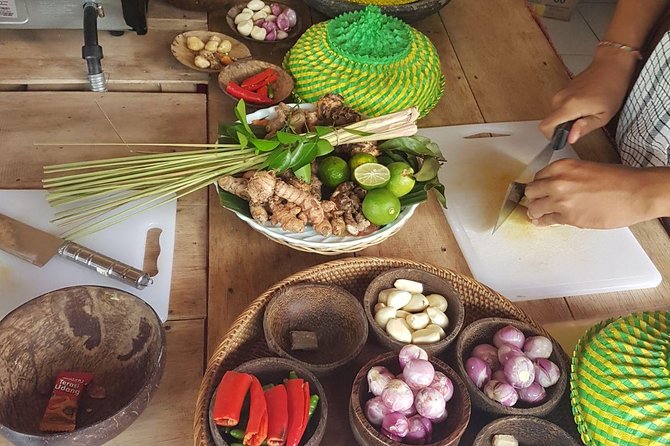
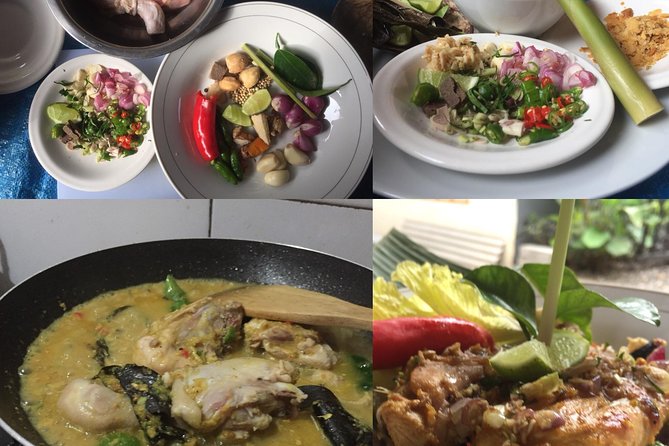
This is where you get the real “why this tastes like Bali” lesson. You’ll learn how to make Balinese spice paste, which the experience describes as a base used for many dishes. That means you’re not just copying recipes. You’re learning a technique that can carry across several dishes.
Expect the paste to be the foundation for the meal’s core flavors. Once you understand the paste, each next dish becomes easier to follow because you know where the taste is coming from.
Also, cooking multiple dishes in one session can feel chaotic if you don’t have a base skill. The spice paste lesson gives you a through-line. It helps the day make sense, even if you’re juggling several recipes and ingredients in a limited time window.
Making up to nine Balinese dishes, step by step
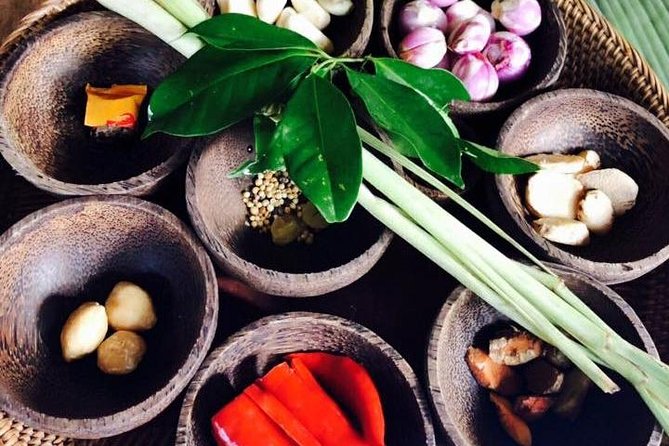
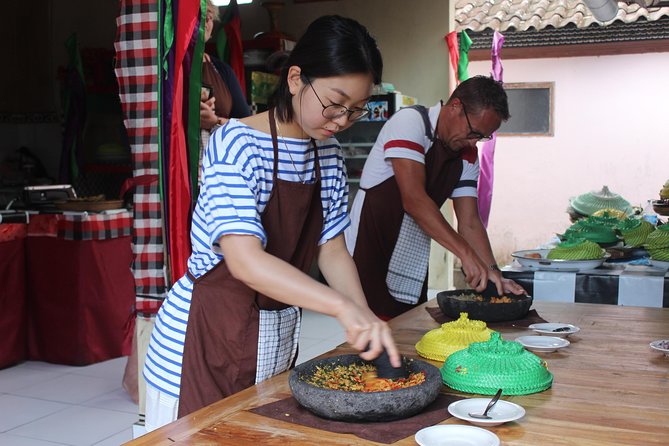
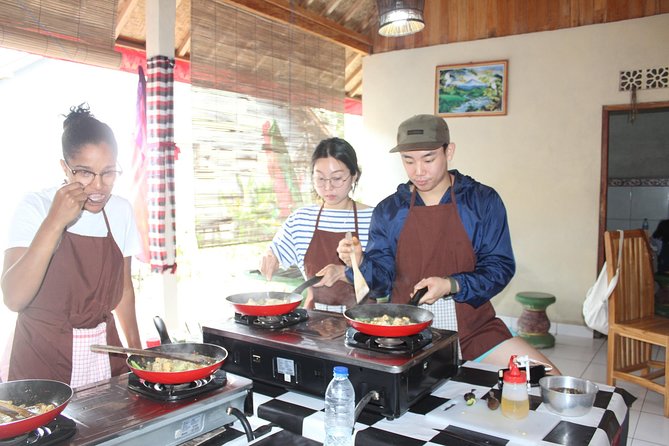
The class is designed around making up to nine local dishes by hand. That’s a big promise for a half day, and the structure is built to make it possible. You’ll work recipe by recipe, and you should have chances to taste along the way.
You’ll typically see some prep involved, and that can make a big difference. One of the key ideas from how this type of class is described is that the heavier groundwork may already be partly done, so you spend more time actively cooking rather than standing around waiting. If you want hands-on time, that’s exactly what you should hope for.
As you cook, you’ll also be learning ingredient basics. Even when you don’t get a formal lecture for every item, the flow of the class teaches you what matters most: texture, timing, and how spice paste changes the dish. That’s the difference between eating food and actually understanding how it comes together.
And yes, there’s a sampling component. You’ll taste your food as you cook, which is a great way to check seasoning and learn what the next step is supposed to accomplish.
Dinner at the family home: what the meal adds to the learning
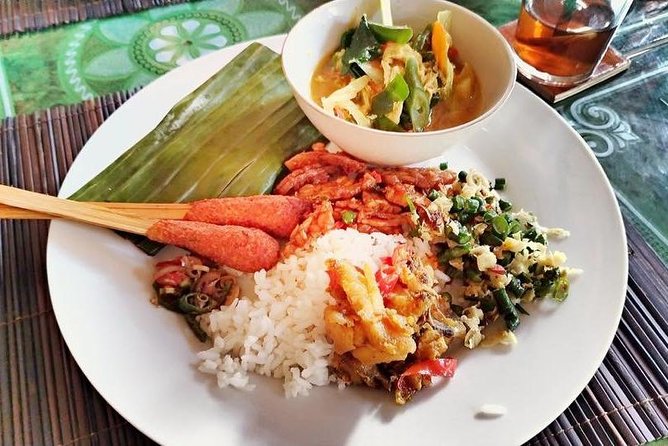
After you cook, you’ll enjoy the big shared meal at the Balinese house, meaning you’re not just taking ingredients from point A to point B. You sit down and eat what you made, as a proper end to the work.
The experience describes the lunch or dinner as coming from your own cooking, and because you start at 2:00 pm, you should expect it to function like dinner for the afternoon slot. Either way, it’s a satisfying format. Cooking classes that end with a snack can feel a bit empty. This one ends with a full meal.
You’ll also have drinks covered, including mineral water and bottled water. That sounds minor, but on a warm Bali afternoon it keeps you comfortable while you’re working and eating.
One extra bonus is the chance to take home the recipes. The class includes sharing a PDF copy of the nine Balinese recipes. It’s not the same as taking food to go, but it does mean you can recreate what you learned without guessing at ingredient lists later.
Price and value: what $46 gets you in real terms
At $46, this is priced like a serious cultural activity, not a casual demo. The value comes from three things you typically don’t get all together in cheaper classes.
First, you’re cooking up to nine dishes. That’s a lot of active time compared to classes that focus on two or three recipes. Second, you’re learning the spice paste base, which is the kind of skill that keeps paying off. Third, you’re getting the family-home meal and the PDF recipes, so it doesn’t end when the class ends.
Also, the class includes local host cooking instruction and round-trip transfers from Ubud hotels described as included for Ubud center pickup and drop. For many people, that transport piece alone makes the class feel more convenient, especially if you don’t want to manage a scooter after shopping or other Ubud plans.
The one thing to keep in mind for value is the practical boundaries. Pickup is free only in Ubud center, and outside Ubud may require additional charges. If you’re staying outside that zone, the final cost can creep up.
Small-group comfort tips (so you don’t feel rushed)
With a max group size of 12, you’ll still want to show up ready to work. Spice paste and multiple dishes mean you’ll likely handle ingredients that stain, so wear something you don’t mind getting a little messy. Even if you try to be careful, cooking always leaves a trace.
Since the notes ask you to bring cash money for buying something, plan for that. If there is any chance you’ll be asked to pay for extra items during the experience, having cash helps you avoid awkward moments. If you’re the type who wants to buy extra spice mixes or ingredients, cash is the simplest solution.
Lastly, protect your schedule. The class has a fixed 2:00 pm start time, and it runs about 5 hours. Don’t stack it too tightly with late-day plans unless you’re comfortable with traffic and timing in Ubud.
Who should book this class, and who might not
This is a great fit if you want a hands-on cooking experience with culture woven in, especially if you like learning foundations like the spice paste method. The canang offering also makes it appealing for people who want more than just food technique.
It’s also a good match for food lovers who care about results, because the class is built around cooking and then eating what you made, not watching from the sidelines.
You might think twice if market browsing is your top priority, because the afternoon class notes say there is no market visit. In that case, you’d likely be happier with a different session that includes ingredient shopping.
Should you book Subak Cooking Class for the afternoon?
If you’re in Ubud and you want a compact, family-style experience where you cook multiple dishes and learn the core flavor base, I think it’s a smart booking at around $46. The combination of canang bali offering, spice paste training, and a full meal you cooked makes the time feel meaningful.
Just confirm two things before you commit: whether you care about a market stop in your session (afternoon may skip it), and whether your hotel is within the Ubud center pickup area. If you can answer those, you’ll go in with the right expectations and come out with skills you can actually use after Bali.
FAQ
What time does the afternoon class start?
The class starts at 2:00 pm.
How long is the experience?
It lasts about 5 hours (approx.).
Is hotel pickup and drop-off included?
Pickup and drop-off are included for Ubud center area hotels. Pickup outside Ubud is not included unless you request it with additional charges.
Is there a market visit during the afternoon class?
The afternoon class notes say there is no market visit.
How many Balinese dishes will I cook?
You will cook up to nine Balinese recipes.
What does the price include?
The class includes a local host cooking class and dinner, plus mineral water and bottled water. A cold ginger tea welcome drink is also part of the experience.
How large is the group?
The group maximum is 12 travelers.
Can I cancel for a full refund?
Yes. You can cancel up to 24 hours in advance for a full refund.
Do I need to bring cash?
You should bring cash money for buying something during the experience, or for any additional charges if you are outside Ubud.
More Kitchens Taking Bookings
Fresh Ubud write-ups from the review desk





Balinese Cooking Classes, compared.
 ★ 5.0PRIVATE Authentic Balinese Cooking Class in Ubud at Putu’s HomeFrom $75644 reviews
 ★ 5.0Balinese Ubud cooking school (9 Dish Cooking and Market Tour)From $58540 reviews
 ★ 5.0Balinese Farm Cooking Class by Pemulan BaliFrom $39410 reviews
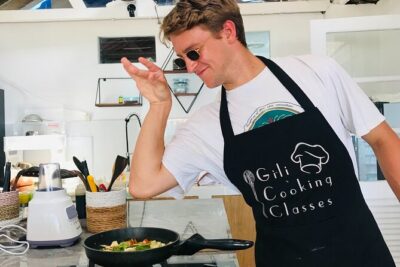 ★ 5.0Learn to cook Indonesian food at Gili Cooking Classes TrawanganFrom $33352 reviews
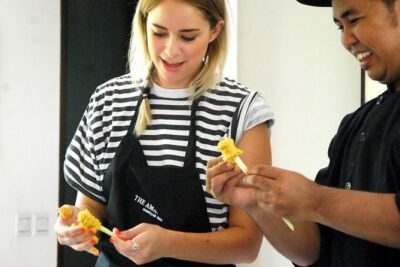 ★ 5.0Balinese Cooking Class in SeminyakFrom $66281 reviews
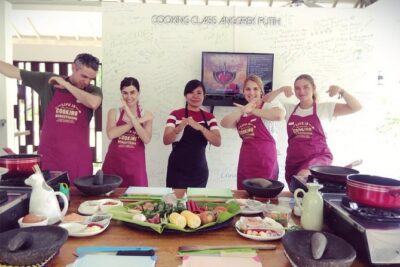 ★ 5.0Anggrek Putih Lombok Cooking ClassFrom $30253 reviews
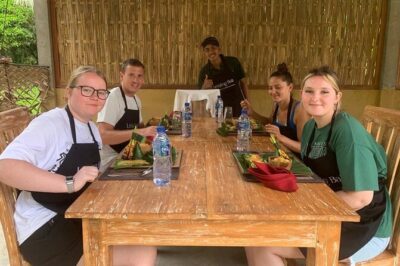 ★ 5.0Balinese Authentic Cooking Class in UbudFrom $39239 reviews
 ★ 5.0PRIVATE Balinese Cooking Class in Ubud with Dewa with TransfersFrom $69213 reviews
Browse the lists this tour appears in