
REVIEW · BALINESE COOKING CLASSES
Exclusive Authentic Balinese Cooking Class at Family home
That first sniff of fresh spices wakes you up.
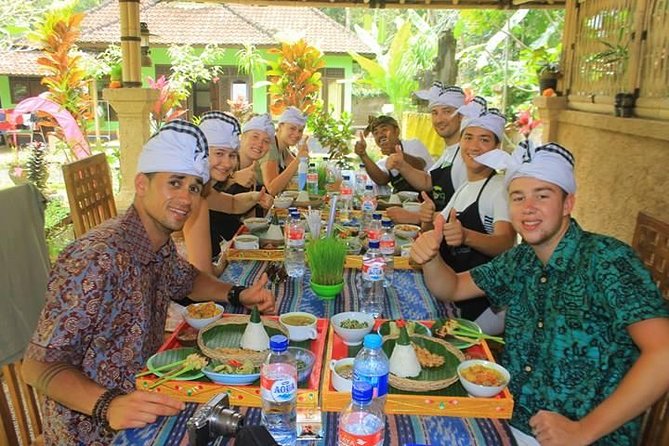
This is a private Balinese cooking class near Ubud that starts with a walk through Payangan Market and ends with you cooking and eating in a Balinese compound open kitchen. You get a close, everyday look at local food culture, not just a scripted demo.
I love the hands-on setup. You chop, pound, grind, grill, and plate your own dishes at your own station, guided by the chef, not hovering around watching. I also like the way they teach flavor building, especially the spice preparation using traditional tools like a wooden chopping block and a stone mortar, where paste and sauce work really matters.
One thing to consider: it runs about 6 hours, and it depends on good weather. If you’re short on time, or you need a perfectly flexible schedule, this may feel a bit less convenient than a quicker class.
In This Review
- Key highlights
- Payangan Market: the ingredient hunt that makes cooking click
- A Balinese compound house visit, coffee first
- Open kitchen teaching: hands-on, student-driven, chef-guided
- Spice paste training: wooden block meets stone mortar
- The dishes you cook: 5 courses with vegetarian options
- Lunch or dinner you make: why the timing is part of the value
- Private class size: why max 12 works for real cooking
- Price and what $75 gets you in Ubud area
- Morning market or afternoon night market: pick based on your energy
- What to bring, what to expect, and how to enjoy the full 6 hours
- Who should book this class at a family home?
- Should you book this Balinese cooking class at a family home?
- FAQ
- What is the duration of this Balinese cooking class?
- Where does the experience start and end?
- Is hotel pickup and drop-off included?
- How big is the group size?
- Can I choose vegetarian dishes?
- Do I need prior cooking experience?
- What dishes will we cook?
- What is included with the class?
- What if the weather is bad?
Key highlights
- Payangan Market stop for a real local produce and ingredient tour
- Family home open kitchen inside a Balinese compound, not a commercial studio
- Traditional spice technique with wooden chopping and stone mortar grinding
- You cook everything from prep to final dishes, with your own station and tools
- Vegetarian-friendly menu options, prepped when you tell them in advance
- Recipes and certificate so the experience follows you home
Other kitchens taking bookings, compared
Payangan Market: the ingredient hunt that makes cooking click
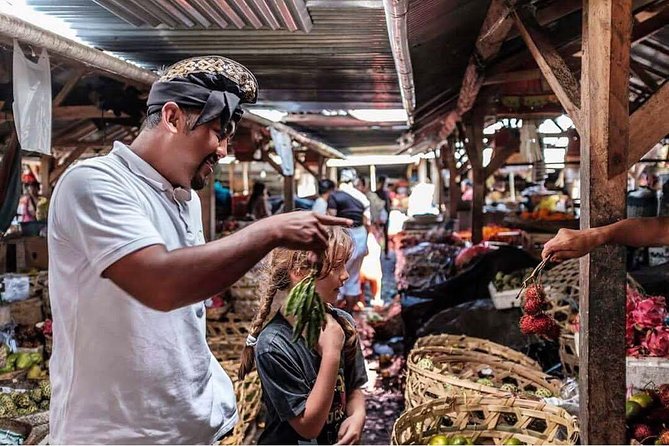
Your morning or afternoon begins with the Payangan Market area, where you get to see ingredients that show up in everyday Balinese cooking. This matters because the class is not just about technique, it is also about knowing what you are actually using, and why it tastes the way it does.
If you care about food, you will probably notice how different the spice routine feels once you have watched ingredients being selected locally. Even small things, like how herbs and vegetables are grouped, how spices look before grinding, and what people buy for meals, make the later cooking steps feel more intentional.
There is also a cultural payoff here. You’re not staying inside Ubud’s tourist bubble. Instead, you’re walking through a traditional market setting where food is simply part of daily life.
A Balinese compound house visit, coffee first
After the market, you head into a Balinese compound house setting. You’ll be welcomed with a Bali coffee or tea, plus Balinese cake before cooking starts. It’s a small moment, but it sets the tone. This class is run like a family event, not a factory-style workshop.
One reason this stop lands well is that it frames what you are about to learn. Balinese cooking is often tied to routine, family kitchens, and the way households move through food from ingredient to meal. When you see the compound setting, the open kitchen setup, and how the cooking area is organized, the class feels more grounded.
From the reviews, I also picked up that the family side of the experience can include personal details like keeping their own native bee honey. Even if you only catch little hints like that, it adds a human layer. You’re not just paying for recipes, you’re being invited into a home-based food culture.
Open kitchen teaching: hands-on, student-driven, chef-guided
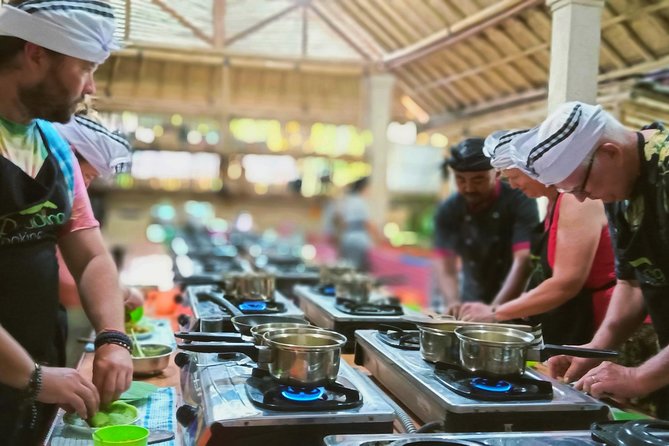
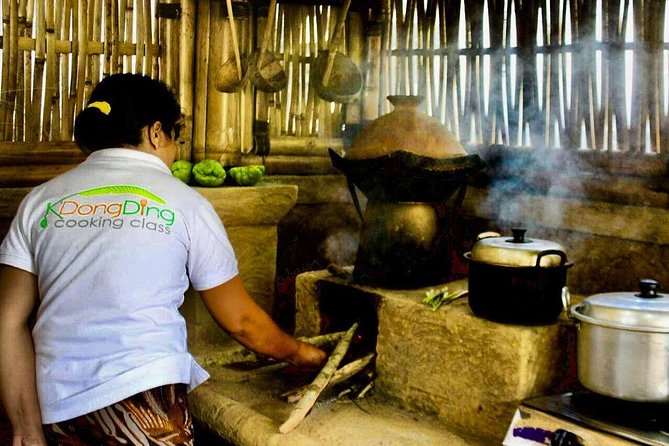
This class is taught in a traditional open kitchen, and the learning style is very clear: you do the prep and cooking work yourself. The chef teaches, guides, and demonstrates, but you are processing the food and making the dishes.
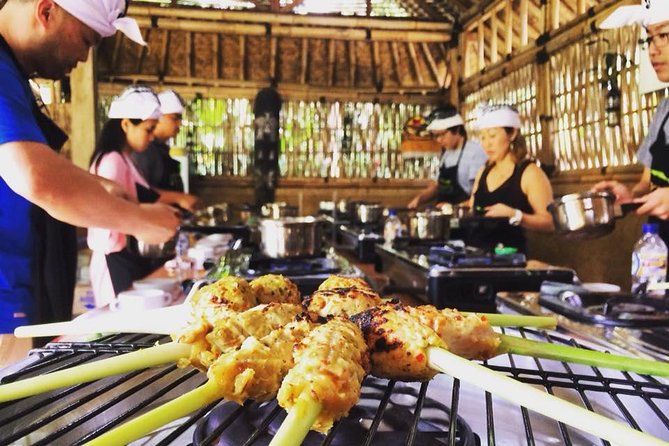
That student-driven approach is a huge part of why people love this experience. You will chop. You will grind and pound. You will handle paste making and sauce building. You will grill. And you will plate and eat what you made, as a real meal, not a snack you sample and forget.
You also get practical tools and setup that make this easier than you might expect. Each participant has their own station. Cooking tools, kitchen set tools, and ingredients are provided, so you are not stuck bringing gear or hunting down missing items.
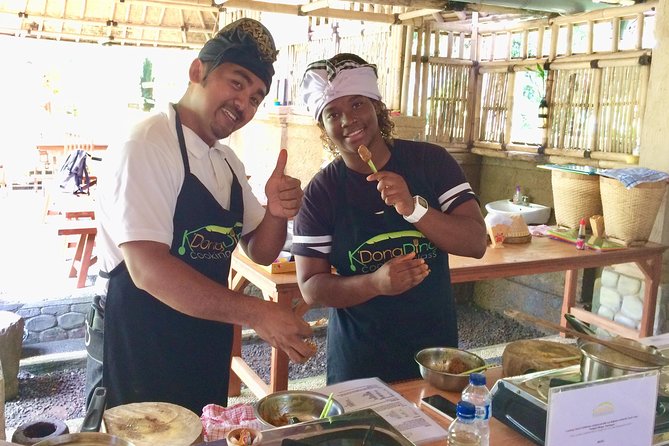
The chef instruction is also part of the value. In past classes, instructors have included Nyoman Mahendra and also Wayan, and the vibe is the same: friendly, informative, and very hands-on. If you like asking questions, this is a good setup for it.
Spice paste training: wooden block meets stone mortar
The most educational part is how they teach Balinese flavor building. The class puts emphasis on paste and sauce preparation, and that’s where the real difference is between simply cooking a dish and understanding how Balinese dishes achieve their punch.
You learn about two main ways of preparing spice bases: chopping on a wooden block, and grinding in a stone mortar before cooking. Both methods matter. The texture changes. The aroma changes. And once you try both in the same class, you start tasting the difference.
This is also where the class earns its reputation for being more than a cooking demo. You are not only following instructions. You’re learning the mechanics of how Balinese spice paste comes together, then watching it transform as it cooks.
If you want to replicate flavors at home later, this is the transferable skill. Tools aside, you’ll walk away with a clearer understanding of how spice paste texture and processing time affect final taste.
- Uluwatu Sunset, Kecak Dance, and Dinner Jimbaran Beach★ 5.0 · 3,681 reviews
- Tanah Lot and North Bali Tour: Scenic Journey★ 5.0 · 3,620 reviews
- Body Massage Experience in Ubud Traditional Spa★ 5.0 · 3,506 reviews
- Best of Bali Waterfalls: Tibumana, Tukad Cepung and Tegenungan★ 5.0 · 3,047 reviews
- Bali: Ubud Kecak and Fire Dance Show Tickets★ 4.4 · 2,631 reviews
The dishes you cook: 5 courses with vegetarian options
You’ll cook a set menu that includes both savory dishes and a sweet finish. The dishes listed for the experience include:
- JUKUT URAB (V)
- SATE LILIT AYAM (V/TOFU)
- CALON BE SIAP WITH CHAYOTE SOUP (V/TOFU)
- TAHU MESANTEN (V)
- DADAR GULUNG ala kdongding (V)
The big idea here is that you’re not making only one type of dish. You get practice across different flavor styles: vegetable-forward meals, spice-rich savory preparations, and a sweet dessert.
Vegetarian is built into the menu, but you still need to tell them in advance. They note that vegetarian applicable options require you to let them know ahead of time so they can prepare accordingly. If you’re vegetarian, this is a real advantage because the class is designed to support it, rather than treating it as an afterthought.
For people who are not vegetarian, this menu still feels like a good mix of classic Balinese dishes and variety. And since you make everything yourself, the satisfaction level tends to be higher than cooking classes where you assemble something “close enough.”
Lunch or dinner you make: why the timing is part of the value
You can do this class in a morning or an afternoon format. In the morning session, you’ll cook and then have lunch. In the afternoon session, you’ll cook and then have dinner.
That might sound like a simple detail, but it affects how you experience the day. A morning market start turns the cooking into a kind of slow food reset. You’re fresh, you learn your way through ingredients, and you eat what you made soon after.
The afternoon choice can feel better if you want a calmer start to your day in Ubud and you’d rather keep sightseeing lighter. Either way, the key point is the meal is part of the class. You’re not just learning technique, you’re sitting down to enjoy the result.
Private class size: why max 12 works for real cooking
This is a private tour/activity for your group only. The maximum group size is 12 people, and the minimum is 1. Each participant has their own cooking station, and the tools and ingredients are provided.
Max 12 can be a sweet spot for a hands-on class because you still get attention. You’re not stuck waiting for the instructor to circle back while your spice paste sits there calling for more grinding.
You should also know the vehicle note. Their car can fit up to 6 passengers. If your party is larger, there may be extra cost for guests beyond six. If you’re coming with friends, it’s worth confirming how they plan the transfer so you’re not surprised by group logistics.
Price and what $75 gets you in Ubud area
At $75 for about 6 hours, this isn’t a cheap “just try it” activity. It is priced like a real workshop with a market visit, a family home setting, hands-on cooking instruction, and a full meal you eat.
So where does the value come from?
You get:
- Market tour experience near Payangan, not just a transfer to a kitchen
- A traditional open kitchen with a guided learning structure
- Hands-on prep and cooking, done by you at your own station
- A meal that includes multiple dishes, plus snacks and welcome drinks
- A recipes book and a culinary workshop certificate
If your goal is learning and tasting a grounded version of Balinese cuisine, this price can make sense fast. If your goal is to take home a single recipe and move on, you might prefer something shorter.
Morning market or afternoon night market: pick based on your energy
The class connects with market life in two ways. The morning class ties to a traditional morning market, and the afternoon class ties to a night market. Both sessions include the Balinese compound house visit, coffee or tea welcome, then the cooking.
Choose the morning version if you like fresh ingredients, quieter starts, and the feeling of turning the day into a food-focused plan. Choose the afternoon if you want an evening rhythm and you prefer the mood that night markets tend to bring.
Either way, you’ll be working through a spice-based cooking process that is the same core skill, just paired with different market energy.
What to bring, what to expect, and how to enjoy the full 6 hours
This is not a “wear sneakers for a long hike” class, but you will be moving between stations and spending time actively cooking. Wear comfortable clothes you don’t mind smelling like spices, because grinding and grilling do their thing.
Also bring your own bottle of water. They ask guests to bring their own bottle to reduce single-use plastic, and you can refill water during the class.
Because the class requires good weather, plan to treat it like a daytime food plan with a weather backup in mind. If conditions are poor, they say you’ll be offered a different date or a full refund, depending on what happens.
Dietary needs are another practical point. If you have allergies or restrictions, contact them with details ahead of time. They explicitly ask you to reach out for special requests, including allergic foodstuffs.
Who should book this class at a family home?
Book this if you want:
- A Balinese cooking class that actually teaches technique, not just plating tips
- A market visit tied to how you later cook
- A vegetarian-friendly experience where options exist on the menu
- A private setup with your group, small enough for hands-on focus
It might not be your best fit if:
- You need a very short activity, because 6 hours is the point of the experience
- You prefer to watch more than cook, because this class makes you do the work
- You’re traveling with very young kids, since the minimum age is 12
Should you book this Balinese cooking class at a family home?
Yes, if you care about learning how Balinese flavors are built. The biggest strengths are the hands-on cooking, the traditional spice paste training using wooden chopping and stone mortar grinding, and the fact that you eat a full set of dishes you made yourself.
If you’re deciding between a quick cooking stop and a deeper food experience, this one leans deeper. You’re not just collecting a souvenir recipe, you’re practicing the steps that create the taste.
Just check two practical things before you commit: that you can comfortably give it about 6 hours, and that you’re okay with the weather dependency. When those align, this class is the kind of Ubud food experience that sticks with you.
FAQ
What is the duration of this Balinese cooking class?
The cooking class runs for about 6 hours.
Where does the experience start and end?
The start point is Payangan Market. The activity ends back at the meeting point.
Is hotel pickup and drop-off included?
Yes, free pickup and drop-off is provided in the Ubud area (and also Payangan area).
How big is the group size?
It is minimum 1 person and maximum 12 people per booking, and it is private so only your group participates.
Can I choose vegetarian dishes?
Yes. Vegetarian options are available, but you need to let them know in advance so they can prepare accordingly.
Do I need prior cooking experience?
No specific cooking experience is required. The class is hands-on, and you’ll be guided through traditional prep and cooking steps.
What dishes will we cook?
The menu includes JUKUT URAB (V), SATE LILIT AYAM (V/TOFU), CALON BE SIAP WITH CHAYOTE SOUP (V/TOFU), TAHU MESANTEN (V), and DADAR GULUNG ala kdongding.
What is included with the class?
Included are the market experience, welcome Bali coffee or tea with Balinese cake, spice testing and hands-on cooking, tools and ingredients, snacks, recipes book, a culinary workshop certificate, and the lunch or dinner you make (depending on morning or afternoon).
What if the weather is bad?
The experience requires good weather. If it is canceled due to poor weather, you will be offered a different date or a full refund.
More Kitchens Taking Bookings
Fresh Ubud write-ups from the review desk





Balinese Cooking Classes, compared.
 ★ 5.0PRIVATE Authentic Balinese Cooking Class in Ubud at Putu’s HomeFrom $75644 reviews
 ★ 5.0Balinese Ubud cooking school (9 Dish Cooking and Market Tour)From $58540 reviews
 ★ 5.0Balinese Farm Cooking Class by Pemulan BaliFrom $39410 reviews
 ★ 5.0Learn to cook Indonesian food at Gili Cooking Classes TrawanganFrom $33352 reviews
 ★ 5.0Balinese Cooking Class in SeminyakFrom $66281 reviews
 ★ 5.0Anggrek Putih Lombok Cooking ClassFrom $30253 reviews
 ★ 5.0Balinese Authentic Cooking Class in UbudFrom $39239 reviews
 ★ 5.0PRIVATE Balinese Cooking Class in Ubud with Dewa with TransfersFrom $69213 reviews
Browse the lists this tour appears in