
REVIEW · BALINESE COOKING CLASSES
From Ubud: Authentic Cooking Class Visit Traditional Market
Your dinner starts at the market. This Ubud cooking class pairs a traditional ingredient hunt with hands-on Balinese cooking, and it ends with a look at local crafts. I love the morning market ingredient hunt and the 5 dishes plus 1 dessert you make and eat, and you’ll also get a farm and art stop. The main consideration is time, it runs about 3 to 3.5 hours, so keep that window free.
If you’re traveling as a couple, family, or group, this one is designed to feel personal, it’s private for your group and includes hotel pickup in several areas. I also appreciate the flexibility: you can request vegan options, diet preferences, and allergies when you book. You’ll finish with a visit to Celuk Village, where you can spot artisans making batik, wood carvings, and gold and silver smith work.
In This Review
- Key Highlights to Know Before You Go
- A Ubud Cooking Class That Starts With Real Ingredients
- Your Traditional Market Walk: What You’ll Pick and Why It Matters
- Cooking in the Kitchen: Sauces, Pastes, Sides, and Mains
- The Farm Tour Stop: How the Ingredients Connect
- Celuk Village Crafts: Batik, Wood Carving, and Metalwork
- Pickup and Private Transport: Making the Day Feel Easy
- Price and Value: Is $45 Worth It?
- Who This Bali Cooking Class Is Best For
- What to Expect From the 3 to 3.5 Hour Schedule
- Practical Tips to Make Your Cooking Day Go Smooth
- Should You Book This Ubud Cooking Class?
- FAQ
- Where does this experience take place?
- How long is the cooking class?
- How much does it cost?
- Is pickup included?
- What’s included besides the cooking?
- How many dishes do you cook and eat?
- Does the class offer dietary options?
- Do you get recipes to take home?
- Is there a cancellation option with a full refund?
Key Highlights to Know Before You Go
- Morning market ingredient selection so you start with the right spices, fruits, and proteins
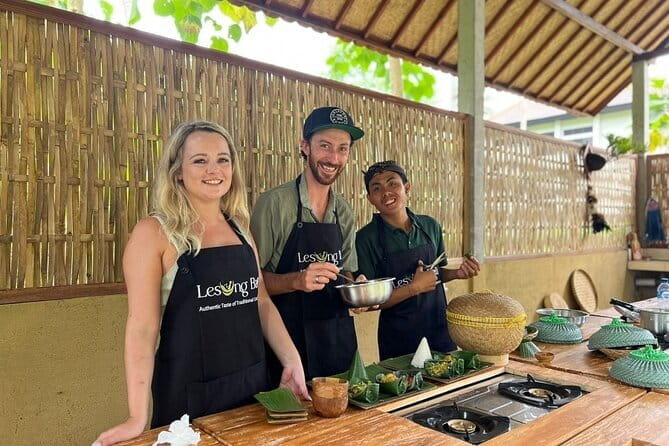
- Cook 5 dishes plus 1 dessert and eat the results, not just watch
- Pickup plus private air-conditioned transport from Ubud and nearby beach areas
- Options for vegans and allergy needs you can request before the class
- Celuk Village craft visit for batik, wood carving, and metalwork
- Recipe booklet plus PDF so you can repeat the dishes later
Other kitchens taking bookings, compared
A Ubud Cooking Class That Starts With Real Ingredients
Most cooking classes in Bali fall into two buckets: watch-and-eat, or shop-and-cook. This one leans hard toward the second. You begin at a traditional morning market, then move into the kitchen to learn how Balinese flavors are built from the ground up.
I like the logic of that flow. It teaches you what you’re buying and why it matters, then gives you the hands-on steps to turn those ingredients into sauces, pastes, sides, and main courses. It’s also a good fit if you want something more than a quick food stop, because the class time is long enough to actually learn.
Your Traditional Market Walk: What You’ll Pick and Why It Matters
The experience starts with a market tour where you choose fresh ingredients yourself. Expect to see the kinds of foods that show up in Balinese meals: meats, fish, poultry, tropical fruits, and those signature spice ingredients you want to recognize later.
This part is more useful than it sounds, because market shopping is where many cooking classes stay vague. Here, you’re making real choices. That means when you later taste your own dishes, you can connect the flavor to the exact ingredients you selected.
A practical way to get more out of the market segment is to ask simple, direct questions while you’re choosing. For example, ask what spice or fruit they recommend for balance, or what ingredient is the base for a paste. You’ll likely notice the class uses those ingredient decisions as the teaching foundation for the kitchen phase.
Cooking in the Kitchen: Sauces, Pastes, Sides, and Mains
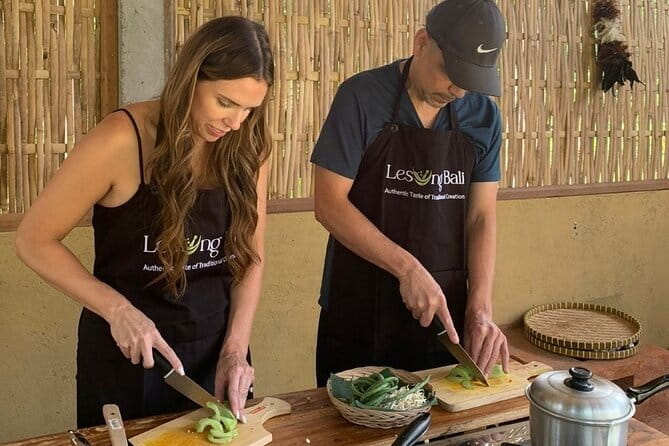
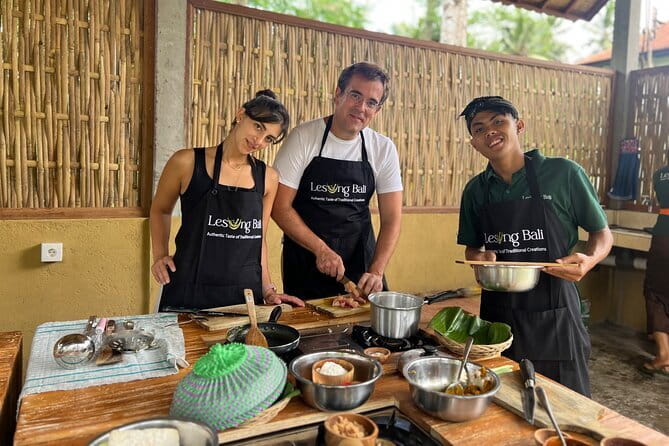
After market shopping, you head to the kitchen and get the real teaching time. This is where the class focuses on Balinese technique, not just recipes.
You’ll learn how to make sauces and pastes, then how to build out side dishes and main courses. That matters because Balinese cooking often tastes layered. The sauces and pastes are the engine, and they affect everything that comes after.
Then you eat what you cook. The class includes 5 dishes and 1 dessert, and having that full menu is one reason this doesn’t feel like a short demo. It gives you a range of flavors and textures to remember, not just one highlight dish.
In one of the experiences shared by earlier guests, the chef was described as informative and funny, and the food came out delicious. That kind of teaching energy matters, because paste-making and spice balancing can feel intimidating if your instructor rushes you. If your chef keeps the pace friendly, you’ll absorb the process faster.
The Farm Tour Stop: How the Ingredients Connect
This experience also includes a farm tour. You don’t get the full explanation of every ingredient in the market from a single lecture, but the farm stop adds a grounding layer.
Even a short farm visit can change how you cook, because you start thinking about ingredients as living crops and not just packaged items. It’s also a nice change of pace from the market and kitchen rhythm, so the day doesn’t feel like two rooms in a row.
If you’re the type who likes to understand where food comes from, this farm segment is a win. If you’re hungry and just want to get straight to cooking, it still helps break up the morning, and it tends to make the whole meal feel more connected.
- Uluwatu Sunset, Kecak Dance, and Dinner Jimbaran Beach★ 5.0 · 3,681 reviews
- Tanah Lot and North Bali Tour: Scenic Journey★ 5.0 · 3,620 reviews
- Body Massage Experience in Ubud Traditional Spa★ 5.0 · 3,506 reviews
- Best of Bali Waterfalls: Tibumana, Tukad Cepung and Tegenungan★ 5.0 · 3,047 reviews
- Bali: Ubud Kecak and Fire Dance Show Tickets★ 4.4 · 2,631 reviews
Celuk Village Crafts: Batik, Wood Carving, and Metalwork
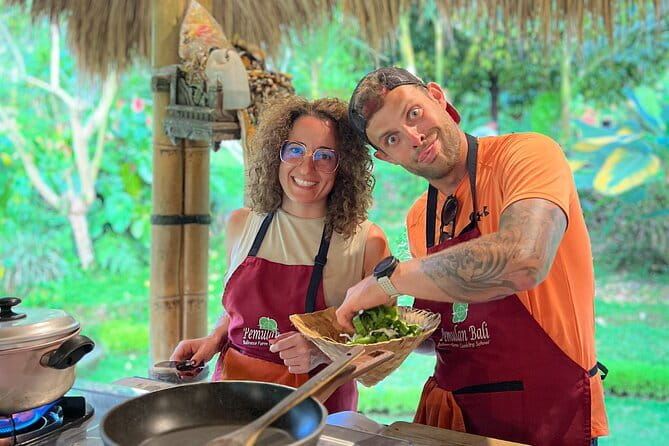
For the finish, you’ll visit Celuk Village, an artisan area known for traditional handicrafts. The focus here is hands-on skill and recognizable local styles, including batik, wooden carving, and gold and silver smith work.
This stop is a smart pairing with a cooking class. Food is one part of culture, and craft is another. When you see the work that goes into materials and designs, you get a broader sense of how Balinese creativity shows up across daily life.
One note for your expectations: this part is more about observation and appreciation than shopping pressure. You can look, learn what you can, and take photos if you’re allowed in the workshop areas. If you do want to buy something, do it for specific pieces you truly like, not just what catches your eye in passing.
Pickup and Private Transport: Making the Day Feel Easy
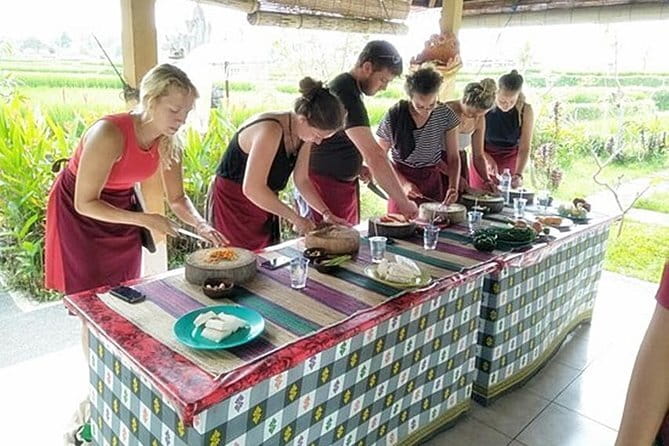
Logistics matter more than people admit, especially in Ubud traffic. This experience includes pickup service from multiple areas, including Ubud, Kuta, Seminyak, Canggu, Legian, Jimbaran, Nusa Dua, and Sanur. You also get private transport with comfortable air conditioning, plus an English-speaking driver.
That combination is good value because you’re paying for more than the cooking. You’re paying for access, time saved, and a smoother schedule. The class includes bottled mineral water, too, which is helpful for a day that involves walking in the market and working in a warm kitchen environment.
It’s also set up as a private tour for your group, meaning you won’t be squeezed into a big crowd scenario. Group discounts may apply, but the key comfort piece is that the day is organized around your group, not random mixing.
A small but meaningful detail: there’s a welcome drink and snacks included. That keeps the energy steady from the market phase through cooking.
Price and Value: Is $45 Worth It?
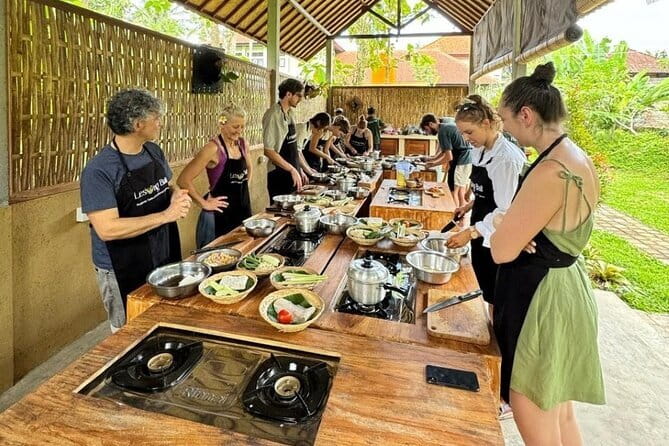
At $45 per person, you’re not just paying for a recipe sheet. You’re paying for a structured experience with several included components: the traditional market visit, cooking instruction, ingredients and the food you cook, a farm tour, and the Celuk craft stop.
You also get practical take-home material: a free recipe booklet and a PDF recipe. That’s important if you want to recreate the dishes later without guessing. Many classes stop at a meal, then you leave with nothing usable. Here, the prep notes and recipes are part of what you’re buying.
Now, I’ll be honest about the value trade-off. If you only want one dish, or if you hate market shopping, you might feel like the time is too full. But if you want the full Balinese food story, this is one of the better ways to spend an afternoon, because it blends learning, eating, and culture.
Who This Bali Cooking Class Is Best For
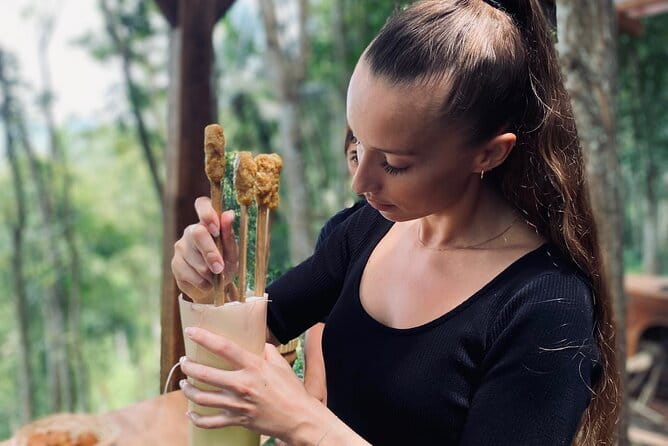
This is a strong match for:
- Couples who want a hands-on experience beyond a dinner reservation
- Families, because you’re doing active learning and then eating together
- Groups who like a shared activity with a guided rhythm
- Food lovers who care where ingredients and spices come from
It’s also a good choice if you have dietary needs. You can request options for dieters, vegans, and allergies either after booking or before the class. That’s not just a nice-to-have, it can make or break the experience, especially when a class includes multiple dishes and a dessert.
If you’re someone who gets nervous cooking, the market-to-kitchen structure can actually calm you down. Instead of staring at a recipe you can’t picture, you already chose the ingredient. You’re cooking something that connects to the day you lived.
What to Expect From the 3 to 3.5 Hour Schedule
Plan for about 3 hours (around 3.5 hours) total. You’ll spend time selecting ingredients in the morning market, then cook in the kitchen, and finish with the farm and Celuk Village craft visit.
That time structure helps you get a full experience without turning it into a full-day trip. It also means you’ll likely want a simple dinner plan afterward, because you eat what you cook. The class includes 5 dishes and 1 dessert, so you’ll be satisfied before you go looking for a second meal.
If your schedule is tight, book this earlier in your day or keep a buffer. Market walks and kitchen timing can’t be rushed, and you’ll appreciate having room to relax afterward.
Practical Tips to Make Your Cooking Day Go Smooth
You can’t control everything, but you can set yourself up for comfort:
- Wear closed-toe shoes you’re okay getting a little warm
- Bring a light layer for the car ride, air conditioning can vary by vehicle
- If you have allergies, clearly mention them when you arrange your request
- Pace yourself in the market, pick a few key ingredients carefully and ask what they’re used for
Also, take a few photos during paste and sauce steps if your chef allows it. The recipe booklet and PDF help, but seeing the texture and consistency matters when you cook later at home.
Should You Book This Ubud Cooking Class?
I’d book this if you want a Balinese cooking experience that feels grounded in real ingredients. The market start is the difference maker, and the fact that you cook 5 dishes plus 1 dessert means you leave with a full taste range, not one token sample.
I’d skip it if your goal is only a quick photo-and-try activity, because the experience is structured and hands-on. Also consider your schedule, since it’s around 3 to 3.5 hours and includes multiple segments.
Overall, if you like learning through doing, and you want Ubud culture that goes beyond temples and viewpoints, this is a smart use of an afternoon. It’s also a solid value because the price covers transport, market access, ingredients, instruction, and take-home recipes.
FAQ
Where does this experience take place?
It’s based in Ubud, Indonesia, with pickup options from Ubud and several nearby areas including Kuta, Seminyak, Canggu, Legian, Jimbaran, Nusa Dua, and Sanur.
How long is the cooking class?
The activity is about 3 hours (approximately 3.5 hours).
How much does it cost?
The price is $45.00 per person.
Is pickup included?
Yes, pickup is offered from the areas listed, and you’ll travel by private transport with air conditioning. An English-speaking driver is included.
What’s included besides the cooking?
You get a visit to a traditional market, a farm tour, a welcome drink and snacks, mineral water, and entry to see the art village crafts in Celuk Village.
How many dishes do you cook and eat?
You’ll cook and eat 5 dishes and 1 dessert.
Does the class offer dietary options?
Yes. You can request vegan options, diet needs, and allergies either after booking or before the experience.
Do you get recipes to take home?
Yes. You receive a free recipe booklet and a PDF recipe.
Is there a cancellation option with a full refund?
Yes. You can cancel up to 24 hours in advance for a full refund.
More Kitchens Taking Bookings
Fresh Ubud write-ups from the review desk





Balinese Cooking Classes, compared.
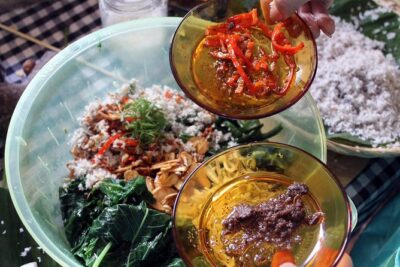 ★ 5.0PRIVATE Authentic Balinese Cooking Class in Ubud at Putu’s HomeFrom $75644 reviews
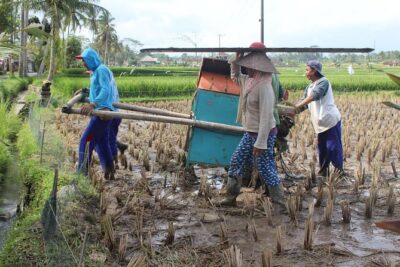 ★ 5.0Balinese Ubud cooking school (9 Dish Cooking and Market Tour)From $58540 reviews
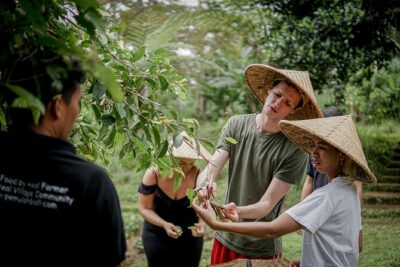 ★ 5.0Balinese Farm Cooking Class by Pemulan BaliFrom $39410 reviews
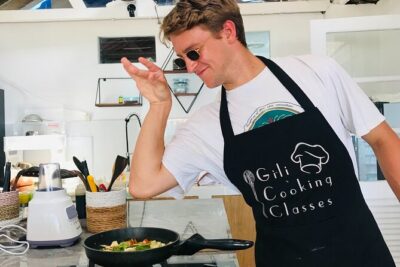 ★ 5.0Learn to cook Indonesian food at Gili Cooking Classes TrawanganFrom $33352 reviews
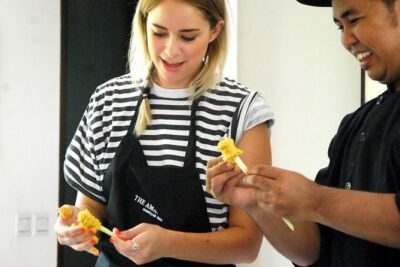 ★ 5.0Balinese Cooking Class in SeminyakFrom $66281 reviews
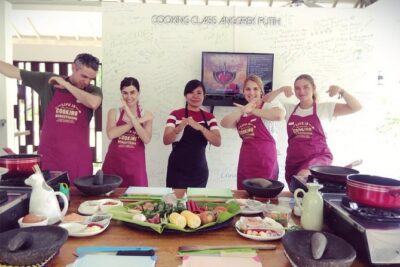 ★ 5.0Anggrek Putih Lombok Cooking ClassFrom $30253 reviews
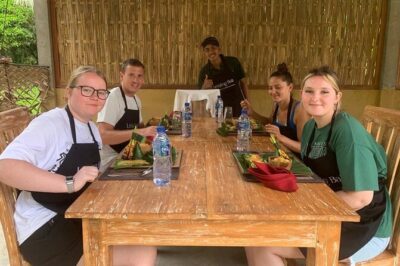 ★ 5.0Balinese Authentic Cooking Class in UbudFrom $39239 reviews
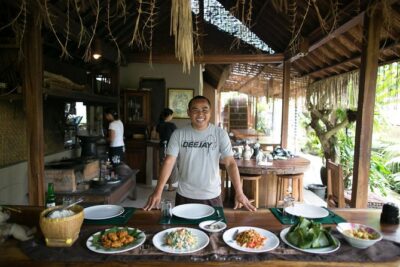 ★ 5.0PRIVATE Balinese Cooking Class in Ubud with Dewa with TransfersFrom $69213 reviews
Browse the lists this tour appears in