
REVIEW · BALINESE COOKING CLASSES
Private Balinese Cooking Class in Ubud at Santika’s Home
Cooking with Balinese spices feels like a secret handshake. I love the private home-kitchen setting in Pesalakan village, and I love learning the fundamentals from Chef Santika himself. One thing to think about: the market stop is only included if you pick the market option, so you will trade that ingredient-hunt time for a more direct cooking focus.
What makes this class extra appealing is the setting and the pace. You start with hotel pickup in central Ubud, head out to rice paddies, then spend about 3 hours total with roughly 1.5 hours of hands-on cooking, followed by the meal you helped make.
In This Review
- Key Things I’d Tell a Friend Before Booking
- Pesalakan Village, Rice Paddies, and Why the Setting Matters
- The Optional Market Stop: What You Look For and Why It’s Worth It
- Meet Chef Santika and Get Your Private Cooking Setup
- What the 1.5 Hours of Hands-On Cooking Actually Feels Like
- The Ingredients: From Lemongrass to Cassava, What You’ll Notice
- Your Meal: Eat What You Made, Then Understand It
- Dietary Needs and the Real Value of Requesting in Advance
- Price and Value: Is $68 Per Person Worth It?
- Timing, Location, and How to Plan Your Half-Day
- Who This Class Fits Best (and Who Might Prefer Something Else)
- Should You Book Private Balinese Cooking in Ubud at Santika’s Home?
- FAQ
- How long is the private Balinese cooking class?
- Is this experience private?
- Do I get hotel pickup and drop-off?
- Is there a market tour?
- What ingredients will I see and cook with?
- Is the meal included?
- Can you accommodate dietary restrictions?
- What cooking is included in the lesson?
- What is included in the price besides the cooking class?
- What is the cancellation policy?
Key Things I’d Tell a Friend Before Booking
- Private cooking in a real home with Chef Santika and his home kitchen setup
- Optional market tour to spot ingredients like cassava, ferns, lemongrass, and bananas
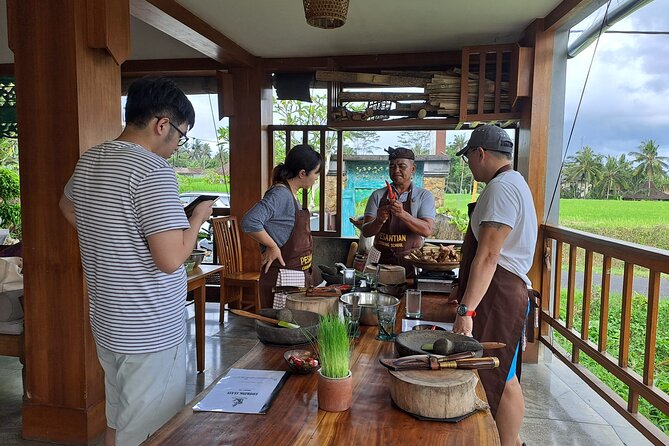
- Hands-on work space with your own chopping area and tools like a mortar and pestle
- Seasonal menu that can shift based on what is fresh and available
- Diet-friendly options available when you request vegetarian, vegan, lactose-free, or gluten-free
- Transport included for central Ubud hotels (within a 10 km radius), so you can relax
Other kitchens taking bookings, compared
Pesalakan Village, Rice Paddies, and Why the Setting Matters
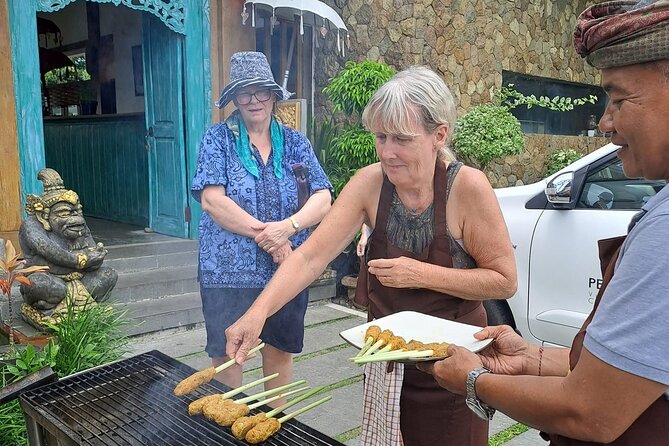
This experience is built around leaving Ubud city center and getting into a quieter pocket of Bali, Pesalakan village. The drive is about 20 minutes, and the area is known for rice paddies, which changes the mood fast. You are not only learning food, you are seeing the everyday rhythm that feeds into Balinese meals.
I like that the cooking happens in an open, home-style kitchen rather than a showroom classroom. You feel the casual flow of a real household, but you still get a structured lesson and your own cooking station. That combination is a big part of the value for me, because you learn faster when the setting feels normal and welcoming.
Do note one practical point: pickup and drop-off are included only for hotels in central Ubud within a 10 km radius. If your hotel is outside that range, plan for an additional transportation charge.
The Optional Market Stop: What You Look For and Why It’s Worth It
If you choose the market plus cooking option, your class starts with a drive to a local market. This part is not just sightseeing. It gives you the ingredient map for what you will cook later, so the spices and produce make more sense when you are at the stove.
In the market, you can typically expect to find local vegetables and ingredients like cassava, ferns, lemongrass, and a variety of bananas. You may also see spices or seasonal vegetables you can buy, depending on what is available. Even when you do not buy anything, just seeing the produce and how it is grouped can help you understand Balinese cooking as daily, not fancy-only.
My advice: if you enjoy learning by observing ingredients first, pick the market option. It adds a bit of time, but it helps you build confidence for repeating recipes later. If you want a more straightforward cooking session and you are short on time, skip it and go straight to the home kitchen.
Meet Chef Santika and Get Your Private Cooking Setup
Your host is Santika, a professional chef who opened a homestay for travelers with his wife. In this class, you get to learn Balinese cuisine using his home kitchen, which means you are cooking in the place where the food culture lives, not in a separate teaching facility.
The experience is private for your group. Even though there may be other guests on the property because it is also a homestay, your cooking class itself is private, with only your group participating. For families and couples, that privacy matters. It keeps the lesson calm, and it gives you space to ask questions without feeling rushed.
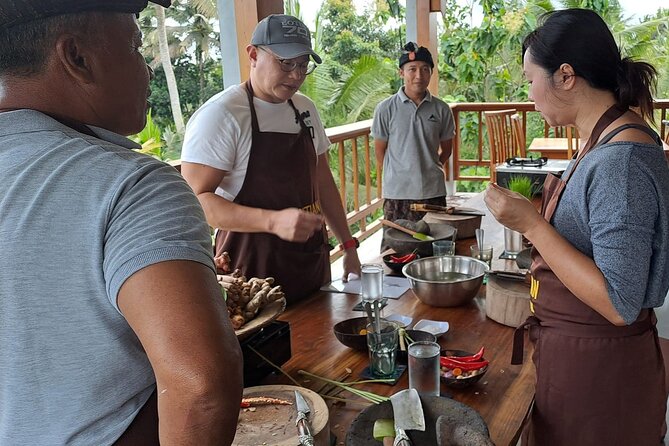
Once you arrive, you join the host in the open kitchen. You get your own work area, and you will cook alongside Santika rather than watching from a distance. The setup includes a chopping board, a motor and pestle, and a stove. That hands-on layout is a big reason people end up loving the class, including families, since kids can do real tasks like chopping and grinding under guidance.
What the 1.5 Hours of Hands-On Cooking Actually Feels Like
After pickup and travel time, the cooking portion is about 1.5 hours. That is a sweet spot. Long enough to learn practical technique, short enough that you are not exhausted before the meal.
You will be making a traditional Balinese meal using local ingredients and spices. The exact menu can vary by season, so do not expect the same dish list every day. In my view, that is a positive, because it nudges you to learn the logic of the food rather than only copying a recipe.
Balinese flavors are often built from spice blends and aromatics, and this class focuses on learning the fundamentals. You start with ingredient recognition, then move into preparation. You get to work with local spices and learn how different components come together during cooking.
If you pick the market option, you usually cook with some of the same ingredient types you saw earlier. That makes the lesson click, because you are not only grinding and stirring, you also remember what the ingredient looked like at the market.
- Ubud: Monkey Forest, Jungle Swing, Rice Terrace, and Water Temple★ 5.0 · 7,160 reviews
- Bali: Ubud Palace Legong Dance Show Ticket★ 4.4 · 3,979 reviews
- Uluwatu Sunset, Kecak Dance, and Dinner Jimbaran Beach★ 5.0 · 3,681 reviews
- Tanah Lot and North Bali Tour: Scenic Journey★ 5.0 · 3,620 reviews
- Body Massage Experience in Ubud Traditional Spa★ 5.0 · 3,506 reviews
The Ingredients: From Lemongrass to Cassava, What You’ll Notice
The market and the kitchen both point you toward common Balinese building blocks. Lemongrass is one of the more recognizable aromatics you might see in the market, and it tends to show up in many local dishes for its citrusy, fragrant punch. Cassava is another ingredient you may encounter, and you get a feel for how it is handled and cooked in local ways.
You might also see ferns, and bananas in different forms. Bananas are especially important in Bali because they are used far beyond simple fruit plates. In a cooking class like this, you are not just tasting, you are seeing how everyday produce becomes a dish.
The key is that you are using local ingredients and spices, not trying to recreate Bali with supermarket shortcuts. When you cook with what the region actually grows, your results will be closer to what you ate in Bali. Even if your ingredients look different at home, you will understand the flavor direction.
Your Meal: Eat What You Made, Then Understand It
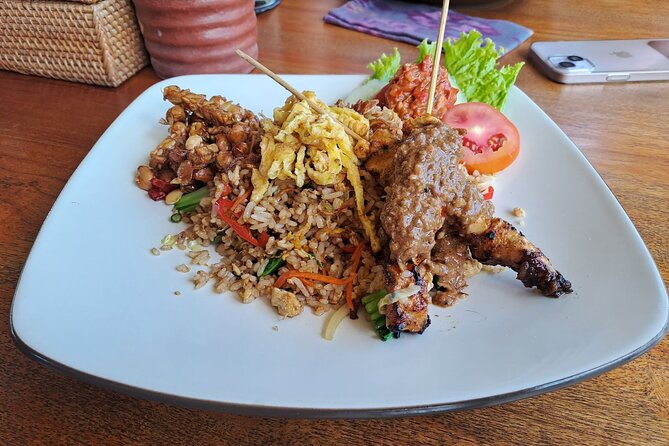
After the hands-on portion, you enjoy the delicious meal you helped prepare. This is not a side detail. Eating together at the end is how you connect the cooking steps to the final taste.
I also like that the meal is homecooked, not a performance. You are eating what a host makes for daily life. That makes it easier to judge which flavors you enjoyed and which techniques you want to repeat later.
Because the menu can vary seasonally, the best outcome is not memorizing dish names. The better goal is learning how to think about Balinese cooking: aromatics, spice blends, texture, and balance. Once you learn the fundamentals, you can adapt at home even if you cannot source the exact same ingredients.
Dietary Needs and the Real Value of Requesting in Advance
One of the strongest practical upsides here is flexibility. Vegetarian, vegan, lactose-free, and gluten-free options are available if you request them at booking.
That matters because cooking classes can be tricky for special diets when ingredients are assumed. Here, you are told upfront that you should advise the host about allergies, dietary restrictions, or preferences. I recommend being specific. If you need lactose-free, say that clearly. If you are gluten-free, confirm whether you avoid cross-contact. The more exact you are, the better the class can be matched to your needs.
For families, this is also a plus. Kids may not want super spicy flavors, and you can ask for adjustments based on what you like. Even when spice levels vary, the class gives you real technique so you can adjust at home.
Price and Value: Is $68 Per Person Worth It?
At $68 per person for about 3 hours, this class prices like a premium experience, but it also includes several things that make it feel more complete than a basic cooking demo.
First, it is private. That is a major value driver if you are traveling as a couple or small family. Private time with a chef means you spend less time waiting and more time doing. Second, hotel pickup and drop-off are included for central Ubud hotels within a 10 km radius. That saves you time and taxi hassle, and it reduces the chance of logistics stress cutting into your fun.
Also included are the homecooked Balinese meal and gratuities. When gratuities are built in, you do not have to scramble at the end deciding what is fair. If you want the market add-on, that can also be included depending on the option you choose.
If you are trying to get the most value, consider your travel style. If you would enjoy a hands-on class with real spice prep and you value learning fundamentals, this feels like a solid use of time. If you only want to watch cooking and take photos, you may want to choose a different format that is cheaper and less hands-on.
Timing, Location, and How to Plan Your Half-Day
The total experience is about 3 hours. It starts with pickup from your central Ubud hotel, then you drive to Pesalakan village. After the market stop (only with the market option), you head to Santika’s home among rice fields.
Because the drive time is relatively short, you can fit this into a day that still includes other Ubud highlights. Still, plan your schedule with buffer time. You want to arrive relaxed, not rushing.
If you are staying outside central Ubud, you may face an additional transportation charge. That does not make it a bad deal, but it can change the math. Before you book, check your hotel location so you are not surprised by added transport.
Who This Class Fits Best (and Who Might Prefer Something Else)
This cooking class is a strong match for:
- Couples or small groups who want a private, home-based lesson
- Families who want kids to participate in real kitchen tasks
- Food lovers who like learning ingredients, not just copying recipes
- Diet-conscious travelers who want vegetarian, vegan, lactose-free, or gluten-free accommodations by request
It may not be ideal if:
- You want a purely sightseeing tour with lots of walking and attractions
- You are short on time and do not want the market stop option
- You prefer large group classes where you can watch and sample many dishes quickly
That said, the class is built around doing, not sitting. If you enjoy hands-on cooking, it is a great fit.
Should You Book Private Balinese Cooking in Ubud at Santika’s Home?
I think you should book if you want a practical cooking lesson in a real Balinese home environment, with a chef who teaches you the fundamentals of spice and daily dishes. The private setup, the hands-on tools, and the fact that you eat what you cooked make it feel like more than a tourist meal.
You should think twice if you are expecting a market visit every time, because it depends on the option you select. Also, double-check whether your hotel is within the included pickup area in central Ubud, since hotels beyond the 10 km radius may have additional transport costs.
One final tip: book ahead. The experience is commonly reserved about 54 days in advance on average, so if your dates are fixed, secure it sooner rather than later.
FAQ
How long is the private Balinese cooking class?
It runs for about 3 hours total, with about 1.5 hours of hands-on cooking.
Is this experience private?
Yes. It is private, personalized for your group.
Do I get hotel pickup and drop-off?
Pickup and drop-off are included if your hotel is in central Ubud and within a 10 km radius from Santika’s home. If your hotel is outside that range, there is an additional transportation charge.
Is there a market tour?
A market tour is included only if you choose the market plus cooking option. If you choose the other option, the class focuses on the cooking at Santika’s home.
What ingredients will I see and cook with?
In the market option, you may see ingredients like cassava, ferns, lemongrass, and bananas. What you cook can vary by season.
Is the meal included?
Yes. You get a homecooked Balinese meal at the end of the class.
Can you accommodate dietary restrictions?
Yes. Vegetarian, vegan, lactose-free, and gluten-free options are available if you request them at booking. You should also advise about allergies, dietary restrictions, and preferences at the time of booking.
What cooking is included in the lesson?
You will learn to cook a traditional Balinese meal using local ingredients and spices, with seasonal menu variety.
What is included in the price besides the cooking class?
The experience includes the private cooking class, the homecooked meal, hotel pickup and drop-off for eligible central Ubud hotels, and gratuities. If you choose the market plus cooking option, the market tour is also included.
What is the cancellation policy?
You can cancel for a full refund up to 24 hours before the experience starts. Changes made less than 24 hours before the start time are not accepted.
More Kitchens Taking Bookings
Fresh Ubud write-ups from the review desk



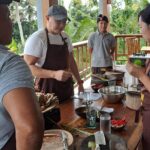

Balinese Cooking Classes, compared.
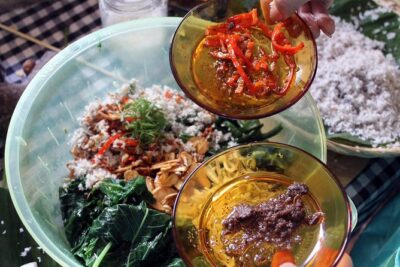 ★ 5.0PRIVATE Authentic Balinese Cooking Class in Ubud at Putu’s HomeFrom $75644 reviews
 ★ 5.0Balinese Ubud cooking school (9 Dish Cooking and Market Tour)From $58540 reviews
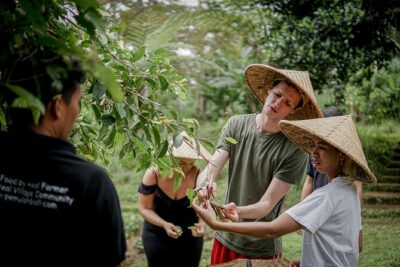 ★ 5.0Balinese Farm Cooking Class by Pemulan BaliFrom $39410 reviews
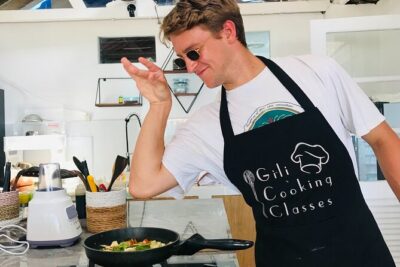 ★ 5.0Learn to cook Indonesian food at Gili Cooking Classes TrawanganFrom $33352 reviews
 ★ 5.0Balinese Cooking Class in SeminyakFrom $66281 reviews
 ★ 5.0Anggrek Putih Lombok Cooking ClassFrom $30253 reviews
 ★ 5.0Balinese Authentic Cooking Class in UbudFrom $39239 reviews
 ★ 5.0PRIVATE Balinese Cooking Class in Ubud with Dewa with TransfersFrom $69213 reviews
Browse the lists this tour appears in