
REVIEW · BALINESE COOKING CLASSES
Pure Bali Village Experience, Cooking & Jamu Class+VIP Transfer
A village day beats Bali bus tours. This small-group experience is built around jamu herbal drinks and hands-on cooking in a real village kitchen, so you leave with skills, not just photos. I like that you also get a taste of everyday Balinese life through instruments, gardens, and farm moments.
The biggest thing to consider is the schedule and the movement involved. The day starts early and includes a 30-minute downhill walk, so it is not ideal if you want an easy stroll the whole time.
In This Review
- Key things I’d circle before you book
- A Jamu and Cooking Class Day in the Batukaru Region
- Morning Pickup and the Drive Into Mountain-Quiet Bali
- Rindik Music First, Because Balinese Culture Isn’t Just Food
- The Herb and Spice Garden, Over 40 Plants and Real Picking Time
- Jamu Pavilion: Crafting Two Tonics and Tasting Fruit Too
- Paon Bali Cooking Class: Sate Lilit on Bamboo, Lak Lak in Clay
- Lunch Nasi Campur Tumping, Then a Proper Slow Down
- Helping With Rice Planting and the Balikaru Farm With Trigona Bees
- Village Walk, Asta Kosala Architecture, and a Soft Downhill Trek
- Belulang Hot Spring: Optional Bath and the Calm-Down Moment
- Price and Value: What $89 Buys You (and Why It Feels Fair)
- Who This Tour Fits Best (and Who Might Want Another Plan)
- Should You Book the Pure Bali Village Experience?
- FAQ
- Is hotel pickup and drop-off included?
- What is the group size?
- How long is the tour, and is there walking?
- Can they accommodate vegetarian or dietary needs?
- Is the Belulang hot spring bath required?
- What happens if the tour is canceled due to weather?
- What languages do guides speak?
Key things I’d circle before you book
- Hands-on jamu: you craft and taste two types of jamu after exploring the herb garden
- Paon Bali cooking, with real stations: learn classics like sate lilit at the bamboo grill and lak lak using a clay pot
- Small group cap (12): you get more time to ask questions and do the cooking
- More than food: learn rindik music, help with rice planting, and meet animals and stingless bees (Trigona)
- Belulang hot spring time: optional bath at the end, usually the calm-down moment
Not decided yet? These Bali trips held up when we went through them.


A Jamu and Cooking Class Day in the Batukaru Region
If you think Bali is only temples, rice terraces, and scooters, this trip nudges you into the quieter stuff. You spend the day in the mountain village area near Batukaru, where herbs, food, and daily rituals matter.
What I like most is that jamu is not treated like a random drink stop. You tour a garden with more than 40 varieties of plants, then you make the tonic yourself at the jamu pavilion. After that comes cooking, in an open-air kitchen at Paon Bali, guided by a chef, with steps you can actually repeat later.
The pacing also helps. It is not just classroom time, then leave. You move from music and herbs to cooking, then into village life with rice planting, a walk, and a sacred hot spring.
Morning Pickup and the Drive Into Mountain-Quiet Bali
Pickup happens around 7:30 am, and you ride in an air-conditioned vehicle. The drive is part of the experience too, with scenic views and a photo stop on the way.
This matters more than you might think. Getting out of the most tourist-heavy areas early means the day feels slower once you arrive. It also sets you up for the rest of the activities, since your hands-on cooking and walking happen while the weather is still manageable.
If you are the type who hates early starts, you can still do it, but mentally plan for it. By the time you’re making jamu and cooking, you’ll be glad you started when the day is fresh.
Rindik Music First, Because Balinese Culture Isn’t Just Food
When you arrive at the mountain village, you start with a leisurely walk and then an introduction to Rindik. Rindik is a traditional Balinese instrument, and you don’t just watch, you learn how to play.
That is a smart opening. It’s a quick way to understand the context of what you’re doing later, herbs and cooking included. Music, gardens, rituals, and daily life in Bali tend to connect more than people expect.
Practical note: you’ll want to pay attention here, because the rest of the day is hands-on. When you feel the flow, it’s easier to relax into the cooking rhythm later.
The Herb and Spice Garden, Over 40 Plants and Real Picking Time
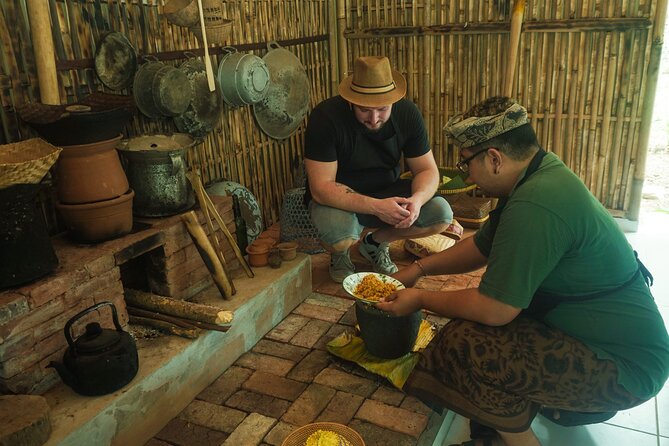
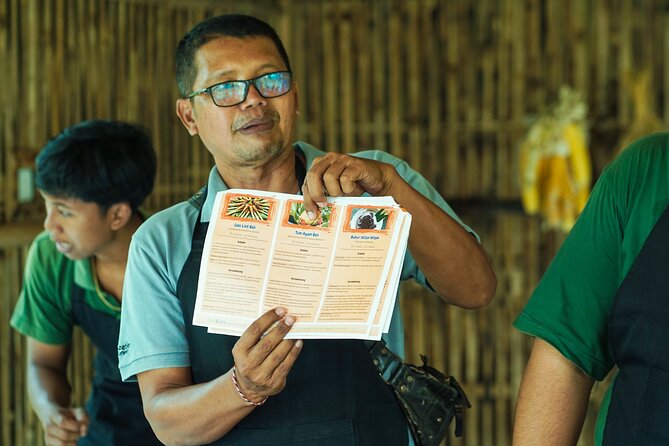
One of the most useful parts of this whole day is the herb garden tour. You go through a garden with 40-plus varieties of plants, guided through what they are and how they get used.
Jamu is the star, and the garden is what makes it make sense. The overview of the experience is clear about this: you pick herbs from the garden and use them to craft your drink. So when you taste your jamu later, you know what you grabbed and why it matters.
This is also where you get a bit of practical Bali knowledge that doesn’t show up in a quick street-food stop. You learn how the ingredients connect to health tonics, and you get a sense of how local people think about food as both flavor and function.
- Monkey Forest, Ubud, Waterfall and Rice Terrace★ 4.5 · 53 reviews
- Private Arrival Transfer: Bali Airport to Hotel★ 3.5 · 47 reviews
- Denpasar Departure Transfer: Hotel to Airport★ 4.5 · 37 reviews
- Mount Batur Jeep Sunrise by 4WD with Breakfast★ 5.0 · 18 reviews
- Pure Bali Village Experience, Cooking & Jamu Class+VIP Transfer★ 5.0 · 16 reviews
Jamu Pavilion: Crafting Two Tonics and Tasting Fruit Too
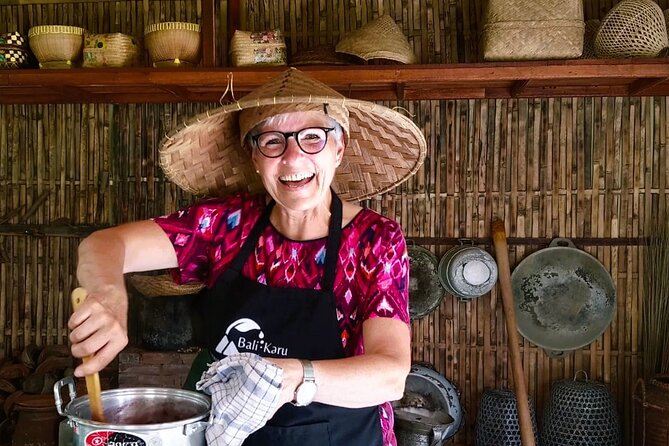
At the Jamu Pavilion, you craft and taste two types of jamu, and you also get fruit tasting time. This part is hands-on, not a demo where you stand at the edge and hope you remember what was used.
I like that tasting is built in. Jamu is not always a drink people pick up on instinct. But once you see the ingredients and make it yourself, the flavors feel less mysterious and more like something you can build on.
If you’re curious about wellness drinks, this will feel grounding. You’re not just buying something bottled, you’re learning what goes into it. And if you’re skeptical, tasting two types helps you form your own opinion fast.
Paon Bali Cooking Class: Sate Lilit on Bamboo, Lak Lak in Clay
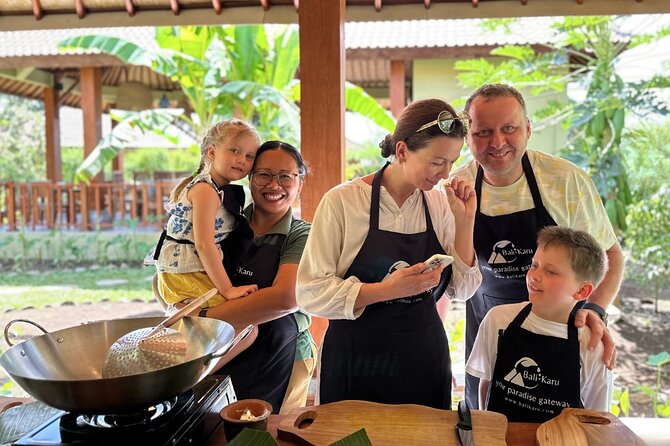
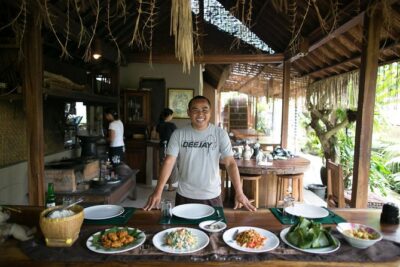
Then you move to Paon Bali, an open-air Bali kitchen, and you cook an authentic Balinese meal with the chef’s guidance. This is where you get the closest thing to a real workshop.
The standout moments for me are the stations. You prepare Sate Lilit at a live bamboo grill station, so you see how the heat and timing affect the final taste. You also learn Lak Lak, a sweet dessert made using a traditional clay pot, which changes the cooking feel and the final texture.
This is the biggest value piece of the tour. For $89, you’re not only paying for a meal, you’re paying for coaching, step-by-step instruction, and the confidence that you can do it again later. The included lunch is part of it, but the real payoff is what you learn while cooking.
A practical tip: during the cooking, focus on technique, not just ingredients. The same recipe can taste different if your heat control and mixing are off.
Lunch Nasi Campur Tumping, Then a Proper Slow Down
After cooking, you eat lunch: Nasi Campur Tumping, plus dessert that you cooked yourself. The day is designed so lunch feels earned, because you actually made the food.
This also works as a reset. You’re in a mountain village setting with nature around you, and after the cooking effort, the quiet is noticeable. It’s not a rushed buffet line. You settle in and then the tour shifts to village life.
If you want to keep the experience authentic, slow down while eating. That means taking a few minutes between bites to notice flavors like local herbs and how the meal comes together.
Helping With Rice Planting and the Balikaru Farm With Trigona Bees
After lunch, you get a chance to assist with rice planting. This is one of those moments where you can feel the rhythm of village work, even if you’re only doing it for a short time.
You also visit Balikaru farm, where you’ll see animals and stingless Trigona beehives. I like including animals and bees because it prevents the day from feeling like a single-topic food tour. It connects herbs to farming and farming to food, which is how many local systems actually work.
The stingless bees part is especially interesting. You’re not just hearing the word stingless, you see the hives and learn enough to make it feel like a real part of the property, not a photo trick.
Wear sunscreen and be ready for outdoor time. There’s a lot of fresh air across the day, and that’s a big reason it feels special.
Village Walk, Asta Kosala Architecture, and a Soft Downhill Trek
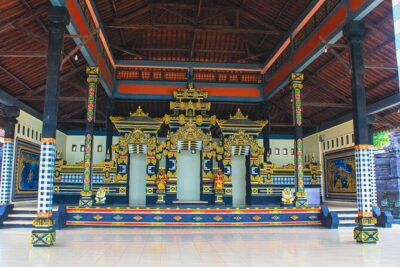
On your return, there’s time for a stroll through the village, with mountain views and chances to chat with locals. You also visit a traditional house compound to learn Asta Kosala architecture, influenced by Balinese Feng Shui.
This is another valuable piece because it explains the logic behind how Balinese spaces are arranged. Even if you don’t memorize the details, you start noticing why buildings and rooms are set up the way they are.
You’ll also do a soft trekking segment of about 30 minutes downhill. It’s not described as extreme, but it is downhill and outdoors. Bring shoes with grip, and keep your pace steady.
For some people, this is the only physically demanding part. For others, it can be the part that decides whether they feel comfortable. Either way, it’s better to know it’s coming.
Belulang Hot Spring: Optional Bath and the Calm-Down Moment
The day ends at the Belulang hot spring, where a bath is optional. This is the moment where the day shifts from active and hands-on to quiet and restorative.
Several people also highlight a spiritual purification-style moment around the springs. Even if that specific ritual is not exactly what you personally picture, the overall point is the same: the hot water and sacred setting act like a reset for the senses after a full day.
If you like soaking and you’re comfortable with basic sacred-site etiquette, consider taking the optional bath. If you’re not, you can still enjoy the setting and the end-of-day calm.
Price and Value: What $89 Buys You (and Why It Feels Fair)
$89 per person might look like a lot until you break down what you’re actually getting. For a full half day plus, you have:
- door-to-door pickup in an air-conditioned vehicle
- a scenic drive with a photo stop
- instruction on Rindik
- a guided herb and spice garden tour with 40-plus plant varieties
- hands-on jamu making and tasting
- a chef-led cooking class in Paon Bali, including Sate lilit and lak lak
- lunch (Nasi Campur Tumping) and dessert that you cook
- rice planting help
- farm time, including animals and Trigona stingless bees
- a walk and a soft downhill trek
- a visit to a traditional compound to learn Asta Kosala
- time at Belulang hot spring
- a farewell gift
- a personal cooking class certificate sent by email
What is not included is also clear: tips, drinks, and personal expenses. So if you plan for those, the price feels more like a package value than a random add-on.
The small group size matters here too. This caps at 12 travelers, which usually means the guide can actually check in while you cook and make jamu. That’s a big deal if you want real instruction.
Who This Tour Fits Best (and Who Might Want Another Plan)
This is a great fit if you want Bali that feels human-scale. You like learning by doing, and you enjoy food that ties back to ingredients, farming, and daily life.
You’ll probably love it if you fall into one of these categories:
- You want a cooking class that teaches technique, not just taste testing
- You’re curious about jamu and herbal ingredients
- You enjoy village walks and small spiritual or cultural stops
- You like meeting animals and seeing practical farming details
You might want to skip or choose carefully if:
- You strongly dislike early mornings, since pickup starts around 7:30 am
- You’d struggle with a downhill walk outdoors for about 30 minutes
- You want mostly free time or a beach-style itinerary, because this day stays busy
Language is also worth noting. The guide is English- or German-speaking, with a surcharge for other languages. If you do not speak English or German, ask when booking so you know what communication support you’ll have.
Should You Book the Pure Bali Village Experience?
I’d book it if you’re craving a Bali day that feels like work and home life, not a theme park. The strongest pull is the combination: jamu made by you, then a chef-led cooking class with recognizable dishes like sate lilit and lak lak, plus a real walk and village moments.
If you want something easy and effortless, or if your idea of Bali is fast shopping and long scenic drives only, this may feel like too much activity. But if you want one day where you come away knowing what to do next, this is the kind of experience that pays you back for weeks.
FAQ
Is hotel pickup and drop-off included?
Yes. The experience includes pickup and drop-off, and you travel by air-conditioned vehicle.
What is the group size?
This activity has a maximum of 12 travelers.
How long is the tour, and is there walking?
The duration is about 8 hours. You also do soft trekking for approximately 30 minutes downhill.
Can they accommodate vegetarian or dietary needs?
Yes. Dietary needs such as vegetarian can be accommodated. You should indicate your requirements at the time of booking.
Is the Belulang hot spring bath required?
No. The hot spring visit includes an optional bath.
What happens if the tour is canceled due to weather?
The tour requires good weather. If it is canceled for poor weather, you will be offered a different date or a full refund.
What languages do guides speak?
The guide is English- or German-speaking. Other languages may be available with a surcharge.
Fresh Bali write-ups from the review desk


Balinese Cooking Classes, compared.
 ★ 5.0PRIVATE Authentic Balinese Cooking Class in Ubud at Putu’s HomeFrom $75644 reviews
 ★ 5.0Balinese Ubud cooking school (9 Dish Cooking and Market Tour)From $58540 reviews
 ★ 5.0Balinese Farm Cooking Class by Pemulan BaliFrom $39410 reviews
 ★ 5.0Learn to cook Indonesian food at Gili Cooking Classes TrawanganFrom $33352 reviews
 ★ 5.0Balinese Cooking Class in SeminyakFrom $66281 reviews
 ★ 5.0Anggrek Putih Lombok Cooking ClassFrom $30253 reviews
 ★ 5.0Balinese Authentic Cooking Class in UbudFrom $39239 reviews
 ★ 5.0PRIVATE Balinese Cooking Class in Ubud with Dewa with TransfersFrom $69213 reviews
Browse the lists this tour appears in